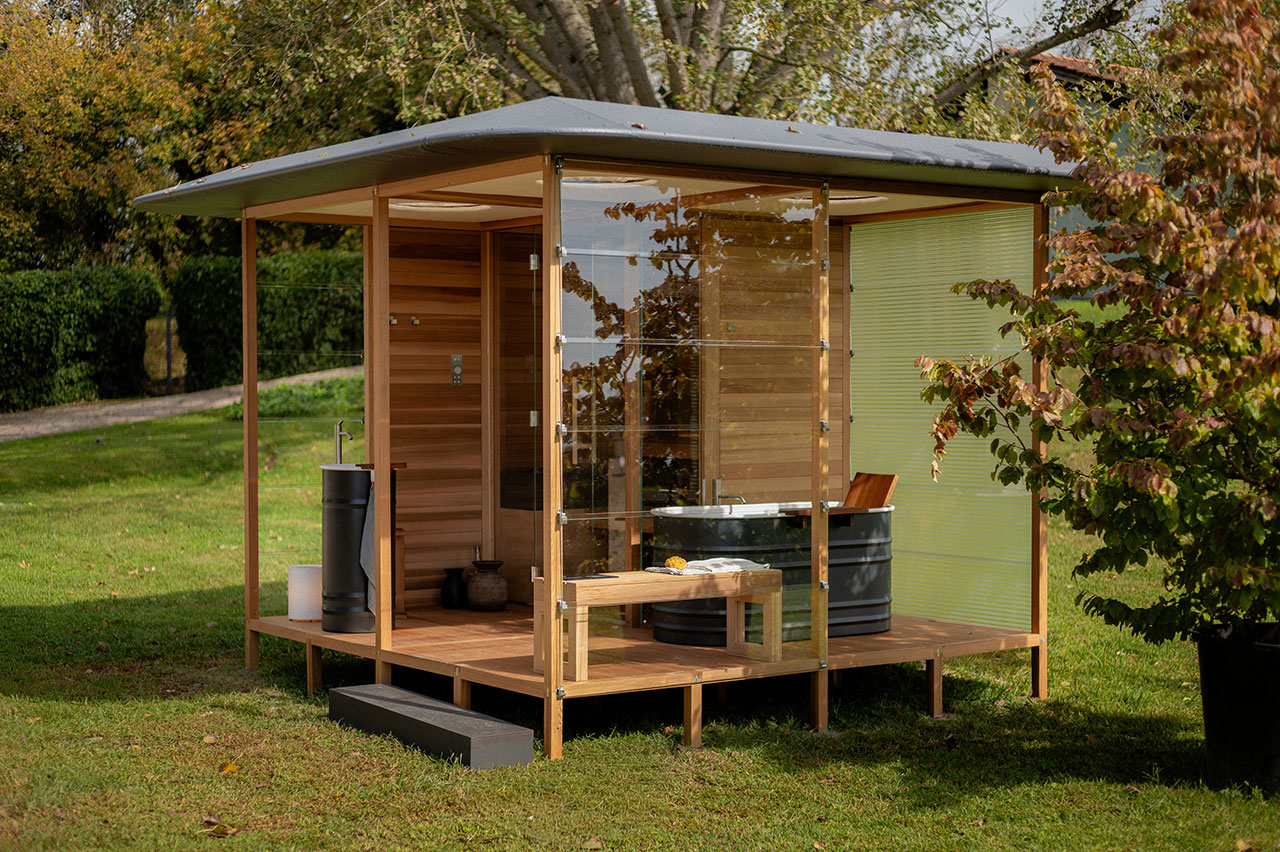
"For many the term is being quickly cliched; simply used as a marketing ploy: gimmicky solutions that are surface level at best but often permanent. What would happen if this formula was turned on its head and the early modernist notion of modularity - pre-produced kit-of-part components brought to and assembled on almost any site - was reintroduced as a way to better frame these settings, allowing their histories to unfold with almost no tampering."
"First articulated in the 1970s, this ethos centers on the idea that objects don't exist in inert vacuums and are instead influenced, constantly reshaped, by their implementation: their use but also placement among other objects and spatial elements. Agape's diverse bathroom collections were all imagined as such: networks of furnishings, fixtures, and luminaires that can be interchanged, and in turn, customized."
Contemporary architectural conversation often centers on place-making and creating spaces that mirror physical and cultural site characteristics. The placemaking label has become clichéd and frequently reduces interventions to surface-level marketing gestures. Reintroducing early modernist modularity—pre-produced kit-of-part components assembled on site—offers an alternative that frames settings while allowing histories to unfold with minimal tampering. Agape's Pavilion Sei sauna, developed by Michele de Lucchi Studio partner Nicholas Bewick, embodies a systems-thinking philosophy originating in the 1970s that views objects as shaped by use and spatial relationships. Agape's collections operate as interchangeable networks, enabling customization through new materials and processes and balancing standardization with individuality to prioritize wellness.
#place-making-critique #modularity-kit-of-parts #systems-thinking #micro-architecture-pavilion-sei #wellness-design
Read at Design Milk
Unable to calculate read time
Collection
[
|
...
]