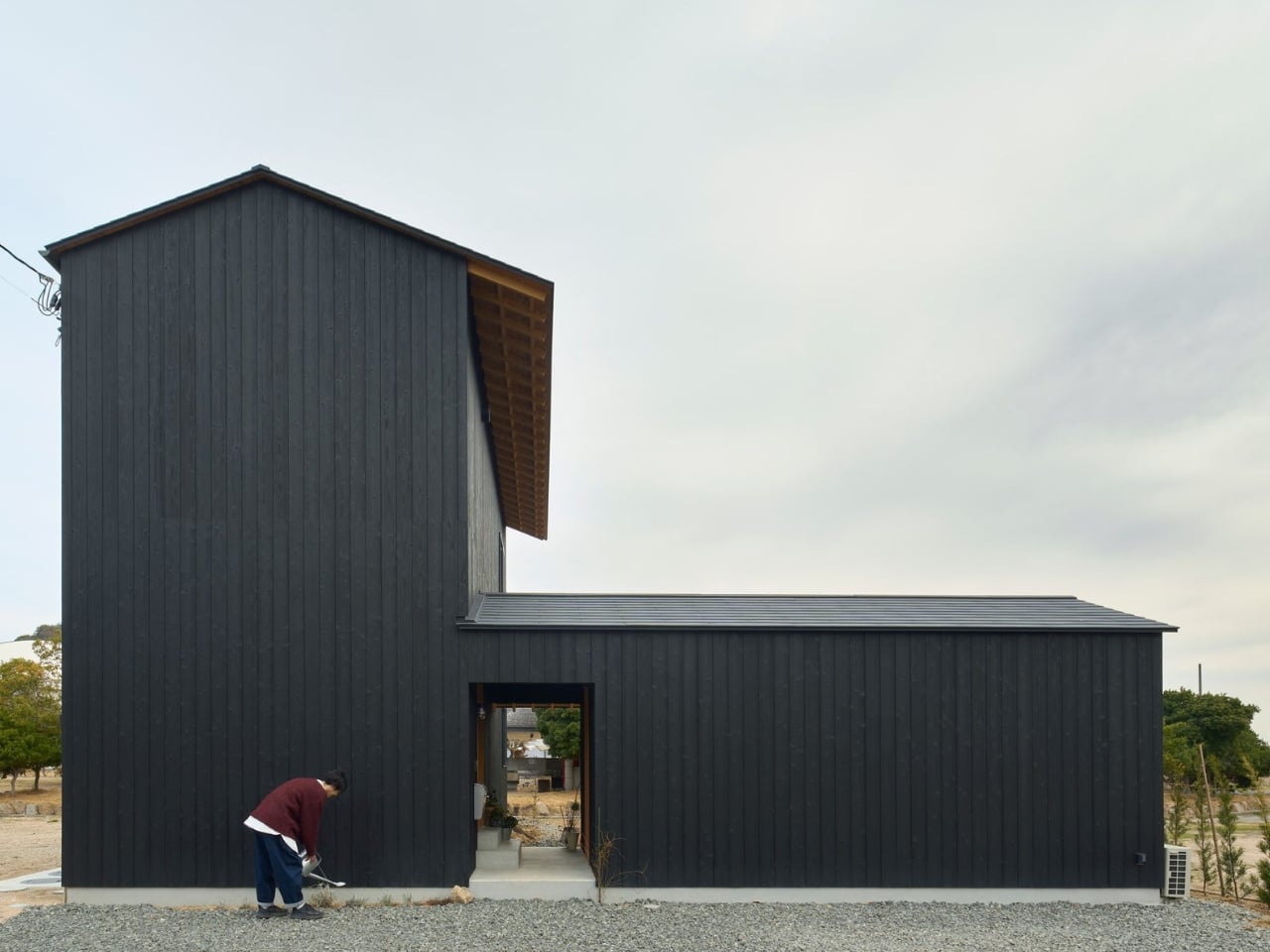
"Sometimes the best architecture knows when to turn away. UK studio Denizen Works just completed their first project in Japan, and it does exactly that. The House in Onomichi presents an almost entirely blank facade to the street, creating what founder Murray Kerr calls an "enigmatic quality." But this isn't architecture being rude. It's architecture understanding that privacy can be the ultimate luxury."
"The clients are a couple who spent years living in London before deciding to return to Japan for a quieter life. What they wanted wasn't just a house but a private sanctuary, and Denizen Works delivered by looking backward and forward at the same time. The design references traditional Japanese residential arrangements while feeling completely contemporary, which is the sweet spot where the best cultural translations happen."
"The house is split into two distinct structures connected by a covered entrance walkway. There's a two-storey main house containing a single bedroom, and a single-storey studio that extends from it, partially enclosing a small garden. This arrangement follows the traditional Japanese concept of Omoya and Hanare, which translates roughly to main house and annexe. In this case, the separation creates a clear division between living and working."
"The real star of the show is the cladding. Both structures are wrapped in vertical burnt-timber Yakisugi, a traditional Japanese technique that involves charring wood to preserve it. The result is a deep black finish that's both protective and beautiful. Yakisugi has been having a moment in contemporary architecture, but here it feels completely appropriate rather than trendy. The technique originated in Japan centuries ago, and using it for a house in Onomichi creates a visual conversation between old and new."
The House in Onomichi presents an almost entirely blank facade to the street, creating an enigmatic quality and prioritizing privacy as a form of luxury. A couple who returned to Japan from London requested a private sanctuary, achieved by referencing traditional Japanese residential arrangements while maintaining contemporary sensibilities. The property comprises two structures linked by a covered entrance walkway: a two-storey main house with a single bedroom and a single-storey studio that partially encloses a small garden, following Omoya and Hanare principles. Clad in vertical burnt-timber Yakisugi, the buildings exhibit a deep black finish that is both protective and visually resonant with historical techniques.
#privacy-focused-architecture #yakisugi-cladding #omoya-hanare-layout #contemporary-japanese-residential
Read at Yanko Design - Modern Industrial Design News
Unable to calculate read time
Collection
[
|
...
]