"It does­n't take too long a look at the almost sur­re­al­is­ti­cal­ly clean-lined build­ings of Wal­ter Gropius to get the impres­sion that the man want­ed to ush­er in a new world, espe­cial­ly when you con­sid­er that many of them went up before World War II. Take the Bauhaus Dessau build­ing, which, though com­plet­ed exact­ly a cen­tu­ry ago, looks like a con­crete trans­mis­sion from the future that nev­er arrived, or one that may indeed still be on the way. It once housed the Ger­man art school turned polit­i­cal and cul­tur­al engine he found­ed in 1919, whose prin­ci­ples includ­ed absolute equal­i­ty between male and female par­tic­i­pants - or they did at first, at any rate."
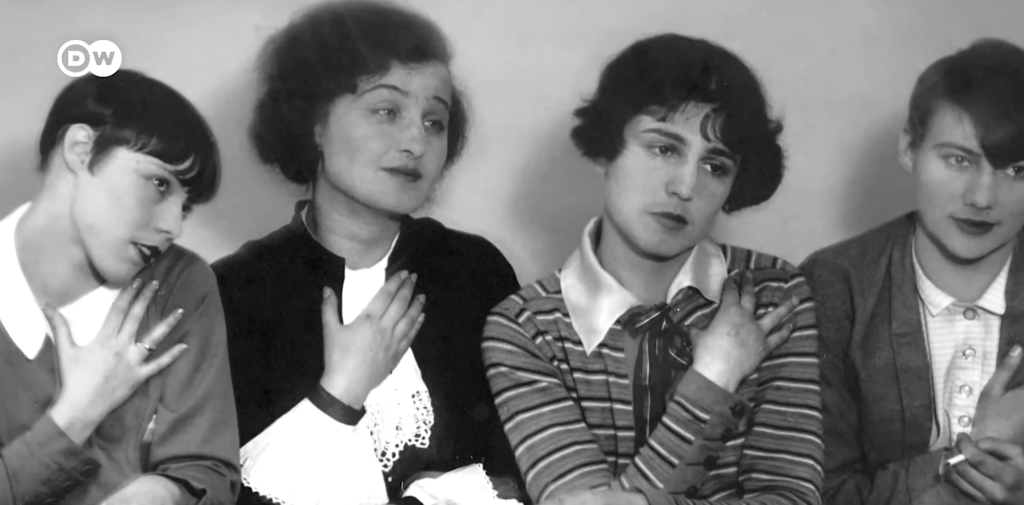
"Soon decid­ing that the new insti­tu­tion would­n't be tak­en seri­ous­ly with too high a pro­por­tion of women, Gropius lim­it­ed their enroll­ment to one-third of the stu­dent body. That episode, among oth­ers that under­score the ways in which Gropius and the Bauhaus' osten­si­ble com­mit­ment to the advance­ment of women was­n't all it could be, fig­ures into Susanne Radel­hof's doc­u­men­tary The Untold Sto­ry of Bauhaus Women."
"Yet what­ev­er the short­com­ings in that depart­ment one might iden­t­ify from a twen­ty-first cen­tu­ry van­tage, the fact remains that the Bauhaus made pos­si­ble - or at least encour­aged - more endur­ing and influ­en­tial work by female artists and design­ers than almost any art school in ear­ly twen­ti­eth-cen­tu­ry Europe."
Walter Gropius designed clean-lined, futuristic Bauhaus buildings such as the Bauhaus Dessau, completed a century ago, embodying a modernist vision formed before World War II. The school was founded in 1919 with stated principles including absolute equality between male and female participants initially. Gropius later limited women's enrollment to one-third of the student body amid concerns about institutional seriousness. Despite such limitations, the Bauhaus enabled and encouraged enduring and influential work by female artists and designers. Nearly 500 women studied there, producing prototypes and innovative design contributions that shaped early twentieth-century European art and design.
Read at Open Culture
Unable to calculate read time
Collection
[
|
...
]