"Wittgenstein found in that remote hut the particular kind of quiet that forces real confrontation with your own thoughts. He was productive there in ways he couldn't replicate anywhere else."
"He later wrote to a colleague that he couldn't imagine working anywhere as he did there, and that the place had a quiet seriousness he found nowhere else."
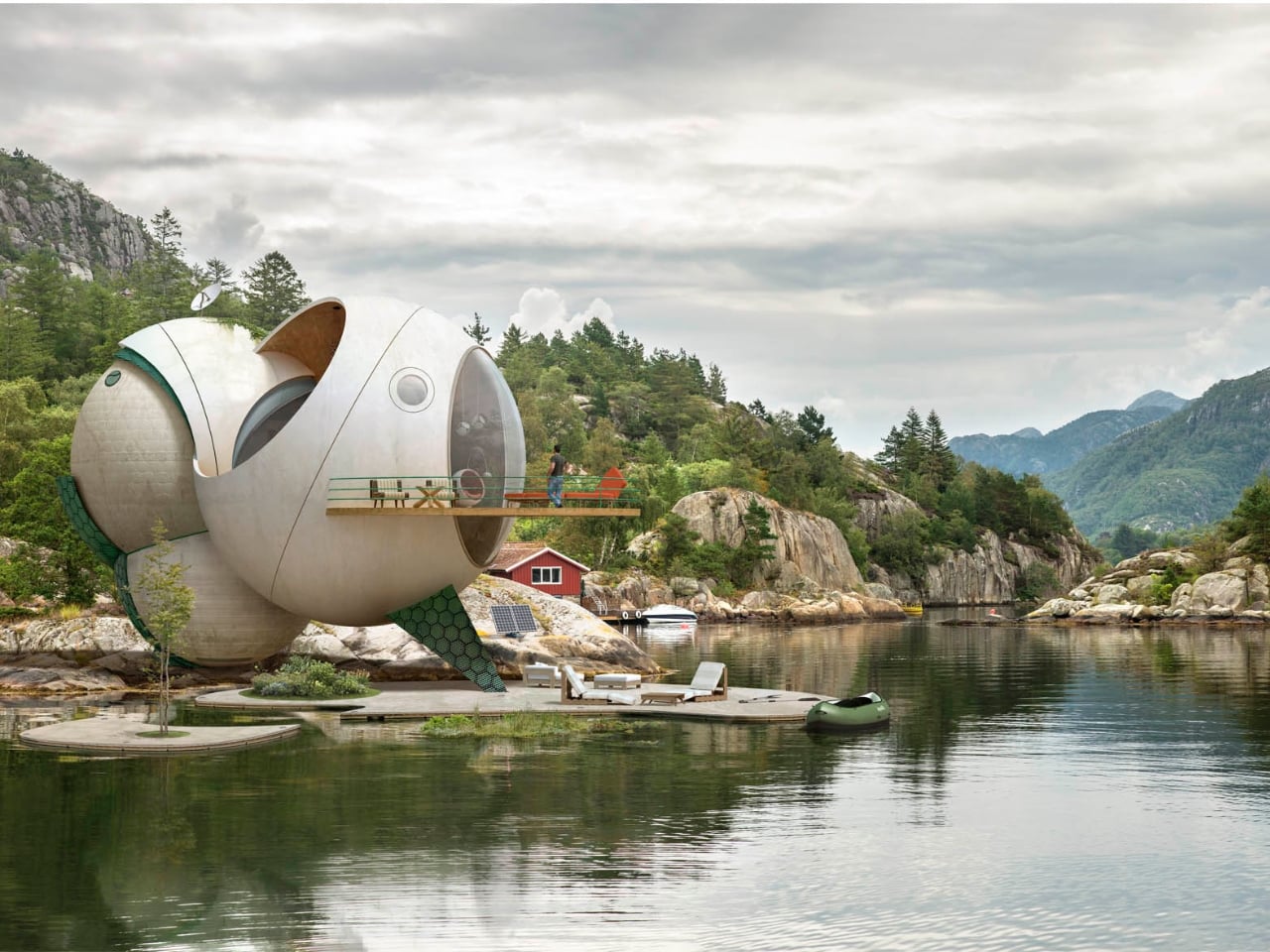
"Dionisio González's series, Wittgenstein's Cabin, takes that founding image as both premise and provocation, envisioning a cluster of amphibious dwellings set directly on the Norwegian fjords."
"These structures are not proposals for construction. They are something closer to visual arguments, reflecting on how people live in extreme or overlooked conditions."
In 1914, Ludwig Wittgenstein built a cabin in Norway, seeking solitude to confront his thoughts. This environment fostered his productivity, leading to significant philosophical developments. Wittgenstein expressed that he could not imagine working elsewhere, emphasizing the unique quietness of the location. Spanish artist Dionisio González was inspired by this setting, creating a series called Wittgenstein's Cabin, which envisions amphibious dwellings on the fjords. These structures serve as visual arguments rather than construction proposals, reflecting on extreme living conditions and the philosophical legacy of Wittgenstein.
Read at Yanko Design - Modern Industrial Design News
Unable to calculate read time
Collection
[
|
...
]