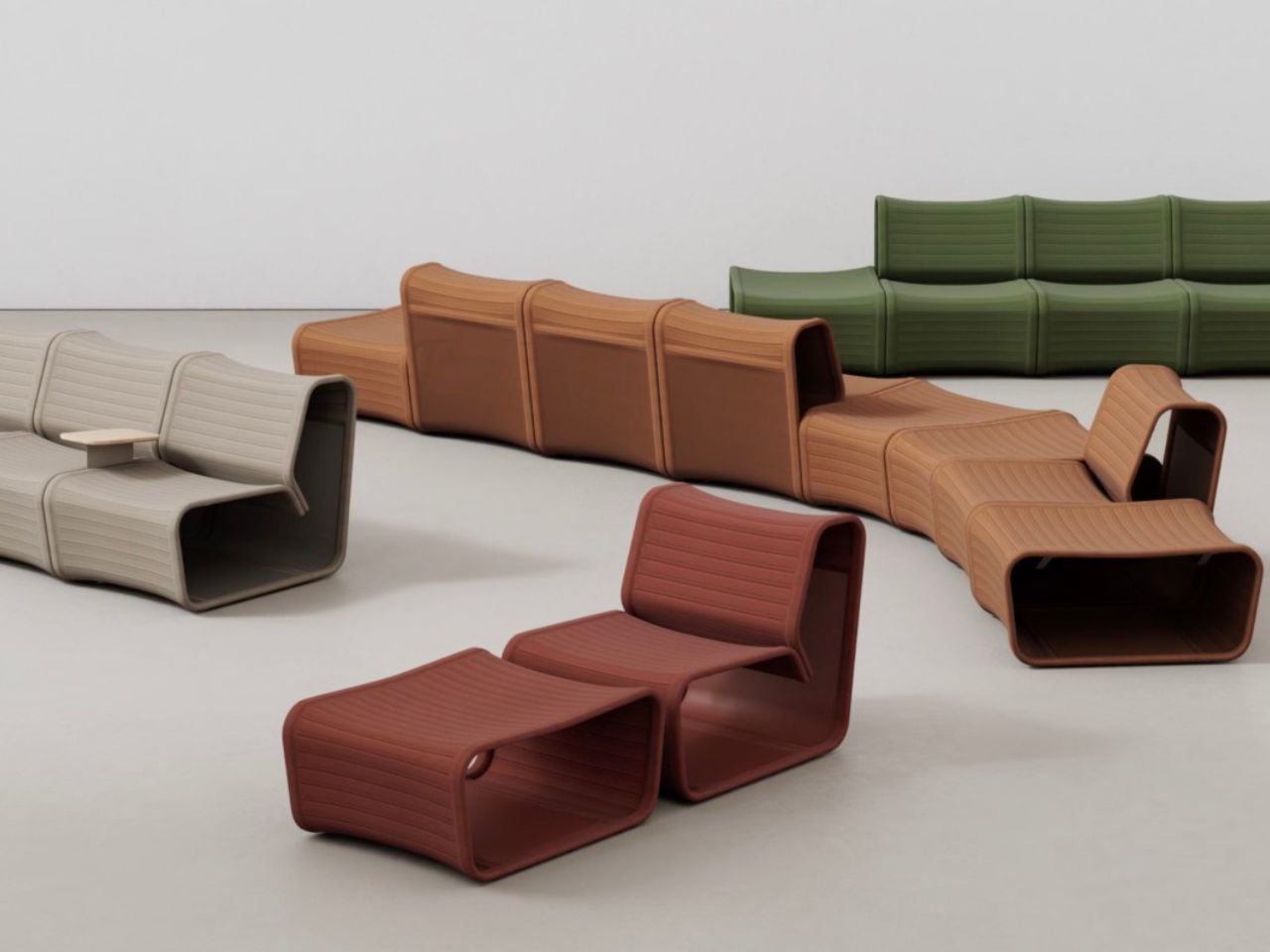
"The chair does not shout innovation through spectacle. Instead, it whispers it through restraint. Gone are the dense layers of upholstery that traditionally define lounge seating. In their place sits a single engineered knitted skin stretched across a lightweight metal frame. What appears visually minimal is in fact materially sophisticated. The knit surface is not decorative upholstery but the structural and ergonomic system itself."
"This shift reframes how we understand softness. Rather than cushioning the body with excess, the chair supports it through tension and precision. Paul Crofts describes the intention as a move away from resource-heavy upholstery toward something smarter and more responsible. The frame bolts together on site, while the knitted sleeve simply drops into position."
"The textile itself carries its own story of transformation. The sleeve is made from Camira's SEAQUAL collection, a fabric created using post-consumer marine plastic waste. Each meter repurposes up to thirty-five recycled bottles recovered from oceans. Advanced three-dimensional knitting technology shapes the textile precisely, eliminating offcuts and ensuring that only the exact amount of material required is produced."
The Knit One Chair by Paul Crofts challenges conventional furniture design by replacing dense upholstery layers with a single engineered knitted skin stretched across a lightweight metal frame. The chair achieves comfort through tension and precision rather than bulk, supporting the body through structural sophistication. The design prioritizes sustainability by using Camira's SEAQUAL fabric made from post-consumer marine plastic waste, with each meter repurposing up to thirty-five recycled bottles. Advanced three-dimensional knitting technology shapes the textile precisely, eliminating waste and offcuts. The construction process mirrors garment assembly, with fewer components and simplified on-site bolting, reducing material waste and environmental impact while maintaining ergonomic performance.
#sustainable-furniture-design #material-innovation #minimalist-seating #circular-economy #ergonomic-engineering
Read at Yanko Design - Modern Industrial Design News
Unable to calculate read time
Collection
[
|
...
]