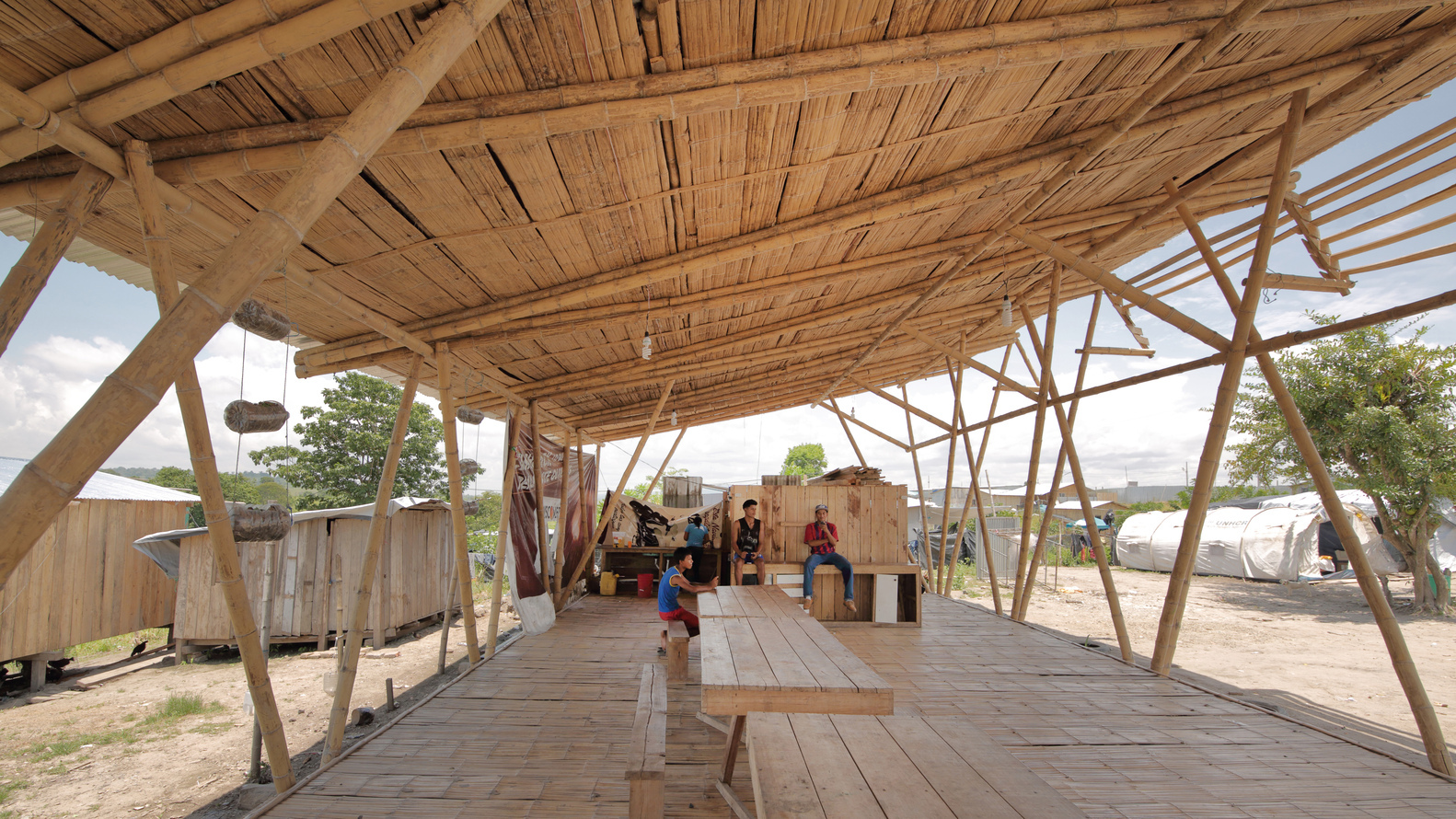
"Can architecture be built from food? Between the fire that warms, the smells that spread, and the bodies that gather around the table, the apparent banality of cooking and eating reveals itself as a choreographed dance of spatial appropriation and belonging. These gestures organize routines, produce bonds, and transform the built environment into lived place. The kitchen- domestic, communal, or urban -thus ceases to be merely a functional space and affirms itself as a territory of encounter."
"The kitchen, however, evolves in direct relation to prevailing social models. From a space destined exclusively for women and servants, it becomes-within contemporary life-a shared environment, inhabited by everyone and therefore placed at the heart of the home. In this configuration, the kitchen turns into a space of encounter and permanence, now without social or economic barriers, where cooking is understood as a relational practice."
Fire historically operated as a central gathering element that organized everyday life and integrated food preparation into collective rituals. Over time fire moved indoors and was domesticated through inventions that automated and streamlined cooking. Cooking spaces were then displaced to secondary, technical areas of the house focused on efficiency and circulation, exemplified by Christine Frederick’s 1922 studies and the 1926 Frankfurt Kitchen by Margarete Schütte-Lihotzky. Social models reshaped the kitchen from a female- and servant-only domain into a shared, central domestic environment. Contemporary kitchens function as social centers where cooking becomes a relational practice, fostering routines, bonds, and territorial belonging.
Read at ArchDaily
Unable to calculate read time
Collection
[
|
...
]