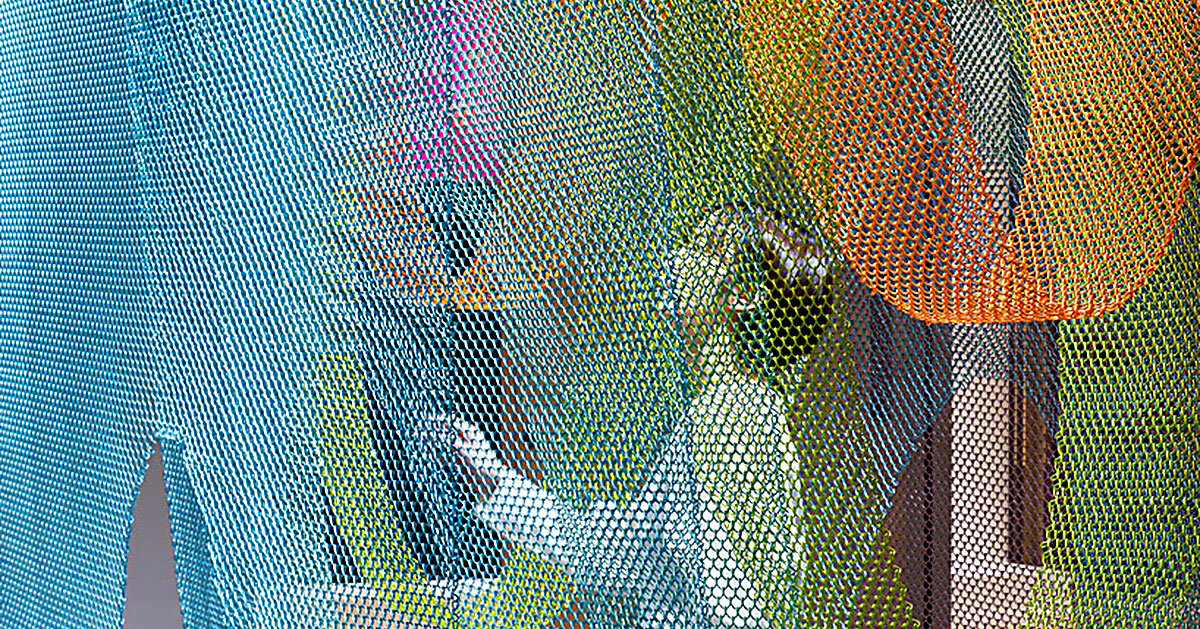
"Wire mesh is employed as both structure and spatial filter. Its composition of lines and voids allows variations in wire type, thickness, density, and color, producing a wide range of visual and atmospheric effects. These variables influence light transmission, shadow, sightlines, and airflow, positioning the material as an active mediator between space and perception. Multiple layers of wire mesh are arranged to generate moiré effects, a visual interference pattern created by overlapping grids."
"The traditional tea house is typically conceived as a contained microcosm intended to heighten awareness and focus. While maintaining this conceptual foundation, the project reframes enclosure through layered transparency rather than solid boundaries. The result is an interior defined by gradations of light and spatial intervals, where enclosure and openness coexist. By working with light, material layering, and perceptual change, the Wire Mesh Tea Ceremony House by Moriyuki Ochiai Architects explores how contemporary materials can reinterpret cultural architectural typologies."
Layered diamond-shaped wire mesh replaces conventional solid enclosures to reinterpret the Japanese tea house as a permeable, gradated interior. The mesh functions as both structure and spatial filter, with variations in wire type, thickness, density, and color altering light transmission, shadow, sightlines, and airflow. Overlapped layers generate moiré interference patterns that produce shifting optical depth, semi-transparency, and continuous visual changes as viewers move. Light is transmitted, reflected, and diffused across the interior to create spatial ambiguity and gradations of enclosure. The design retains the tea house's focus on heightened awareness while reframing containment through layered transparency and material texture.
Read at designboom | architecture & design magazine
Unable to calculate read time
Collection
[
|
...
]