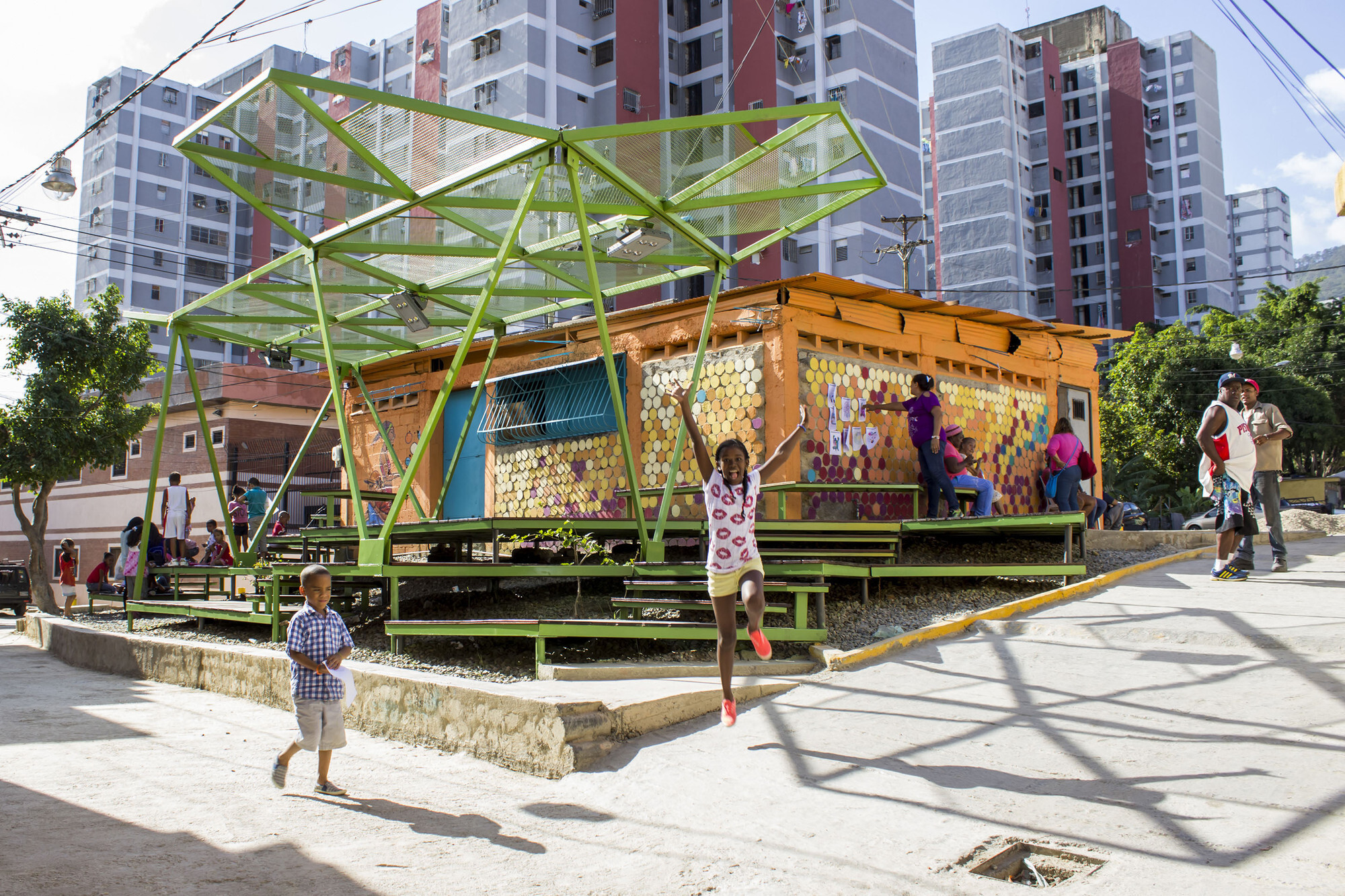
"They emerge from the in-between, from intermediate spaces: the courtyard, the veranda, the sidewalk, the shared corridor. These areas, often considered residual or informal by the traditional architectural discipline, are precisely where everyday life builds bonds. From this Latin American culture comes a spatial logic in which daily life is organized in a relational and expansive way. Practices such as sitting at the front door, occupying the sidewalk, and playing in the street produce a lived city that extends beyond the formal limits of design."
"More than the result of infrastructural shortcomings, the occupation of these intermediate spaces expresses a culture that values encounter and improvisation. The Latin American city is thus built less as a finished object and more as a cultural process in constant transformation, where everyday use continually redefines the meaning of space. From this perspective, the collective construction of place is not limited to the design of form or the definition of programmed uses, but involves creating conditions for relationships to happen spontaneously."
"Within the architectural repertoire, spaces of encounter take shape in different atmospheres, and one of them is the courtyard. As an opposite to the "full," the courtyard's void represents the freedom of unprogrammed appropriation. In the Latin American climate, which often favors outdoor activity, the courtyard mediates the transition between the intimate and the collective, sheltering throughout the day children at play, adults in conversation, moments of rest, and celebrations."
Everyday encounters in Latin American cities arise in intermediate, informal spaces such as courtyards, verandas, sidewalks, and shared corridors. Those spaces function as relational, expansive zones where front-door sitting, sidewalk occupation, and street play extend urban life beyond formal design boundaries. The occupation of intermediate spaces reflects a cultural preference for encounter and improvisation rather than mere infrastructural failure. Collective place-making operates as an ongoing cultural process where daily use, care, and social negotiation continually redefine spatial meaning. Courtyards serve as a key social device, offering a permissive void for unprogrammed appropriation that mediates between intimate domestic life and broader communal activity.
Read at ArchDaily
Unable to calculate read time
Collection
[
|
...
]