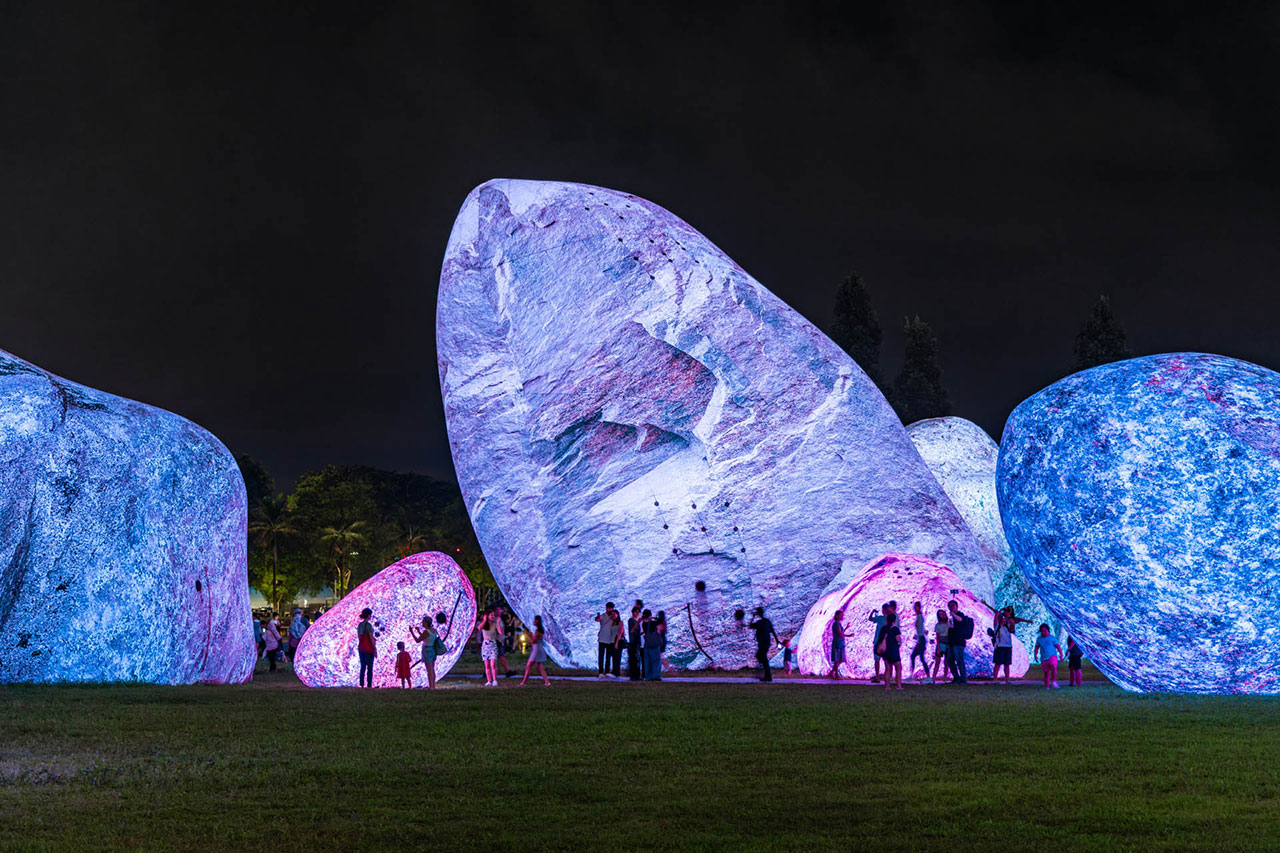
"When Nimrod Weis was 11 years old he would go to the Tandy store in Australia and buy electrical components that he could tinker with and assemble into his own objects. His grandfather, a sculptor who lived and worked in the Negev region of Israel, made a lasting impression on him. "He was instrumental to my artistic development, because out in the desert he gave me the sense that people can do extraordinary things," Weis says."
"His father purchased a home computer, and the excitement was palpable because they were the first family on the block to own one. While everyone else couldn't wait to play the latest games on the PC, Weis wanted to create them instead, and that's when he realized he was a maker. In 1997, Weis founded technology and art studio ENESS, based in Australia. His multidisciplinary team, known as happiness architects, produces temporary and permanent interactive art that combines elements like music, software development, and textiles."
"He invites viewers to experience what he calls unexpected curiosities, taking digital installations out of galleries and museums and into the public sphere. At the intersection of the virtual and physical, his work challenges how people view cities and their spaces, always sparking the imagination. Weis doesn't limit himself to a particular style or form. He continually explores outside of his comfort zone. "As a departure from large-scale art, sometimes I will create a piece of furniture or design some socks," he notes."
Nimrod Weis began tinkering with electronics at age eleven, buying components from a Tandy store and assembling his own objects. His grandfather, a sculptor in Israel's Negev, shaped his artistic outlook and belief that people can do extraordinary things. A childhood home computer inspired him to create games and embrace making. In 1997 he founded ENESS, a technology and art studio in Australia whose multidisciplinary "happiness architects" produce temporary and permanent interactive works combining music, software, and textiles. Weis takes digital installations into public spaces to reframe urban experience, experiments across mediums from furniture to socks, and finds inspiration in Kyoto's Seki Zen gardens.
Read at Design Milk
Unable to calculate read time
Collection
[
|
...
]