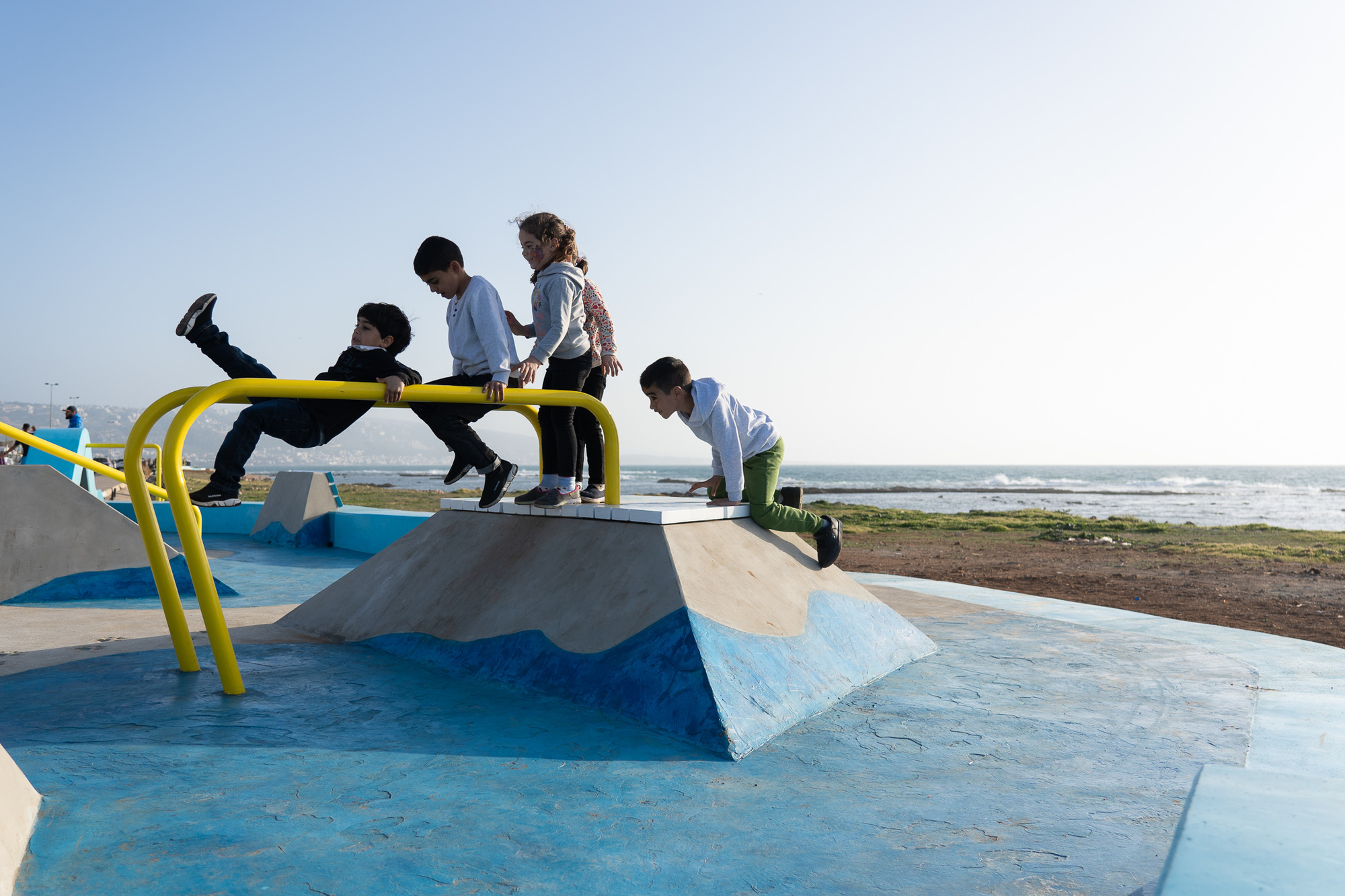
"Architecture is often evaluated through finished forms, yet some practices operate in a different register, one where design unfolds through relationships, time, and use rather than through a single outcome. For CatalyticAction, participation is not a parallel social activity, but the means through which spaces are conceived, constructed, and sustained over time. Based between Beirut and London, the practice has worked across the Middle East and Europe, developing public spaces, schools, playgrounds, and everyday urban infrastructures through long-term collaboration with local communities."
"Grounded in participatory research and collective decision-making, this approach was recognized through ArchDaily's 2025 Next Practices Awards, highlighting a mode of practice where architecture is understood as a shared, evolving process rather than a fixed object. In this context, architectural value is measured through continuity, use, and collective ownership, rather than through form alone. Founded in 2014, CatalyticAction brings together architects, researchers, artists, builders, educators, and practitioners from multiple disciplines."
CatalyticAction is based between Beirut and London and has operated across the Middle East and Europe since 2014. The collective includes architects, researchers, artists, builders, educators, and other practitioners working together. Projects encompass public spaces, schools, playgrounds, and everyday urban infrastructures developed through long-term collaboration with local communities. Participation structures all project stages: identifying needs, co-designing spatial strategies, implementing construction, activating sites, and ensuring long-term stewardship. The practice emphasizes durability, adaptability, social relevance, local labor, and context-appropriate materials and techniques. Architectural value is evaluated through continuity, use, and collective ownership rather than through form alone.
Read at ArchDaily
Unable to calculate read time
Collection
[
|
...
]