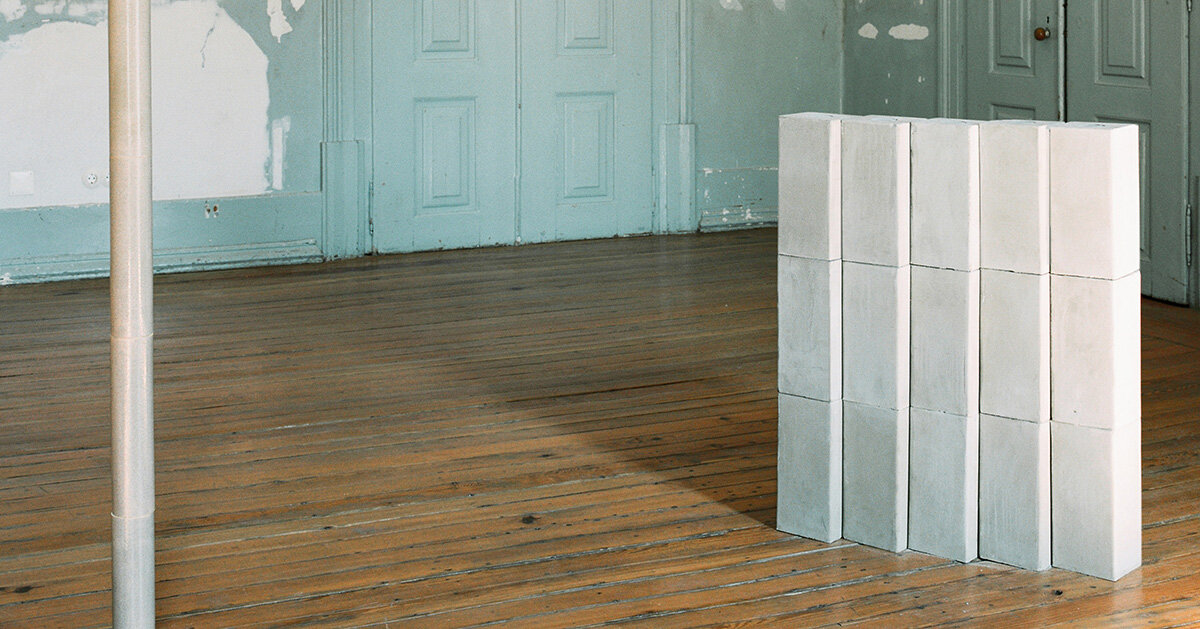
"At the Lisbon Triennale 2025, Besley & Spresser present a material provocation disguised as an architectural installation that begins with a disarming question from Peter Besley. 'What if one of the building industry's most hazardous materials could become one of its most promising?' Together with co-founder Jessica Spresser, the studio reframes asbestos as a mineral whose future might diverge radically from its past."
"The transformation is a working demonstration of a certified EU process that recrystallizes asbestos into stable silicates, safe, tactile, even visually compelling. 'The goal is to replace the idea of asbestos as taboo with one of possibility and to see that even materials with deeply troubled histories can be remade into something constructive, safe, and unexpectedly beautiful.' the architects tell designboom."
"Asbestos is an ancient mineral, woven into the urban fabric through decades of industrial enthusiasm and catastrophic neglect. Though naturally occurring and not toxic in itself, its mining, processing, and installation embedded a lethal hazard into cities worldwide that continues to kill hundreds of thousands of people annually and leaves millions of tons of contaminated waste in landfills. Besley & Spresser's installation operates inside this uncomfortable legacy."
REDUX, installed at the Lisbon Triennale 2025, demonstrates a certified EU process that recrystallizes asbestos waste into stable silicate materials. The process yields safe, tactile, visually appealing, and carbon-negative construction materials developed in collaboration with Rotterdam-based Asbeter and ceramicist Benedetta Pompilli. The work reframes asbestos from a hazardous, taboo substance into a material with constructive potential while acknowledging its deadly legacy and vast contaminated waste. The project highlights the paradox of industrial material culture—convenience versus damage—and aims to show that deeply troubled materials can be remade into safe, useful, and beautiful alternatives.
Read at designboom | architecture & design magazine
Unable to calculate read time
Collection
[
|
...
]