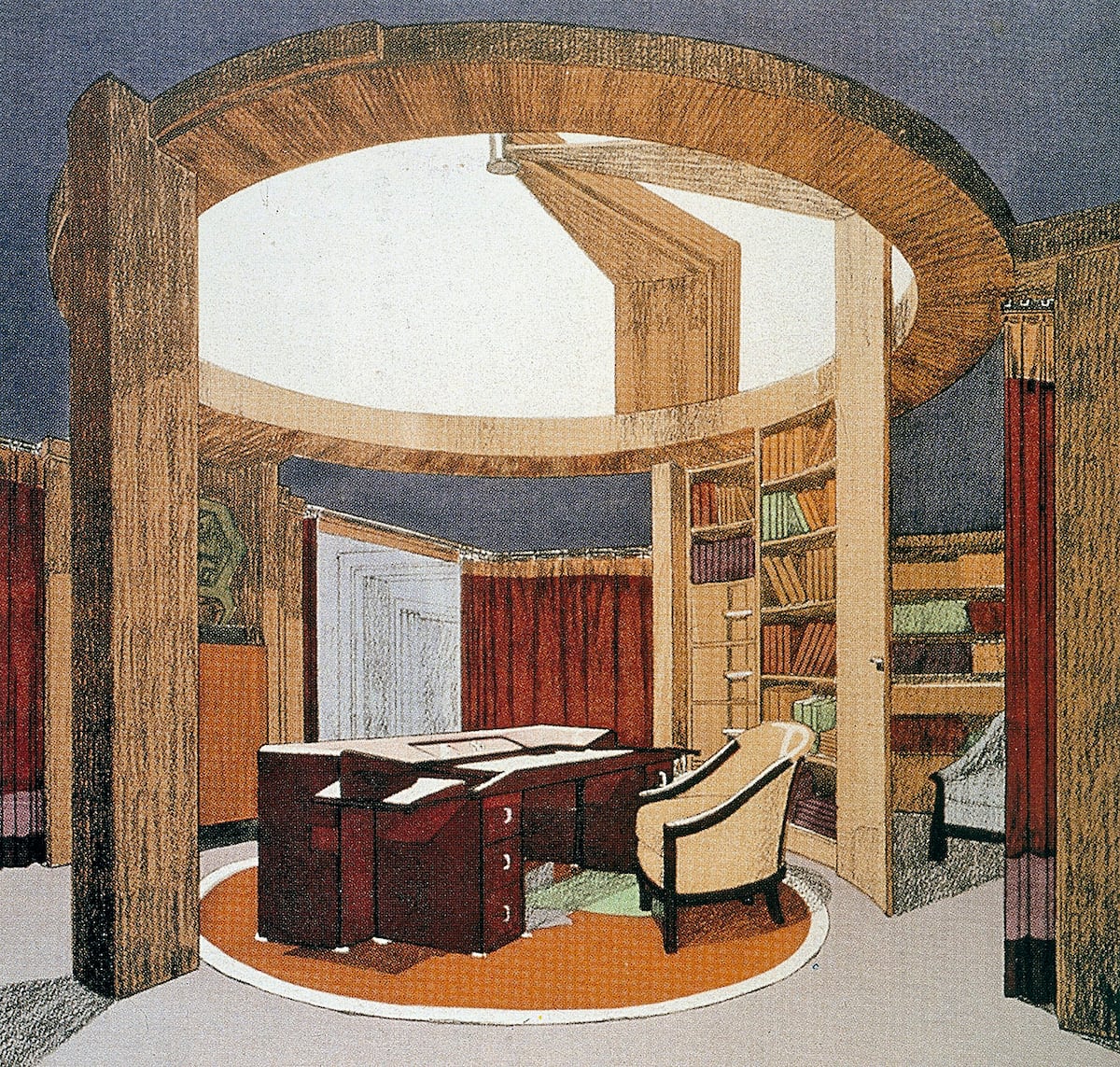
"The finest hotels in Paris, the homes of today's illustrious interior designers and the shopping lists of the most discerning antique collectors all have one thing in common: a craze for Art Deco. This luxuriously geometric and eternally modern style (think of imposing black lacquer screens or expensive beige armchairs) recently turned 100-year-old. And, of course, it was born from the ashes of its opposing style."
"Lucien Dior the famous couturier's great-uncle and then-minister of Commerce and Industry took the matter very seriously. He spoke of the urgent need for French taste to (once again) prevail in the world of design. After arduous negotiations, he secured several hectares in the city center from the Paris municipality. This was just enough land to stage the mother of all applied arts exhibitions. From then on, the world would again be in need of the French r sound to describe the most sophisticated interiors."
Art Deco became a dominant decorative taste in Parisian hotels, designers' homes, and antique collectors' purchases, characterized by luxurious geometry and modern lines. The style emerged around its centenary and replaced the ornate forms of Art Nouveau, which in the 1920s were seen as evidence of national failure. French modernist furniture lagged behind Germany's Bauhaus-influenced design, prompting government intervention. Lucien Dior, as minister, negotiated with Paris to secure central land for a major applied-arts exhibition intended to reassert French taste and commercial leadership in interior design. The Werkbund's earlier Salon d'Automne appearance intensified French urgency for a national exhibition.
Read at english.elpais.com
Unable to calculate read time
Collection
[
|
...
]