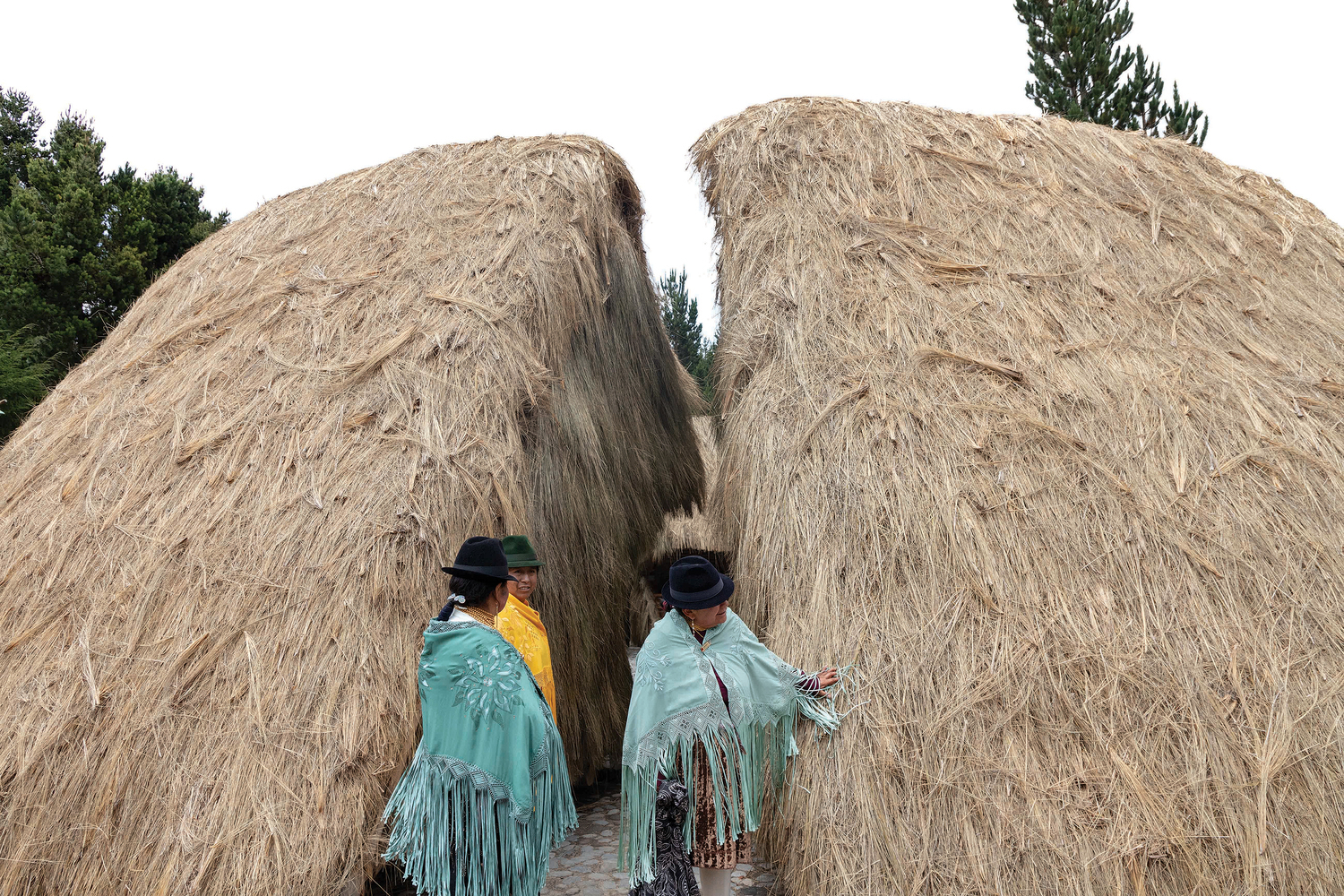
"Between the Andes, the coast, and the Amazon, Ecuador's architecture has evolved as a reflection of its layered geography, a place where climate, topography, and culture unite. Throughout the territory, architecture has been an act of adaptation: from vernacular traditions rooted in collective labor and local materials to the colonial and modernist influences that reshaped its cities. This diversity has produced distinct constructive systems,"
"New academic programs and international references have encouraged a growing awareness of climate and social justice. Emerging architects are redefining practice through workshops, collective studios, and on-site experimentation that blurs the line between design and activism. No longer focused on architecture as an object, a new generation of architects is approaching design as a process. One focused on collaboration, sustainability, and cultural identity. Their questions have shifted the design language from what to build to with whom."
Ecuador's varied geography between the Andes, coast, and Amazon has shaped architecture through climate, topography, and cultural influences. Vernacular traditions rely on collective labor and local materials, producing bamboo and cane structures on the coast and earth and stone construction in the highlands. Colonial and modernist interventions reshaped urban forms while preserving an archive of adaptive constructive systems. Over the past decade, academic programs and international exposure increased awareness of climate and social justice. Emerging architects employ workshops, collective studios, and on-site experimentation, reframing design as collaborative, process-driven practice focused on sustainability and cultural identity. Design questions now emphasize with whom to build rather than what to build.
#ecuadorian-architecture #vernacular-construction #climate-adaptation #collaborative-sustainable-practice
Read at ArchDaily
Unable to calculate read time
Collection
[
|
...
]