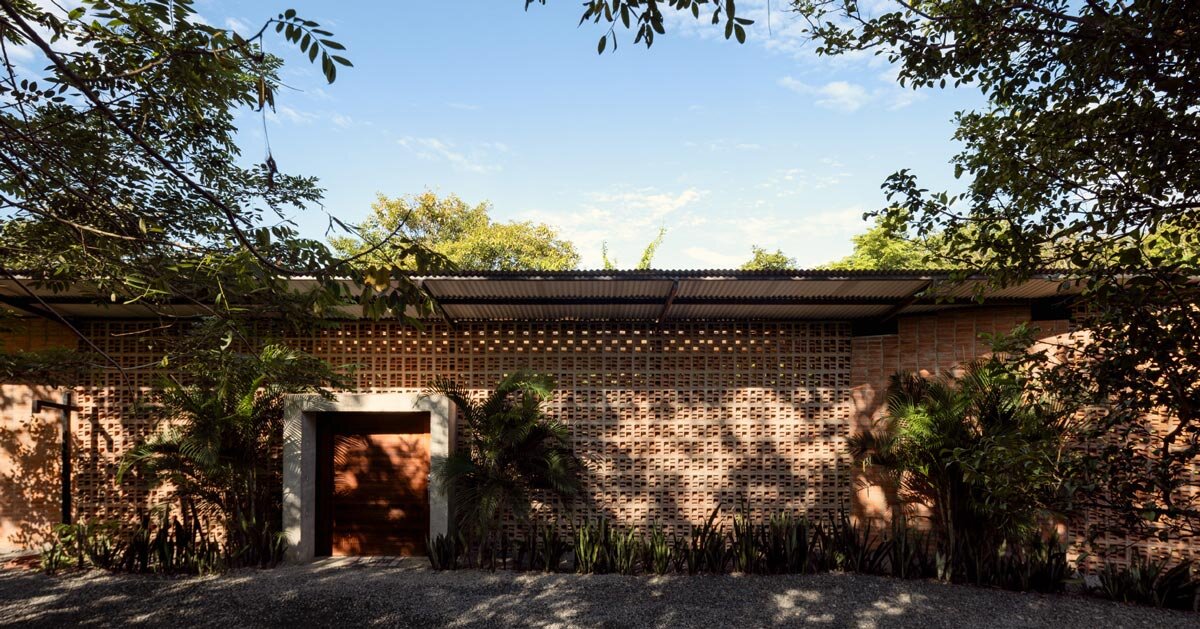
"Casa Chavarria by Carazo Arquitectura is organized around an interior garden that operates as a central spatial and environmental element rather than a decorative feature. Positioned at the core of the , the garden regulates ventilation, daylight, and degrees of privacy, structuring both the plan and the sequence of domestic spaces. It functions simultaneously as a point of transition and as a spatial anchor within the dwelling."
"Located in Puntarenas, Costa Rica, the project is conceived through a gradual transition between open and enclosed conditions. A series of porous boundaries defines movement from shared areas to more private rooms, allowing exterior conditions to permeate the interior. These transitions establish a spatial rhythm that integrates outdoor and indoor environments without relying on framed views. all images courtesy of Carazo Arquitectura"
"Exposed concrete, teak wood, and modular brick are used to articulate varying levels of openness and enclosure. These materials support passive environmental strategies by enabling airflow, filtering light, and moderating the relationship between the house and its surrounding landscape. Rather than treating nature as a visual backdrop, the design incorporates it as an organizing architectural element. Vegetation, light, and air shape the spatial experience of the house, contributing to environmental comfort and defining how the dwelling is occupied."
Casa Chavarria is organized around a central interior garden that regulates ventilation, daylight, and privacy while anchoring the sequence of domestic spaces. The garden operates as both a transition point and a spatial anchor, shaping circulation and the plan. The dwelling employs gradual transitions between open and enclosed conditions through a series of porous boundaries that allow exterior conditions to permeate interior spaces. Exposed concrete, teak wood, and modular brick articulate varying levels of openness and enclosure and support passive strategies by enabling airflow and filtering light. Vegetation, light, and air act as organizing elements, defining occupation and environmental comfort.
Read at designboom | architecture & design magazine
Unable to calculate read time
Collection
[
|
...
]