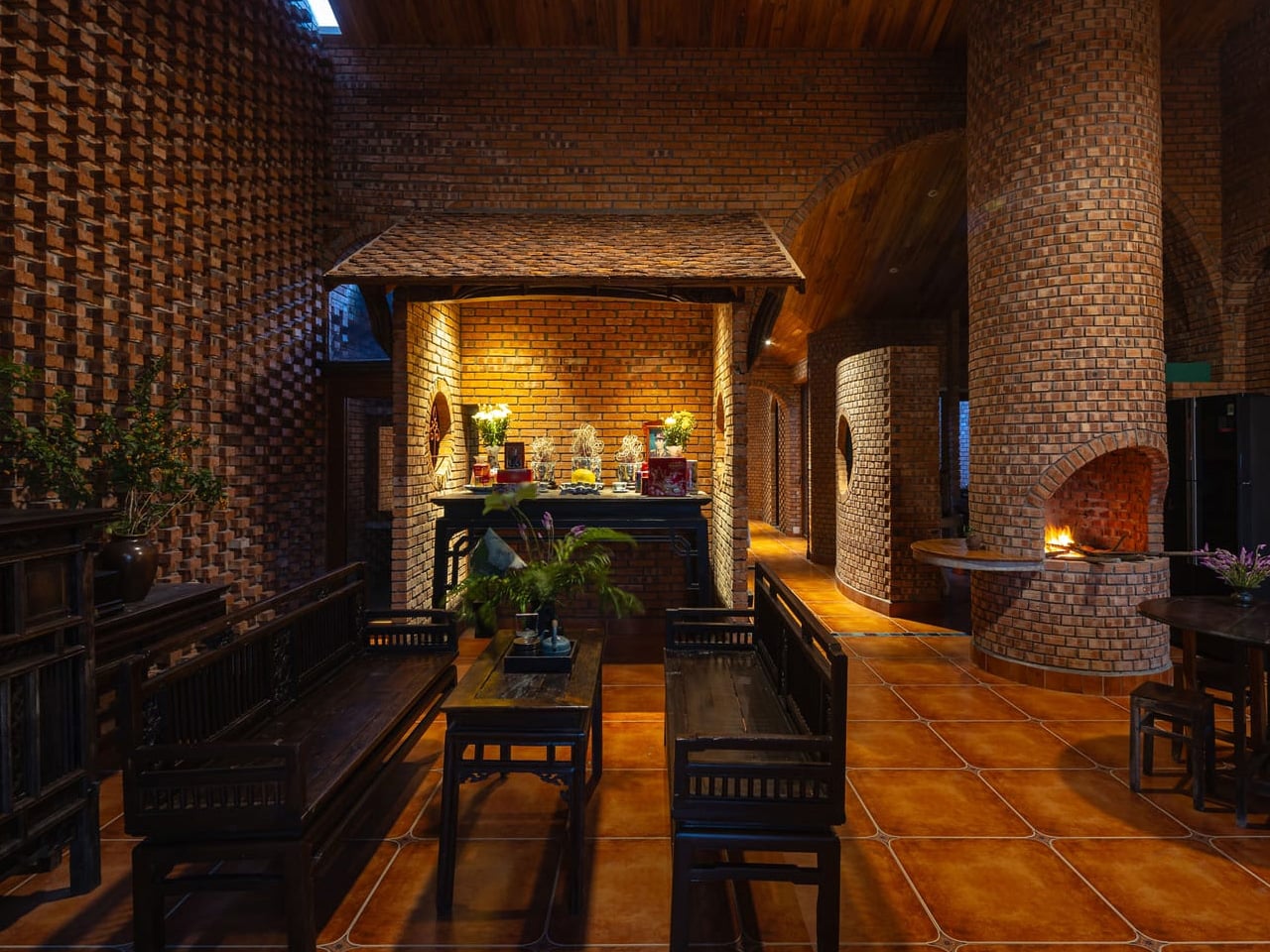
"In the outskirts of Hanoi, where sprawling urbanization steadily encroaches on traditional village life, Trung Tran Studio has completed a residence that refuses to erase what came before it. The Nang House, a 270-square-meter dwelling for three generations, sits quietly among established homes and mature trees, each element of the natural landscape carefully preserved rather than cleared away. Completed in 2025, this project emerges at a moment when rapid development threatens to break down the traditional rural structure that has defined these communities for generations."
"The architecture speaks through brick, that most fundamental of building materials, reimagined through contemporary forms. Textured walls rise in modular patterns, their surfaces catching light at different angles throughout the day. Arches and circular openings punctuate the structure, creating portals that guide movement while framing views of the gardens beyond. The material choice feels both pragmatic and poetic, grounding the home in local building traditions while pushing toward something unmistakably modern."
"What makes this project remarkable is its relationship with the site. Trees that have stood for years remain rooted in their original positions, their trunks accommodated by deliberate notches carved into rooflines. The canopy spreads over a central courtyard, blurring boundaries between interior and exterior spaces. This garden becomes the heart of the home, a breathing space where sunlight filters through leaves and generations gather."
In the outskirts of Hanoi, a 270-square-meter home accommodates three generations while preserving established homes and mature trees. Textured brick walls are arranged in modular patterns, with arches and circular openings that frame garden views and guide movement. High wooden ceilings and curved details contrast the angular masonry, creating warm, airy interiors. Trees remain in place, with deliberate notches cut into rooflines so trunks can pass through; the canopy shelters a central courtyard that blurs interior and exterior boundaries. The floor plan sequences rooms around this central void, enabling natural ventilation through a porous brick facade and continuous indoor-outdoor living.
Read at Yanko Design - Modern Industrial Design News
Unable to calculate read time
Collection
[
|
...
]