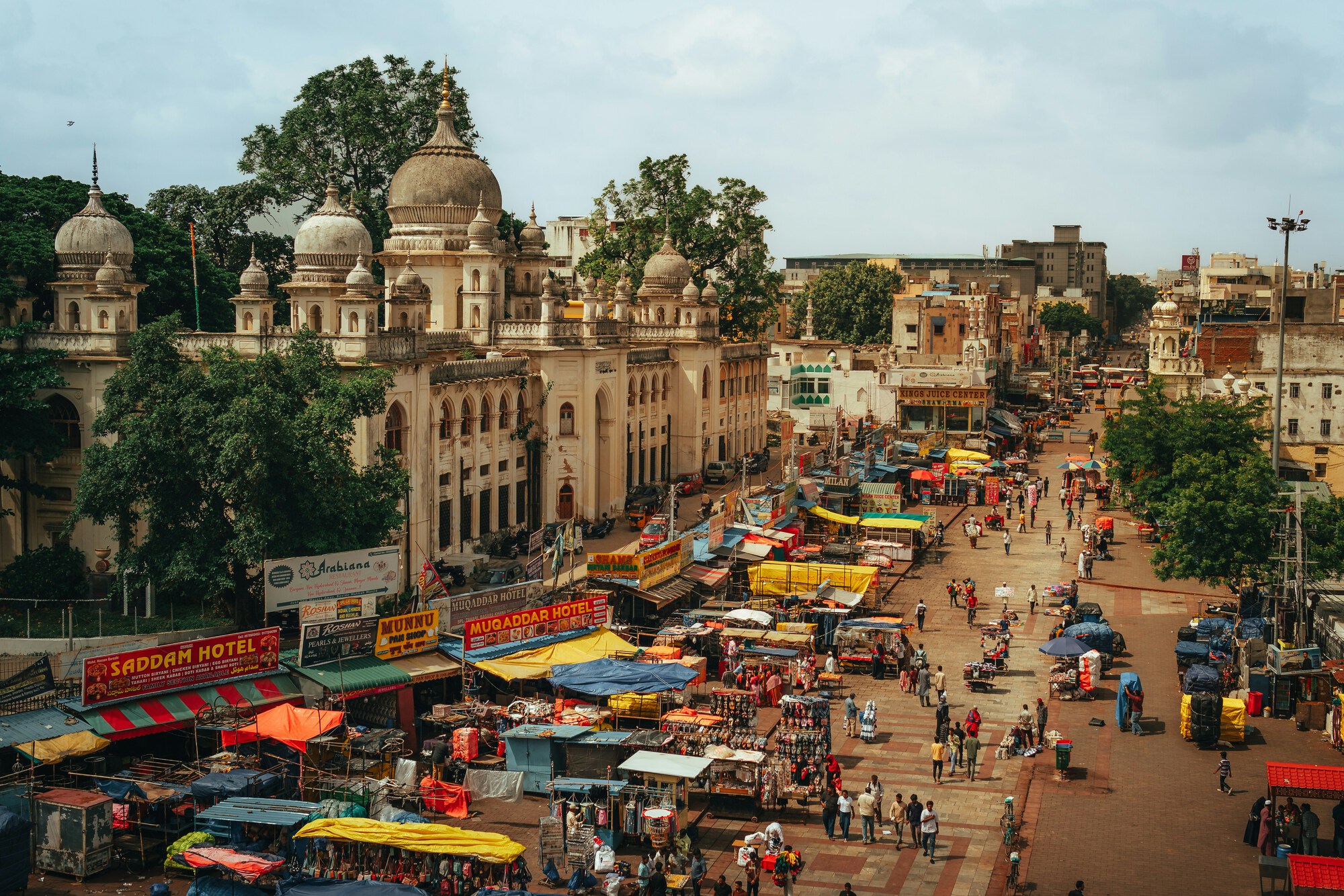
"Architecture is most often represented as a stable object: a building captured at a moment of visual clarity, isolated from surrounding contingencies. Plans, sections, and photographs promise legibility by suspending time. Yet many of the world's most enduring public environments resist this mode of representation altogether. They are not designed to be read instantaneously, nor do they reveal their logic through form alone. Their spatial intelligence emerges gradually, through repetition, occupation, and duration."
"The bazaar belongs firmly within this category. It cannot be understood through a single drawing or a finished elevation. Its organization is not fixed but rehearsed. What sustains it is not purely architectural composition, but shared timing, collective memory, and long-standing patterns of use. Togetherness in the bazaar does not arise from formal design decisions; it is produced through repeated encounters, negotiated proximities, and social familiarity accumulated over time."
Bazaars operate as temporal systems where spatial order emerges through repetition, occupation, and shared timing rather than static form. Markets assemble, intensify, pause, transform, and dissolve across a single day, governed by temporal coordination more than enclosure. Regulation is achieved through repetition and collective memory, not formal enforcement or signage. Conventional architectural tools—plans, zoning, walls—lose relevance as movement, overlap, and behavior become primary. Wayfinding depends on familiarity and memory rather than diagrams. Understanding these environments requires reading time as an organizing framework and prioritizing behavior as architectural material.
Read at ArchDaily
Unable to calculate read time
Collection
[
|
...
]