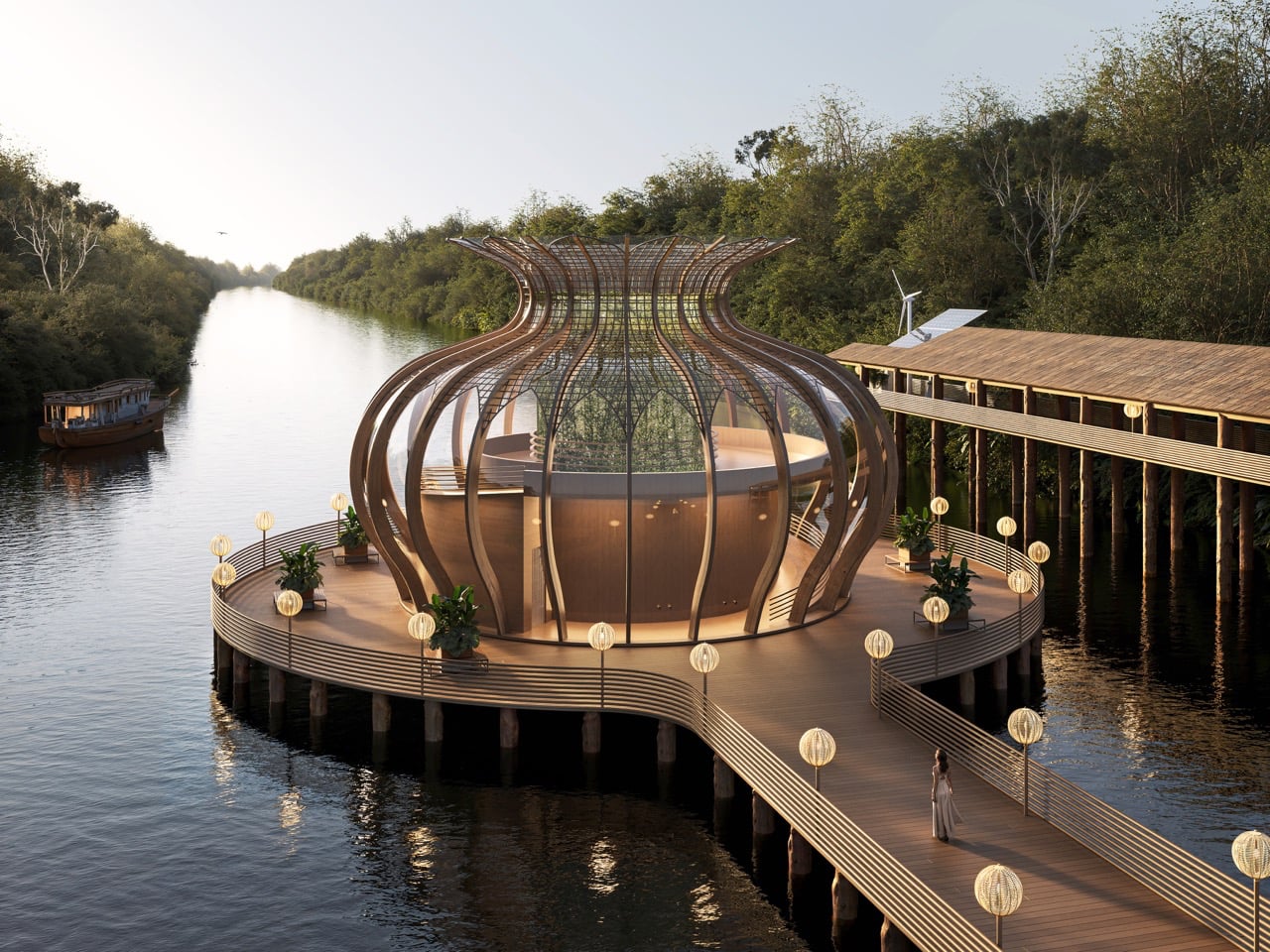
"Designers working across product design and interior architecture view the Amazon not as a backdrop, but as a lesson in how materials, forms, and systems perform under real conditions. Designing in this context means moving away from rigid objects and fixed layouts, and learning from the forest's logic of layering, adaptation, and response to heat, moisture, and constant change. From furniture to spatial planning, every decision must align with the environment rather than resist it."
"In the Amazon, a roof is more than just a cover. It must work like the forest canopy, using layers to control heat and handle heavy rainfall. Instead of a single surface, a layered roof helps reduce heat build-up and protects the interior from extreme weather, creating a naturally cooler living environment. This can be achieved through a double-layer roof system, with an outer protective layer and an inner insulated ceiling. The space between them allows hot air to escape, improving natural ventilation."
Design approaches in the Amazon prioritize systems that adapt to heat, moisture, and continuous change by using layered forms, resilient materials, and responsive spatial strategies. Furniture and spatial planning favor durability, tactile warmth, and reduced environmental impact through material choice and detailing that soften light and diffuse glare. Roof systems emulate the forest canopy with double-layer construction, ventilation gaps, and overhangs to minimize heat gain and manage heavy rainfall. Deep overhangs and screened surfaces create shaded, comfortable interiors that integrate with surrounding nature. Designs behave like living systems: efficient, adaptive, and quietly luxurious while aligning with environmental forces.
Read at Yanko Design - Modern Industrial Design News
Unable to calculate read time
Collection
[
|
...
]