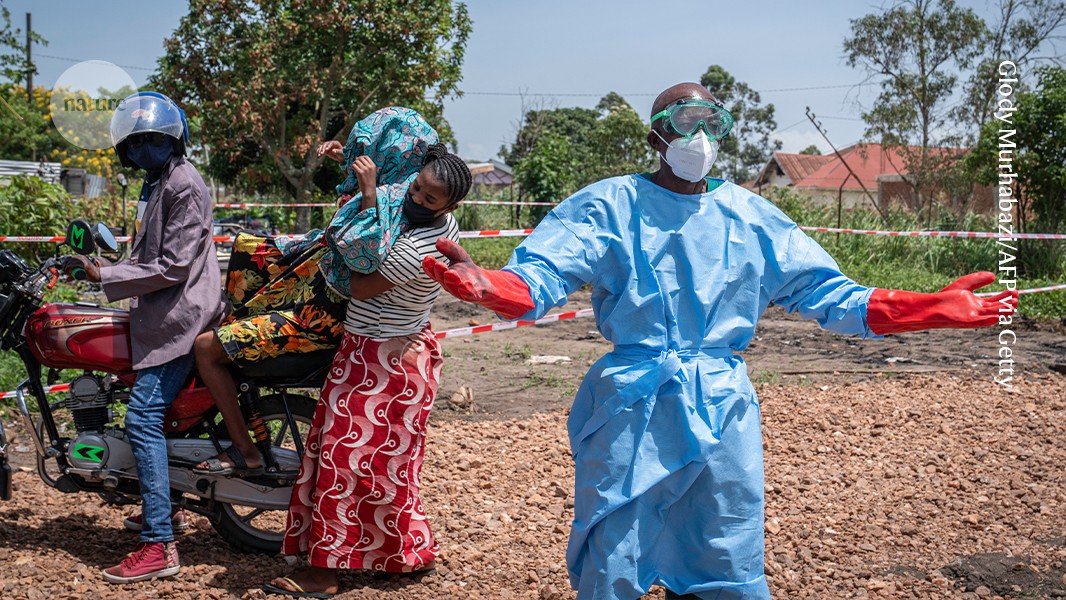
Suspected and confirmed Ebola cases in central Africa rose from 256 on 16 May to about 1,000 by 27 May, with roughly 240 deaths reported. The outbreak is currently confined to the Democratic Republic of the Congo and Uganda and shows no clear signs of slowing. Specialists say control is possible using tools developed from prior Ebola experience, and the DRC has extensive handling expertise due to repeated past outbreaks. A major limitation is the lack of a vaccine or targeted treatment for the specific Bundibugyo ebolavirus causing this outbreak. As a result, rapid diagnosis, isolation, and prevention of further transmission depend on increasing laboratory capacity, testing, and contact tracing, though regional testing capacity is under strain.
"The tally of people with suspected and confirmed cases of Ebola in central Africa is rocketing upwards with shocking speed - from 256 cases on 16 May to roughly 1,000 as of 27 May. According to the World Health Organization (WHO), some 240 people have died - and the outbreak shows no signs of slowing down (see 'Ebola's surge continues'). But specialists say that they have tools to help to control the outbreak, which is for now confined to the Democratic Republic of the Congo (DRC) and Uganda, thanks to hard-won expertise gained during previous Ebola epidemics."
"One challenge is that there is neither a vaccine nor a targeted treatment for the specific virus causing this outbreak, the Bundibugyo species of ebolavirus. This means that other measures will be needed to stop the virus's march. Here are some of the measures that specialists recommend. Increase testing and contact tracing. Ramping up the laboratory capacity to diagnose Ebola is essential to quickly identifying who is infected so that they can be isolated before they spread the virus to others, says Robert Garry, a virologist at Tulane University in New Orleans, Louisiana."
""We should be in a better position to respond" than during previous outbreaks, Ohuabunwo says. One challenge is that there is neither a vaccine nor a targeted treatment for the specific virus causing this outbreak, the Bundibugyo species of ebolavirus. This means that other measures will be needed to stop the virus's march."
#ebola #public-health-response #epidemiology #testing-and-contact-tracing #democratic-republic-of-the-congo
Read at Nature
Unable to calculate read time
Collection
[
|
...
]