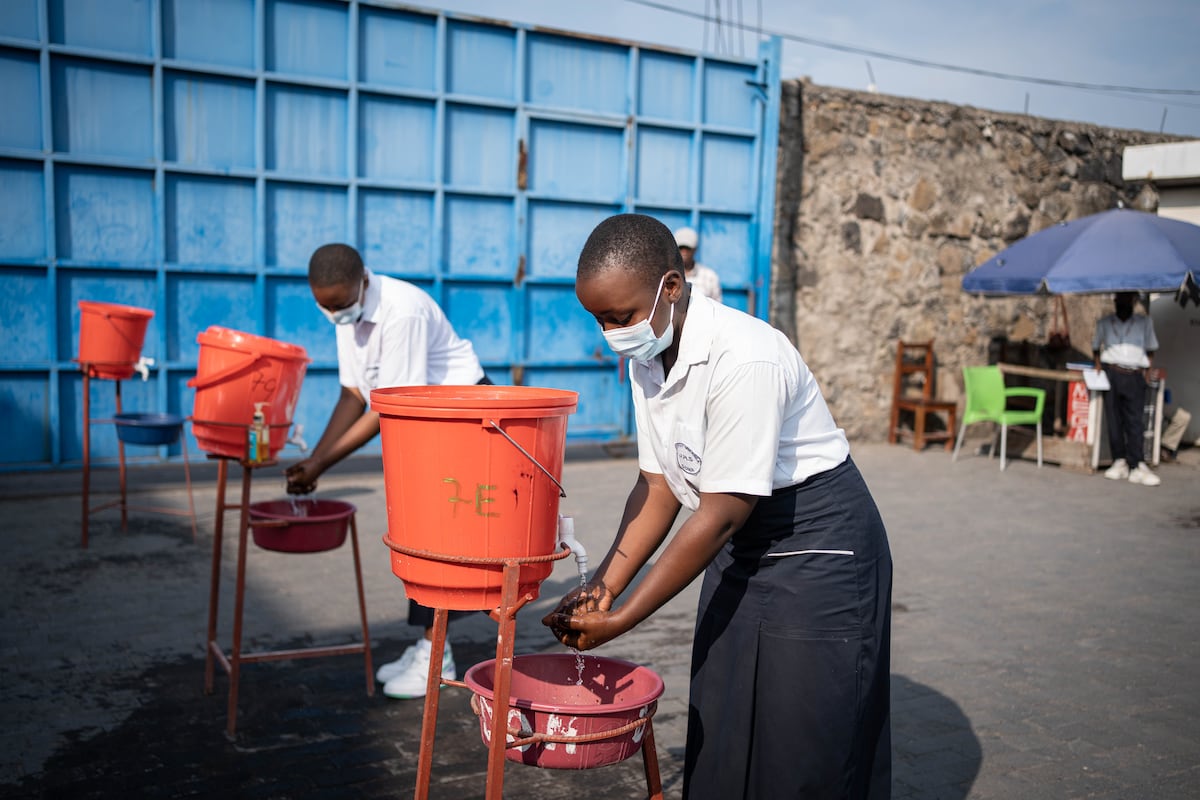
Ebola spread in Ituri province in northeastern Democratic Republic of the Congo after an already severe health situation marked by cholera outbreaks, diarrheal diseases, and thousands displaced. The Bundibugyo variant has no vaccines or treatments, and the outbreak is centered in a border area with large population movements and difficult access due to conflict. The virus has rapidly increased from fewer than a hundred cases to more than 500 in four days, with 130 deaths. Response tools are limited, requiring focus on early detection, contact tracing, and diagnostic capacity. Breaking transmission depends on isolating infected people and ensuring safe burials, while the government opens treatment centers for symptom management.
"Before Ebola began to spread last April, the health situation in Ituri province in northeastern the Democratic Republic of the Congo (DRC) was already dire, with cholera outbreaks, diarrheal diseases, and thousands displaced from their homes. But what is coming now is a major crisis. With a strain for which there are no vaccines or treatments the Bundibugyo variant and with the epidemic's epicenter in a border area with large population movements and zones difficult to access because of conflict, this outbreak is very worrying."
"The tools we have to tackle it are greatly reduced, which forces us back to the essentials: early detection, contact tracing, and diagnostic capacity, Molfino adds. The virus is moving quickly and has gone from fewer than a hundred cases to more than 500 in just four days, with 130 deaths. The Congolese government has announced the opening of three treatment centers, where symptoms will be managed until something better is developed."
"That is why the key now is to break chains of transmission through isolating infected people and ensuring safe burials. Lucas Molfino, medical director of MSF Switzerland."
"The 20142016 Ebola epidemic in West Africa marked a turning point in the response to this disease, which was first identified in 1976. For nearly half a century, outbreaks in more or less remote areas of countries such as Gabon, the Republic of the Congo, the DRC, Uganda, and Sudan followed a familiar patt"
Read at english.elpais.com
Unable to calculate read time
Collection
[
|
...
]