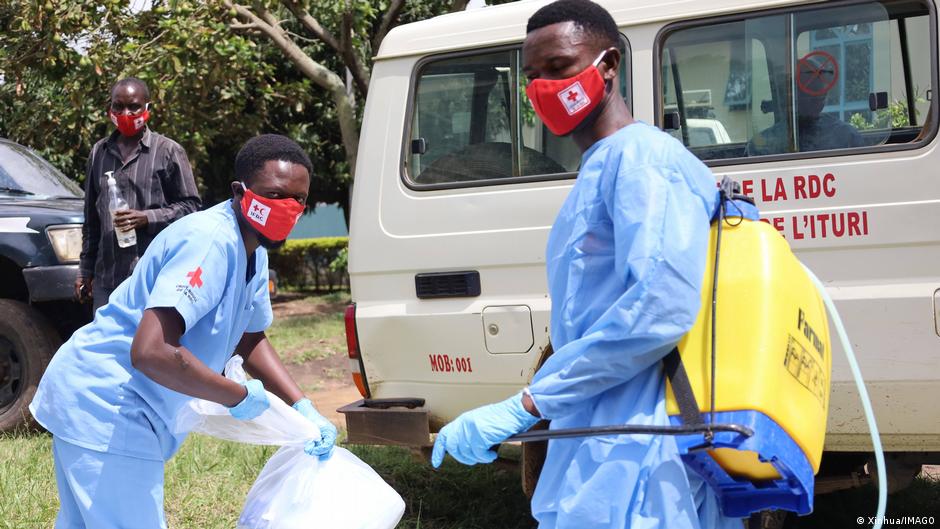
Ebola spreads through person-to-person contact with body fluids such as blood, saliva, feces, and urine, and can also be present in semen after recovery. Transmission requires direct access through mucous membranes in the mouth, nose, or eyes, or through cuts and wounds on skin, since intact skin blocks entry. Infected people shed large amounts of virus in these fluids, creating high risk for healthcare workers handling bodily secretions without protection and for family members caring for sick relatives during late-stage illness when viral load peaks. After entry, the virus replicates at the site in lymph nodes, then spreads through the bloodstream to multiple organs. It targets immune defenses first, disabling the body’s ability to recognize and destroy the virus.
""The Ebola virus is spread from person to person by body fluids. So that means by blood, by saliva, possibly by feces, by urine, and also we now know in persons who are recovered through the semen.""
""The virus will always replicate at the site of entry in the lymph nodes, but then it spreads throughout the body and gets carried away by cells through the bloodstream to different organs.""
""How Ebola virus enters the body The virus needs direct access through mucous membranes in the mouth, nose or eyes, or via cuts and wounds on skin. Intact skin provides a barrier, but any breach becomes an entry point.""
Read at www.dw.com
Unable to calculate read time
Collection
[
|
...
]