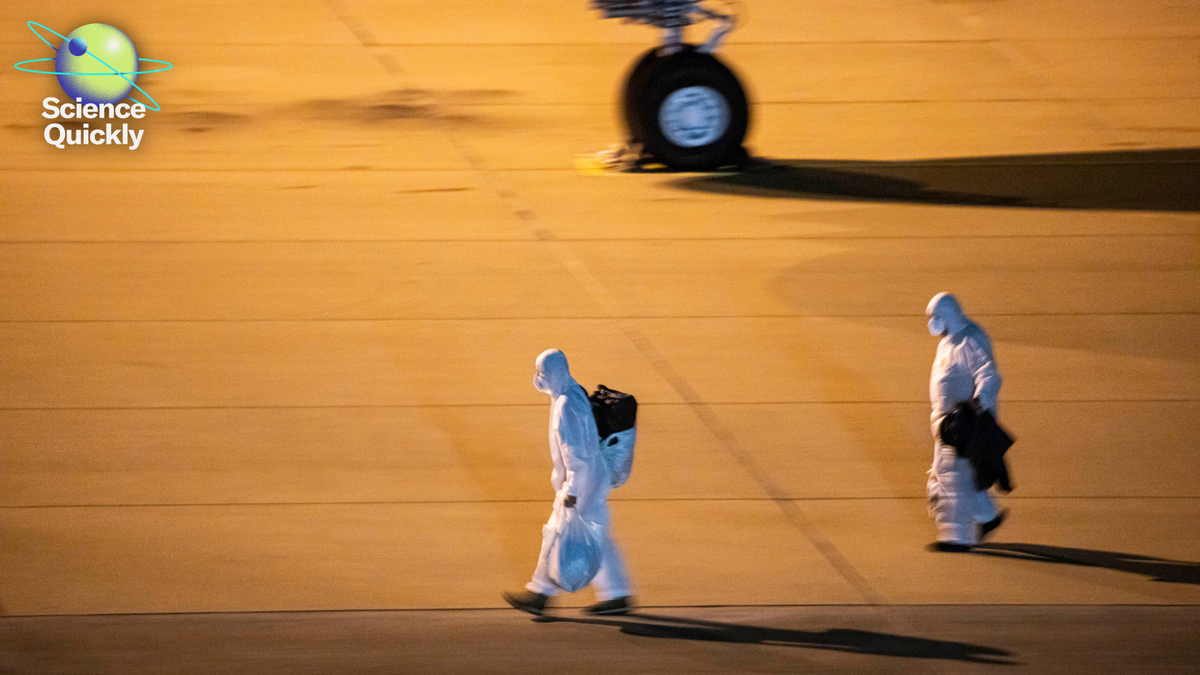
"More people have been confirmed to have the virus or are suspected to have it. We're now up to 11 suspected cases and three deaths, two of which were confirmed cases, I believe. While there are more cases the virus has not spread, you know, wildly, and these are all cases that were passengers on the ship itself, so we have yet to see sort of secondary cases. So it's somewhat reassuring."
"But we still don't completely understand all the ways that it transmits. This virus could still transmit through the air. We're not talking about, you know, COVID-like virus that is very, very transmissible, but the hantavirus Andes variant has been known in the past to spread among people in close contact but also in situations like a party, where there was, you know, people just talking to each other in an enclosed space."
"But the general public probably isn't going to encounter it anytime soon, hopefully. It's more of a concern for people who had contact with individuals who were on that ship."
Eleven suspected hantavirus cases and three deaths have been reported, including two confirmed deaths. Despite the increase in suspected cases, the virus has not spread widely, and all identified cases are linked to passengers on the same ship, with no secondary cases observed yet. Transmission is not fully understood, and airborne spread remains a possibility. The Andes variant has previously been associated with person-to-person spread in close contact and in enclosed social settings such as parties. The risk is therefore mainly relevant to people who had contact with individuals who were on the ship, rather than the general public.
Read at www.scientificamerican.com
Unable to calculate read time
Collection
[
|
...
]