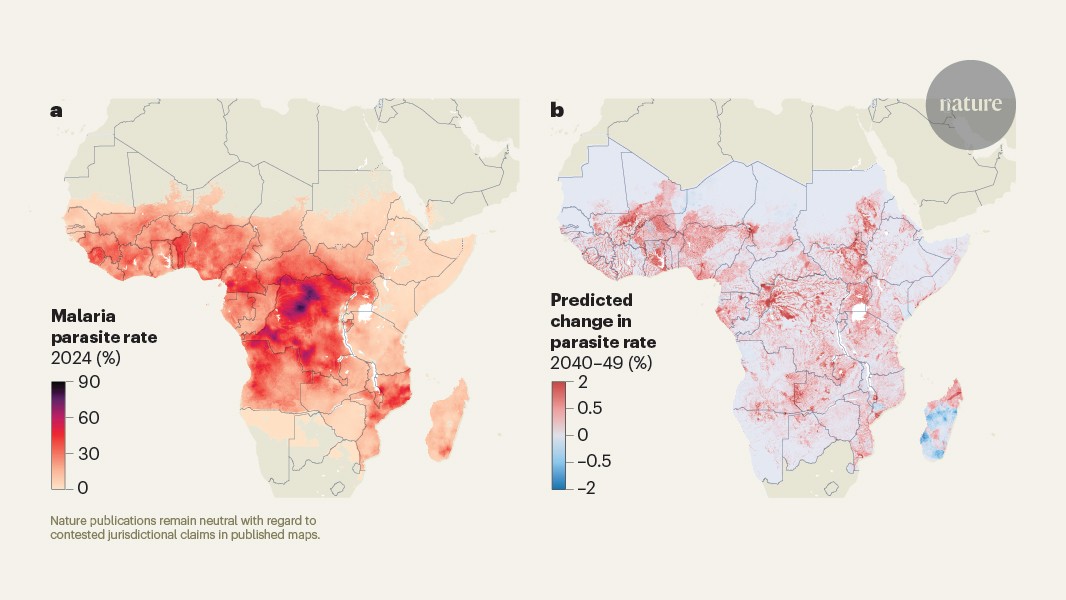
Climate change affects malaria transmission through temperature and rainfall impacts on Anopheles mosquitoes and Plasmodium parasites. Decades of research have produced inconsistent predictions about malaria spread in Africa, typically emphasizing geographic expansion rather than disease intensification in existing endemic areas. Recent research contextualizes climate change within real-world social and public health systems that determine malaria risk. Extreme weather events present more immediate dangers to disease control infrastructure and effectiveness than gradual warming trends, requiring urgent attention to system resilience alongside long-term climate adaptation strategies.
"Temperature and rainfall influence where malaria-carrying mosquitoes such as Anopheles species can survive and how well malaria parasites, such as Plasmodium falciparum, develop in them. Past predictions have been inconsistent and have often focused on where malaria might spread, rather than on how severely it could intensify where it already exists."
"Writing in Nature, Symons et al. confront this debate by placing climate change in the real-world context of the social and public-health systems that govern malaria risk."
#climate-change-and-malaria #extreme-weather-events #disease-control-systems #public-health-infrastructure #mosquito-borne-diseases
Read at Nature
Unable to calculate read time
Collection
[
|
...
]