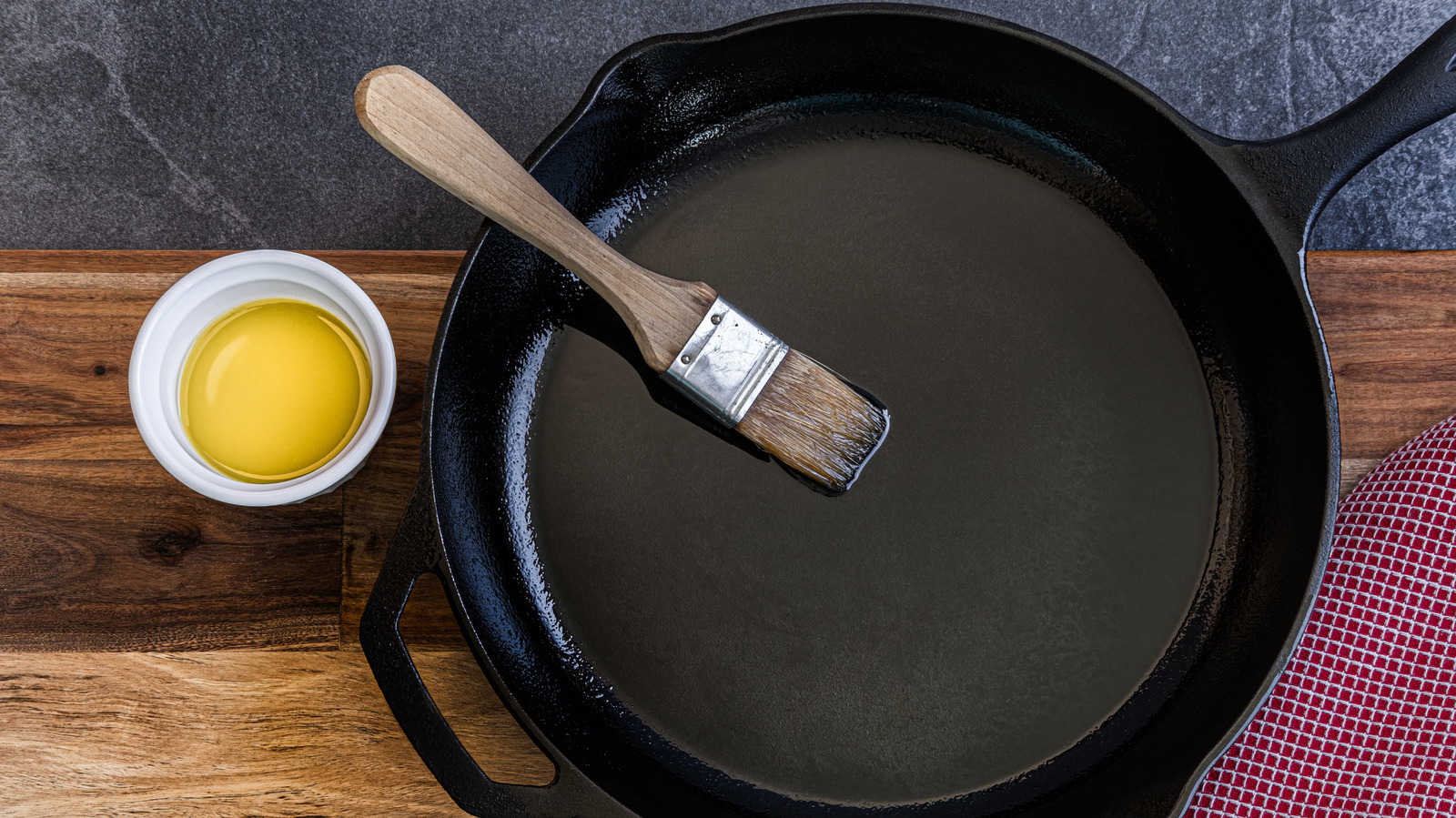
"Seasoning cookware is all about chemistry, particularly when it comes to cast iron, which requires oil that can polymerize properly. Polymerization happens when oil is heated past its smoke point and transformed into a hard, dark layer that bonds to your pan. That layer is essential for giving well-seasoned pans their slick, nonstick surface."
"Seasoning requires sustained heat at or above 400 degrees Fahrenheit, which makes canola or vegetable oil your best bet. Olive oil has a lower smoke point than other oils, which is also why you should think twice before using it to fry foods."
"On stainless steel especially, oil doesn't bond the way it does to cast iron. It just sits there, being all sticky. Dust clings to it. Heat can cause it to discolor. What started as a quick little cosmetic fix can quickly become a cleaning headache."
Olive oil, while versatile and flavorful for cooking, is unsuitable for seasoning or polishing cookware. Seasoning cast iron requires oil that polymerizes at temperatures above 400 degrees Fahrenheit, creating a hard, protective layer that prevents sticking and rust. Olive oil's low smoke point makes it ineffective for this process; canola or vegetable oil are better choices. On stainless steel, olive oil fails to bond properly and instead sits on the surface, attracting dust and discoloring with heat. Over time, it leaves streaks and grime buildup, creating cleaning problems rather than improving appearance.
Read at Tasting Table
Unable to calculate read time
Collection
[
|
...
]