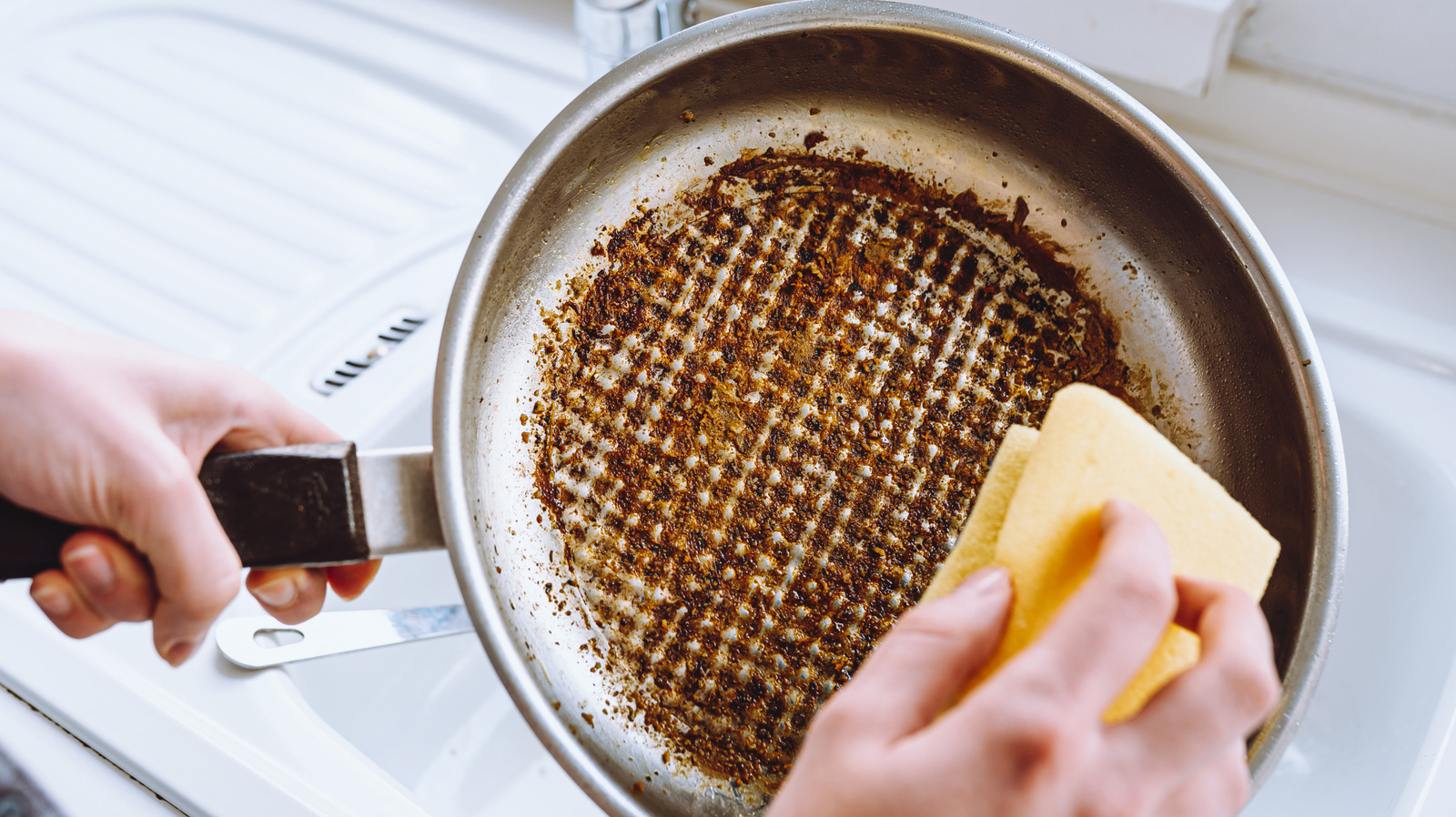
"The secret to cleaning burned-on messes with rhubarb is to chop the stalks into pieces, place them in the dirty pot or pan, and boil them in water for 10 to 30 minutes, depending on the pot's size and how full it is. Your goal is to reduce the rhubarb and burnt residue down into a thick, gluey sludge. Watch the pot as it boils to keep an eye on its progress."
"Rhubarb is rich in oxalic acid, just like potatoes ( which are perfect for cleaning cast iron). Oxalic acid is much stronger than the acetic acid found in vinegar. This is the same substance found in heavy-duty cleaners like Bar Keepers Friend. It's used in industrial rust cleaning products because it works by breaking chemical bonds at a molecular level, turning that stubborn residue into a water-soluble salt that rinses off."
Chopped rhubarb stalks boiled in water for 10 to 30 minutes reduce burnt residue into a thick, gluey sludge that can be rinsed away. The process requires monitoring to prevent the pot from boiling dry, especially with heavy carbonized mess or insufficient water. Rhubarb's effectiveness comes from oxalic acid, which breaks chemical bonds and converts residue into water-soluble salts. Oxalic acid is stronger than vinegar's acetic acid and is used in heavy-duty cleaners and rust removers. The method offers a non-abrasive alternative to scrubbing with steel wool or baking soda and leaves cookware clean after a final wash.
Read at Tasting Table
Unable to calculate read time
Collection
[
|
...
]