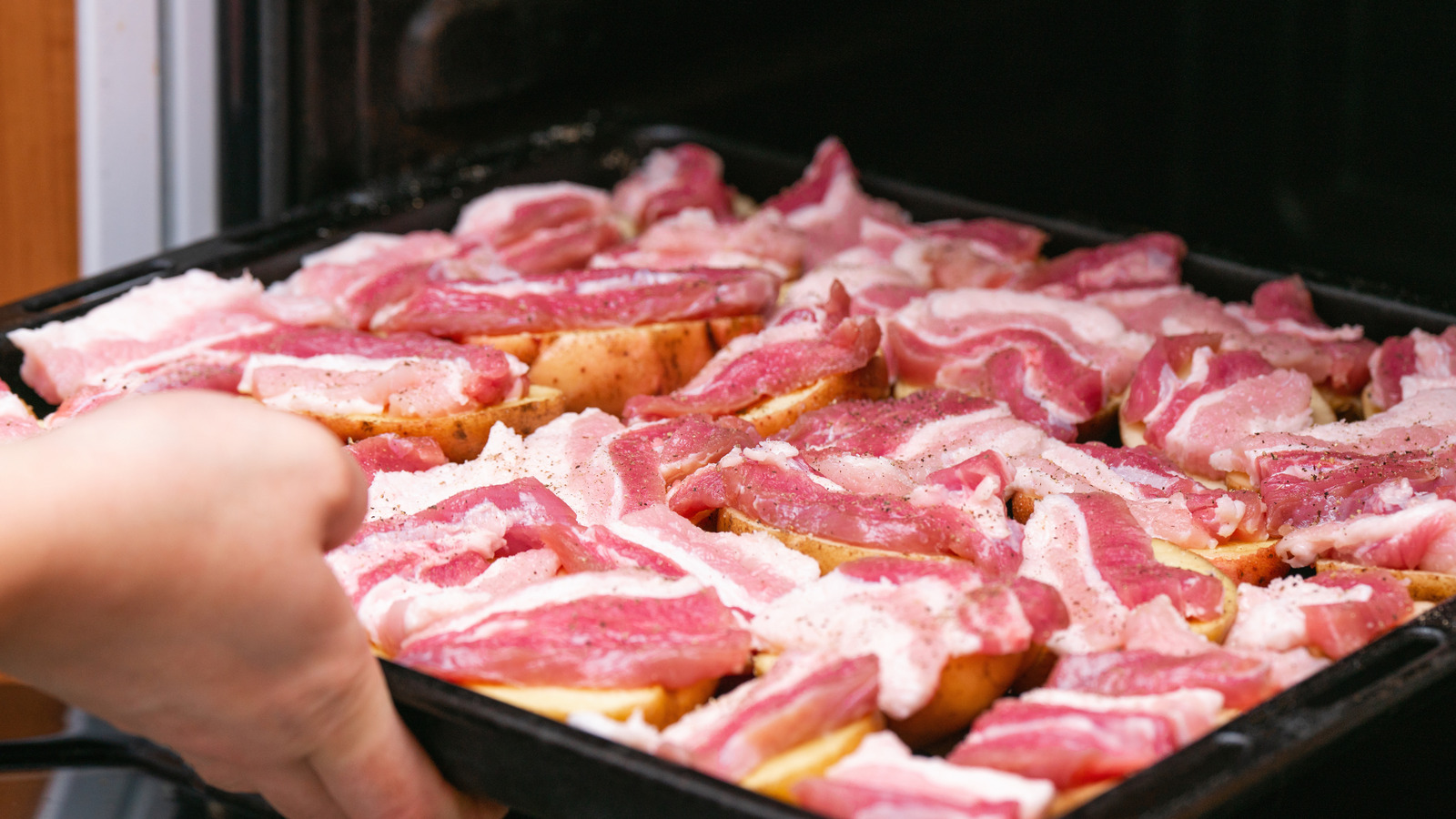
"If you look for recipes for cooking bacon in the oven, many recommend lining a baking sheet with foil and placing the cooling rack on top. Then, bacon is arranged on the rack. The idea here is that the fat will drip from the bacon onto the baking sheet and you'll get a crispier, less greasy end product. What you also get is a bigger mess to clean up."
"Cooling racks used for bacon are especially hard to clean. It's not just grease; the fat clings to the wires and can take a lot of scrubbing to remove. If you have ever tried to scrub into the little squares to get those bits off, you know just how long this job can take."
"By allowing the fat to drip down, you're drying the bacon out. The trade-off in crispiness is negligible because it's going to crisp up just fine on a baking sheet without the cooling rack."
Bacon reached peak popularity in the early 2000s but became overused by the 2010s. Today it has returned to being a complementary ingredient in many dishes. While oven cooking produces crispy bacon, many recipes recommend using a cooling rack to allow fat to drip away. However, this approach creates significant cleanup challenges, as grease clings stubbornly to the cooling rack's wires. Cooking bacon directly on a foil-lined baking sheet without a cooling rack produces equally crispy results. The fat does not prevent crispiness, and the negligible difference in texture does not justify the extra scrubbing required to clean the cooling rack.
Read at Tasting Table
Unable to calculate read time
Collection
[
|
...
]