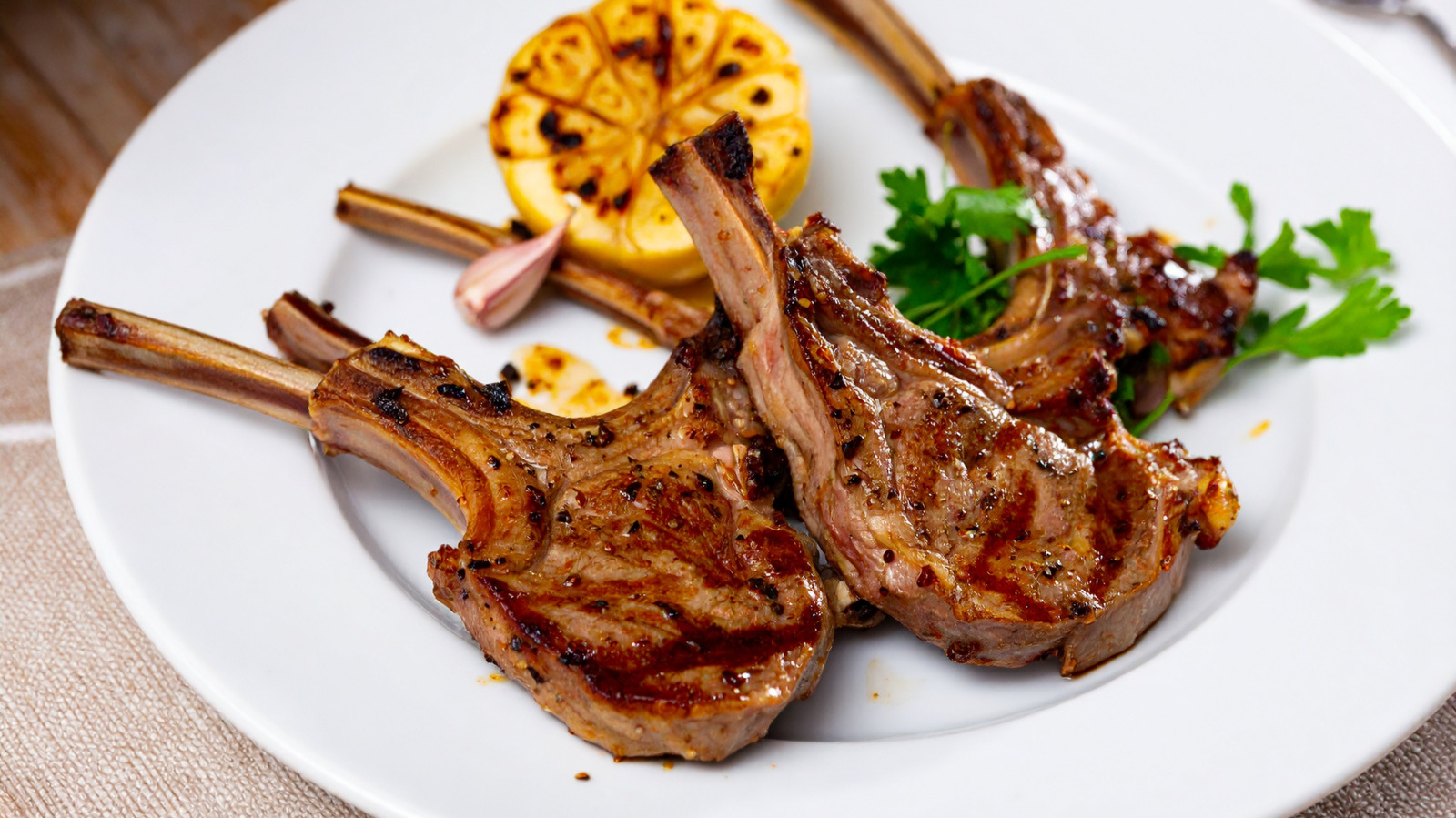
"Many chefs prefer to keep the fat intact because that's where a lot of the lamb's natural flavor lives. When you roast it, the fat melts right into the meat, essentially giving you a built-in basting system to keep the entire thing moist and tender throughout its stint in the oven. While that's great and all, some chefs prefer to trim the fat off for a practical reason: a really thick cap can take longer to render during cooking."
"try leaving about ⅛ or ¼ inch of the fat and crosshatching it. This will still let you enjoy some of that flavor-boosting fat while still having it render nicely as the lamb cooks. And if you decide to trim it down further? That's perfectly fine, too. Your dinner, your rules! Sure, you can grill your lamb rack as-is - and look, plenty of people do, no judgment. But why not slather it with Dijon mustard before it hits the heat?"
Keeping some fat on a rack of lamb preserves natural flavor and melts into the meat, creating a built-in basting system that keeps the roast moist and tender. A very thick fat cap can take longer to render, risking uneven cooking with chewy exterior fat and perfectly cooked meat. Trimming excess fat yields faster, more uniform results. A practical compromise is to leave about 1/8 to 1/4 inch of fat and crosshatch it to promote rendering while retaining flavor. Brushing the rack with Dijon mustard before grilling creates a fragrant, peppery crust with minimal effort.
Read at Tasting Table
Unable to calculate read time
Collection
[
|
...
]