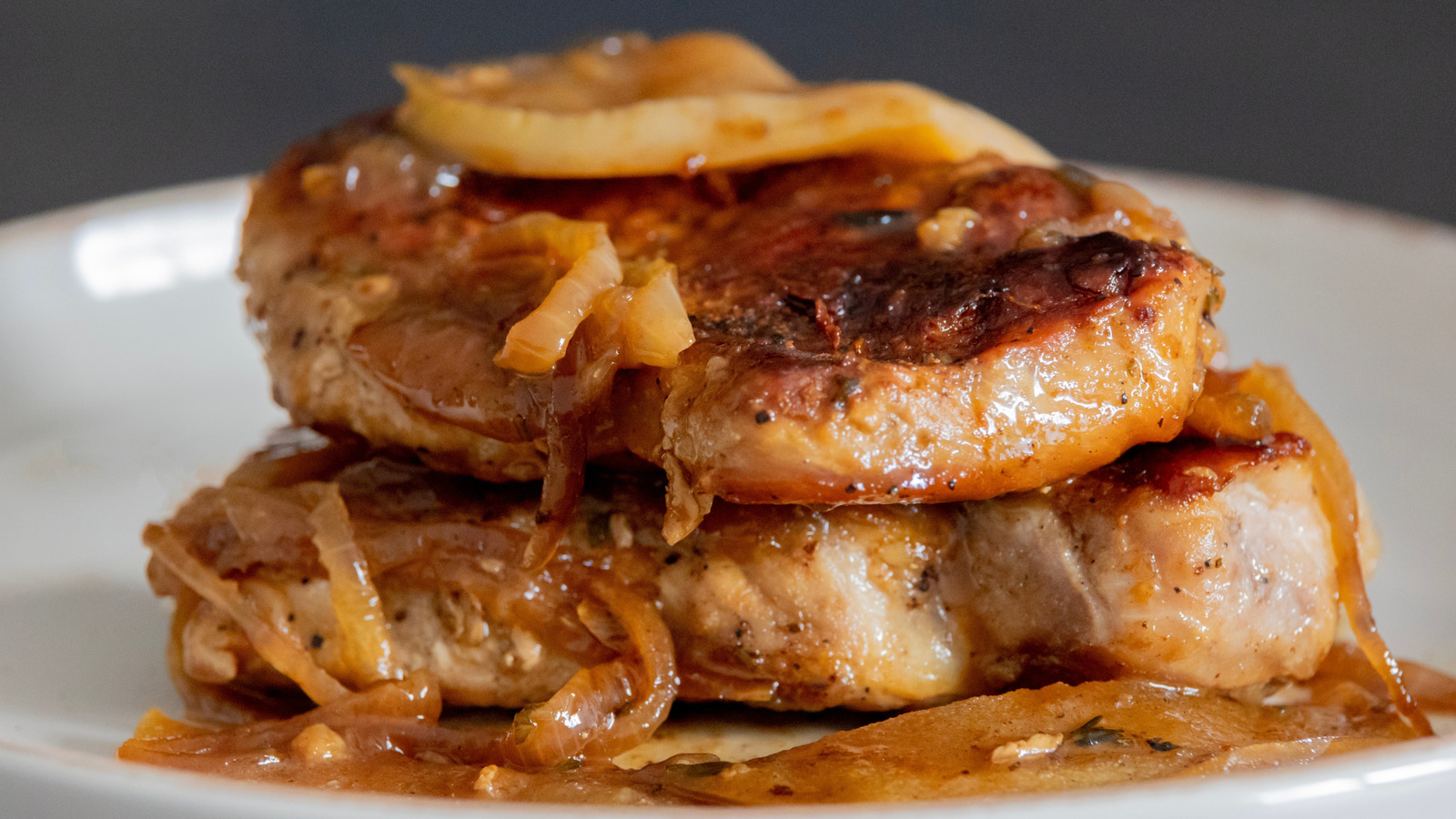
Pork and apples are natural culinary partners, with the fruit's sweetness balancing pork's salty, savory qualities. The optimal cooking method involves preparing pork in a skillet, then cooking apples in the same pan to absorb residual flavors, juices, and fat. Gordon Ramsay demonstrates this technique by searing bone-in pork chops in butter, then adding sliced apples with seasonings to caramelize and release their juices. The cooked apples are served alongside the meat with apple juice drizzled back onto it. This approach can be elevated by selecting apple varieties that maintain their shape, such as Granny Smiths, Fujis, or Pink Lady apples, rather than varieties that become mushy.
"If you're looking for an even better way to marry these complementary ingredients, though, you should try cooking the apples in the same skillet that you cooked your pork in. For example, if you're making seared pork chops, add the fruit back to the skillet after you've cooked the pork so that it can soak up all the flavor, juice, and leftover pork fat that may have been left behind."
"Gordon Ramsay tried a similar technique in his shake-and-bake pork chop recipe. He cooks his bone-in chop in a cast-iron skillet with plenty of frothing butter, per a video shared on his YouTube channel. Once he removes the butter-basted pork chop from the pan, he adds in sliced, skin-on apples and basic seasonings like salt, pepper, and brown sugar. He continues to cook them in the pan, allowing them to caramelize, release their juices, and, presumably, soak up all that residual pork juice."
"For one, you can play with the types of apples that you use to bring out more tangy or sweet flavors. Our go-to apple varieties for pairing with pork include ones that hold their shape and don't turn mushy; leave McIntoshes and Red Delicious out of it, and opt for Granny Smiths, Fujis, or Pink Lady apples instead."
Read at Tasting Table
Unable to calculate read time
Collection
[
|
...
]