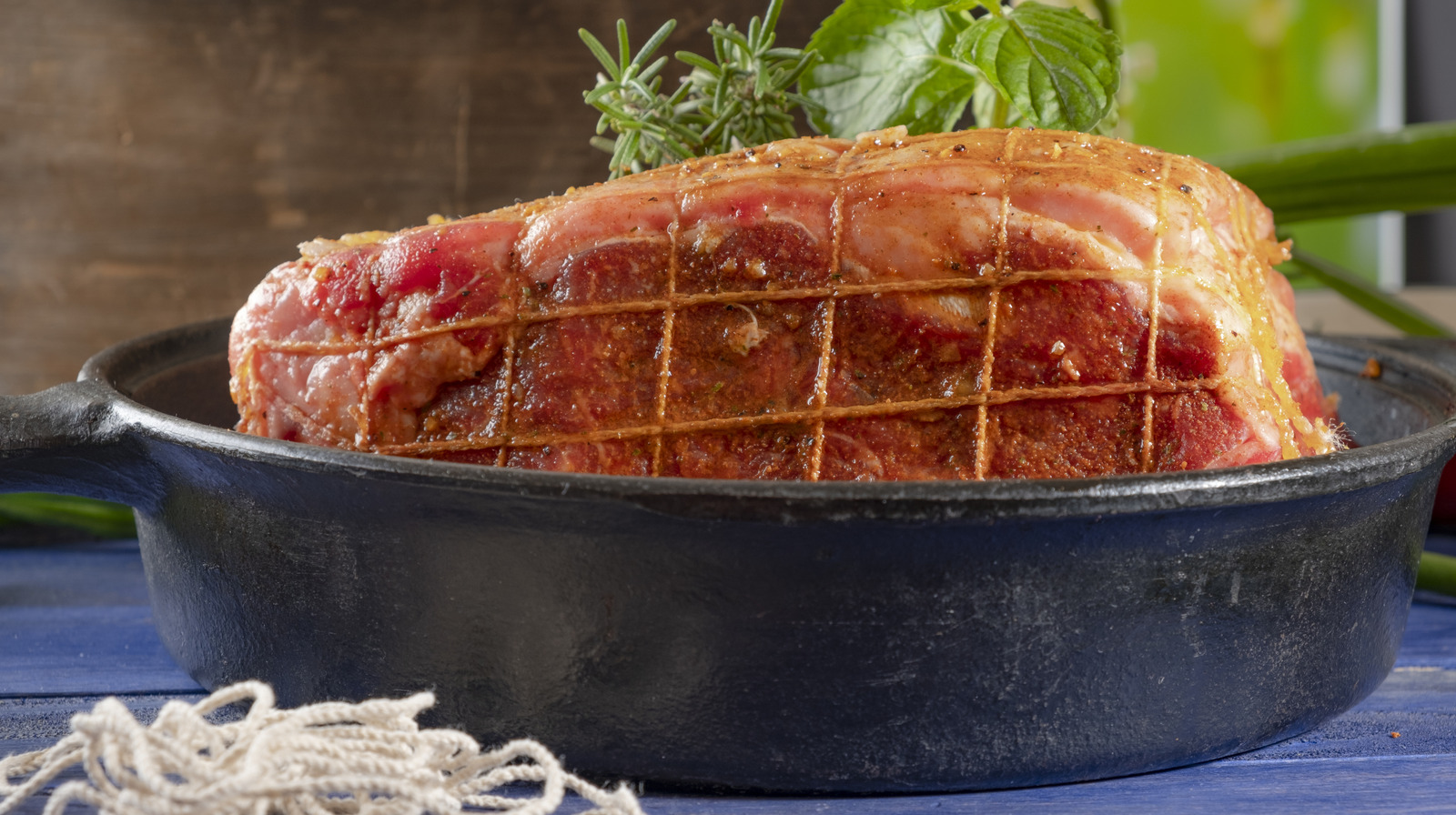
""Fold maybe 6-8 inches of that tapered in back on itself and tie it off. That will make the skinny end much closer to the thickness of the fat end and allow for the roast to cook evenly," he says. "Trussing the rest of the tenderloin with tight circles of butcher's twine every couple inches will also keep the tenderloin round rather than allowing it to flatten out, which will also help with cooking evenly.""
"If you have never trussed a beef roast before, it can be a little intimidating to take on for the first time. This is one of those things where you just have to try it and refine your technique. Thomas recommends using a single long piece of string instead of multiple smaller ones, which require more knots. Not only will this help the roast cook evenly, but it also gives it a shape that's easier to carve when it's done. It prevents the meat from spreading and getting messier when it cooks. It's a good"
Trussing binds a beef roast with butcher's twine to keep it in a tight package during cooking. Trussing is especially useful for beef tenderloin because the cut tapers from a thick end to a thin end; folding 6–8 inches of the tapered end back and tying it evens the thickness. Wrapping tight circles of twine every couple of inches keeps the roast round and prevents flattening. Using a single long piece of string reduces knots and simplifies the process. Trussing promotes even cooking, neater presentation, and easier carving, and improves with practice.
Read at Tasting Table
Unable to calculate read time
Collection
[
|
...
]