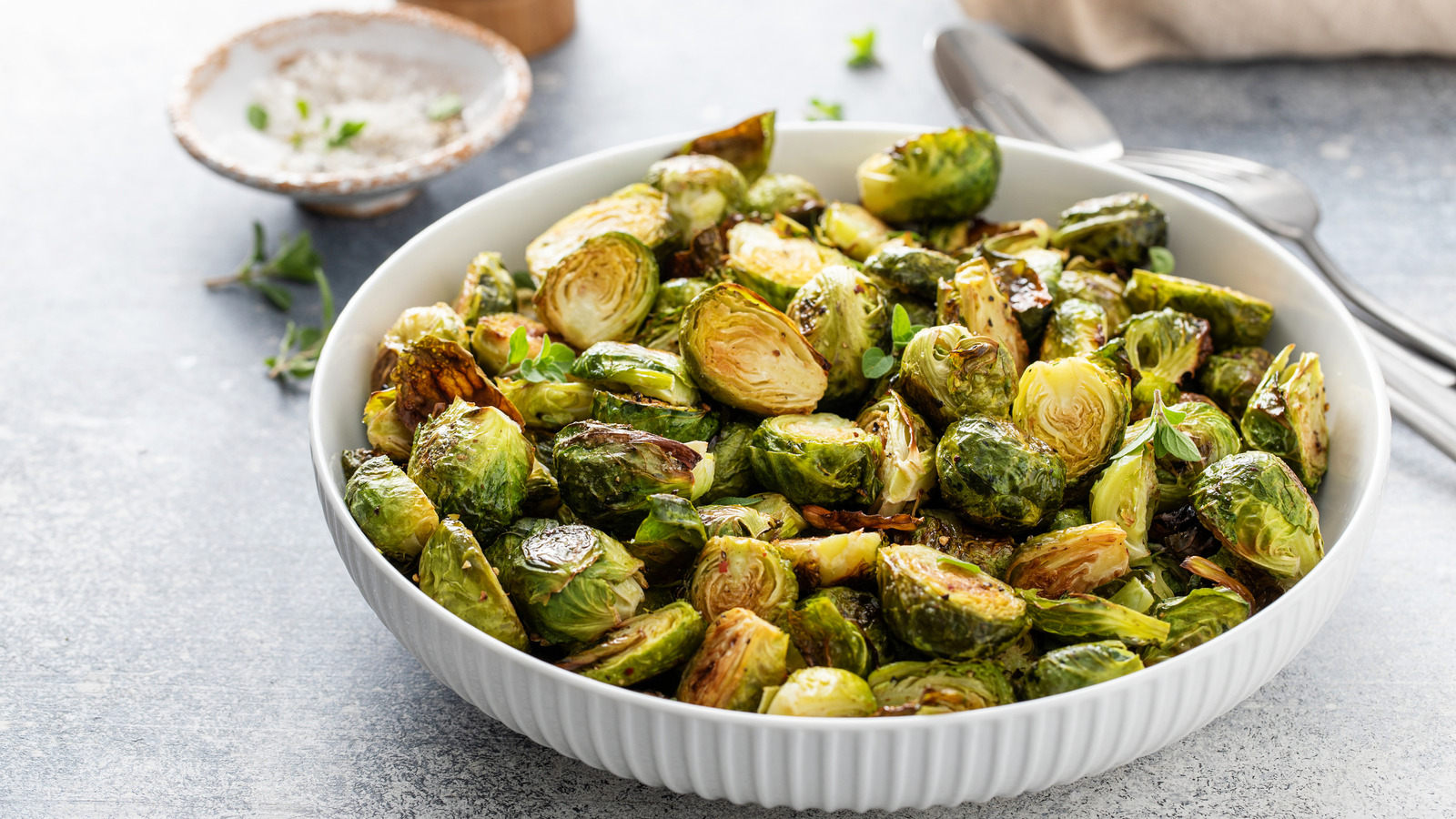
"When you pull a tray of roasted Brussels sprouts out of the oven, you might find two very different bites staring back at you. Some will collapse on the fork, while others resist with an unwanted, al dente defiance. What has happened is explained by the simple physics of heat applied to disparate sizes. Brussels sprouts, which are selectively-bred cousins of cabbages, may look cute and uniform in the bag,"
"Whole sprouts steam inside as they brown on the outside, and halving a sprout exposes the cut side to the heat and allows direct heat to reach the tight inner leaves, speeding cooking and caramelization. Quartered sprouts are smaller, have even more surface area and will cook the fastest, and so on. When you mix these shapes and sizes, you're mixing different cook times, which guarantees the dreaded double-texture problem. Put simply, this is one of the biggest mistakes"
Brussels sprouts vary internally by size and maturity, producing inconsistent textures when roasted together. Smaller sprouts have looser, airier leaves while larger ones have denser, tougher layers, so identical cooking yields both collapse and al dente bites. Cutting alters heat exposure: halving exposes inner leaves to direct heat for faster cooking and caramelization, while quartering increases surface area and speeds cooking further. Mixing whole, halved, and quartered sprouts creates different cook times and a double-texture result. Sorting sprouts by size and choosing uniform cuts gives each piece an equal chance to roast evenly and achieve tender-crisp cohesion.
Read at Tasting Table
Unable to calculate read time
Collection
[
|
...
]