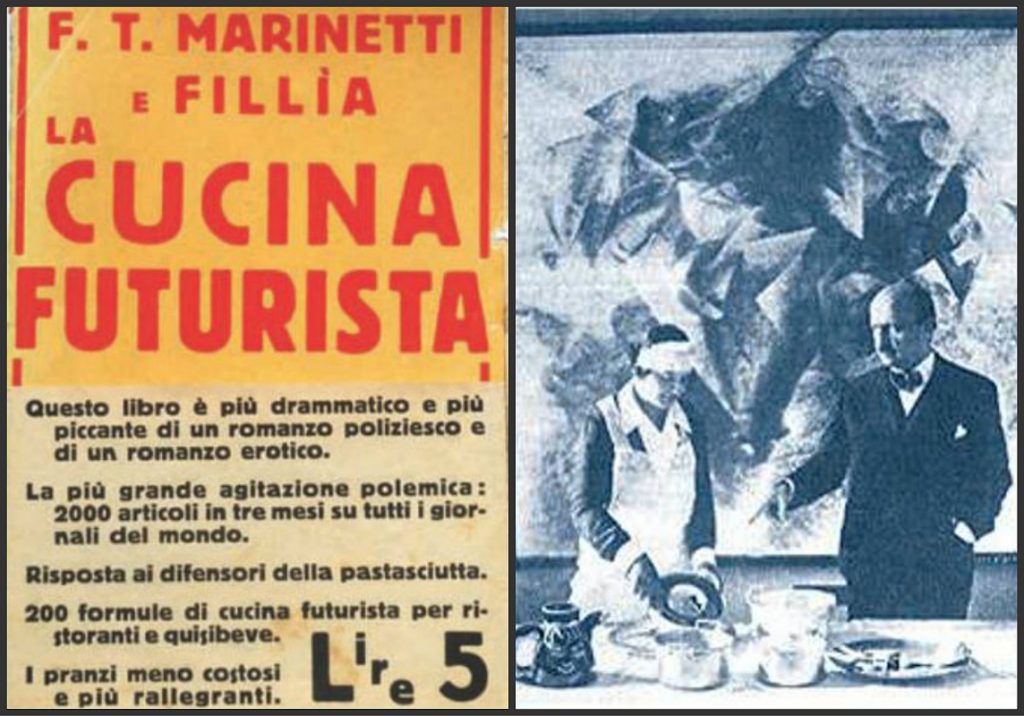
"We would be mistaken, suggested Futurist poet and theorist F.T. Marinetti (1876-1944), should we neglect to see cooking as an art form akin to all the others in its moral and intellectual influence on us."
"Just as he had sought with his earlier Futurist Manifesto to revolutionize art, Marinetti intended his cookbook to foment a 'revolution of cuisine,' as Alex Revelli Sorini and Susanna Cutini point out. You might even call it an act of war when it came to certain staples of Italian eating, like pasta."
Arts funding cuts may necessitate a return to patronage systems reminiscent of the Gilded Age, where wealthy individuals controlled artistic production. Haute cuisine has historically depended on wealthy patronage and remains accessible primarily to select audiences due to food's inherent nature. F.T. Marinetti, a Futurist poet and theorist, recognized cooking as an art form equivalent to others in its moral and intellectual impact. His Futurist Cookbook represented a deliberate revolution in cuisine, challenging traditional Italian culinary staples like pasta. Unlike whimsical artist cookbooks such as Salvador Dalí's or MoMA's collections, Marinetti's work approached food preparation with serious, aggressive intent to fundamentally transform eating practices.
#futurism-and-cuisine #art-and-food #marinettis-culinary-revolution #patronage-systems #artistic-manifestos
Read at Open Culture
Unable to calculate read time
Collection
[
|
...
]