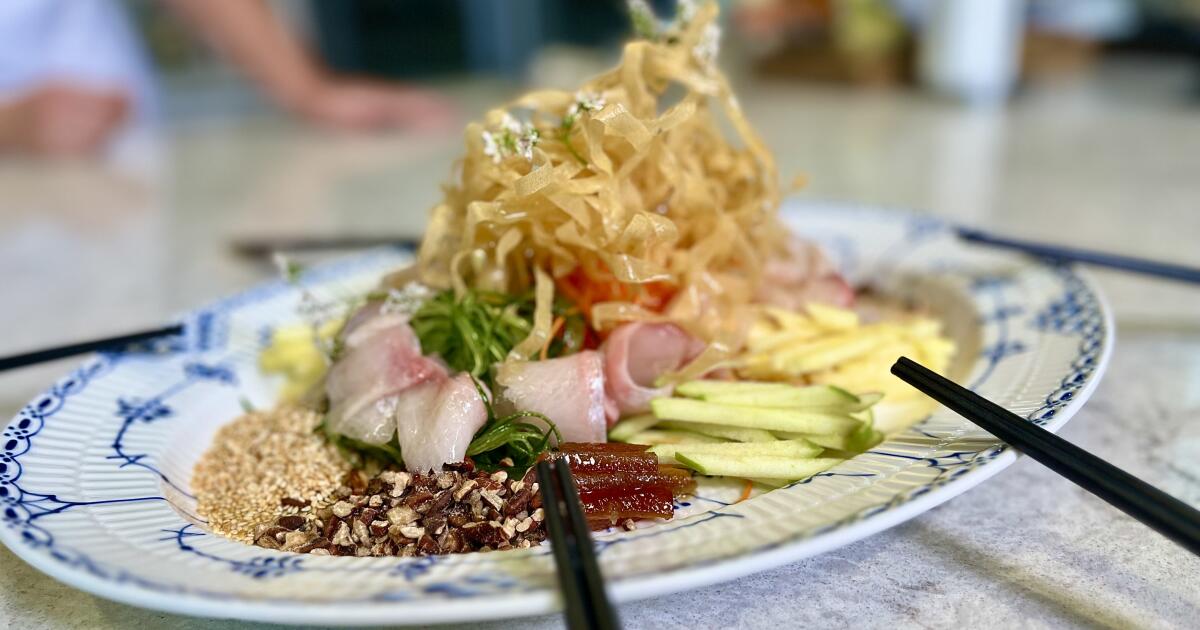
"Carrots are considered key for good luck blessings. Green daikon symbolizes eternal youth, as does cucumber, which can also mean a fresh start, while white daikon is considered good for business success. Sometimes Tan uses strips of purple cabbage (associated with the wish for a large and prosperous family), but in the Times Test Kitchen he used green apple, pineapple and candied orange, all of which are considered auspicious."
"Made with raw fish and thin, long slices of vegetables and fruit, it's a wonderful salad to serve any time of the year. But during Lunar New Year celebrations, especially on the seventh day (Feb. 23 this year), families and friends often gather around the yu sheng platter and then toss the salad with their chopsticks while shouting "Huat ah!" or other wishes for prosperity and good fortune in the new year."
Chef Zor Tan showcased yu sheng, also called lo hei or prosperity toss, a Lunar New Year specialty of raw fish and long, thin vegetable and fruit strips. The dish is tossed with chopsticks while diners shout wishes such as "Huat ah!" to invite prosperity. Any sashimi-grade fish can be used; Tan prefers hiramasa (yellowtail kingfish). Ingredient choices carry symbolic meanings: carrots for luck, green daikon and cucumber for youth or fresh starts, white daikon for business, and purple cabbage for family. Tan favors pecans over peanuts, yuzu over plum sauce, fried spring-roll wrapper strips for crunch, and toasting sesame seeds himself. Vegetables should be cut into long strips; a sharp knife can substitute for a mandoline.
Read at Los Angeles Times
Unable to calculate read time
Collection
[
|
...
]