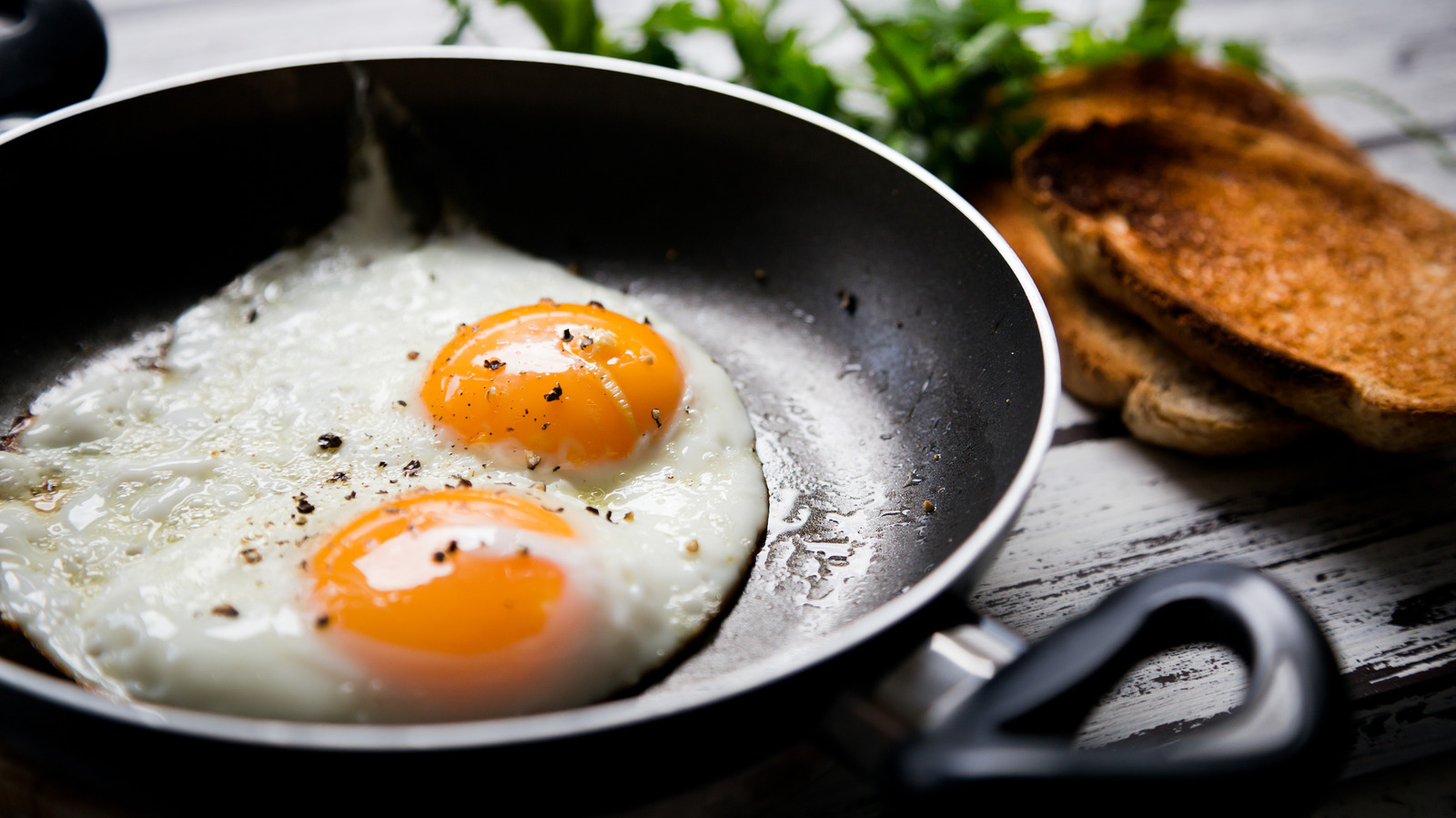
"It's important to fry eggs at a fairly low temperature. Egg whites cook much faster than the yolk, so frying an egg at too high a temperature will result in rubbery, overcooked whites with burnt edges before the yolk sets."
"I don't think there's a temperature that's too low, it will just take longer for the eggs to cook! Better to err on the side of caution than end up with rubbery, burnt eggs. According to Steele, if the edges of your eggs start to brown and curl up, the temperature is too high."
"One of the key tips for a successful fried egg is using fresh eggs because, as an egg ages, the whites thin considerably and will spread out in the pan. The membrane on the yolk also thins as an egg ages, so the yolk is more likely to break if you fry an old egg."
Mastering fried eggs requires careful temperature control. Egg whites cook faster than yolks, so high heat causes rubbery, burnt-edged whites before yolks set. Medium to medium-low heat is ideal, with lower temperatures simply taking longer without risk of overcooking. If egg edges brown and curl, the temperature is too high. Fresh eggs are crucial since aged eggs have thinned whites that spread excessively and weakened yolk membranes prone to breaking. Using fresh eggs and maintaining low, controlled heat produces picture-perfect fried eggs with properly cooked yolks and tender whites.
Read at Tasting Table
Unable to calculate read time
Collection
[
|
...
]