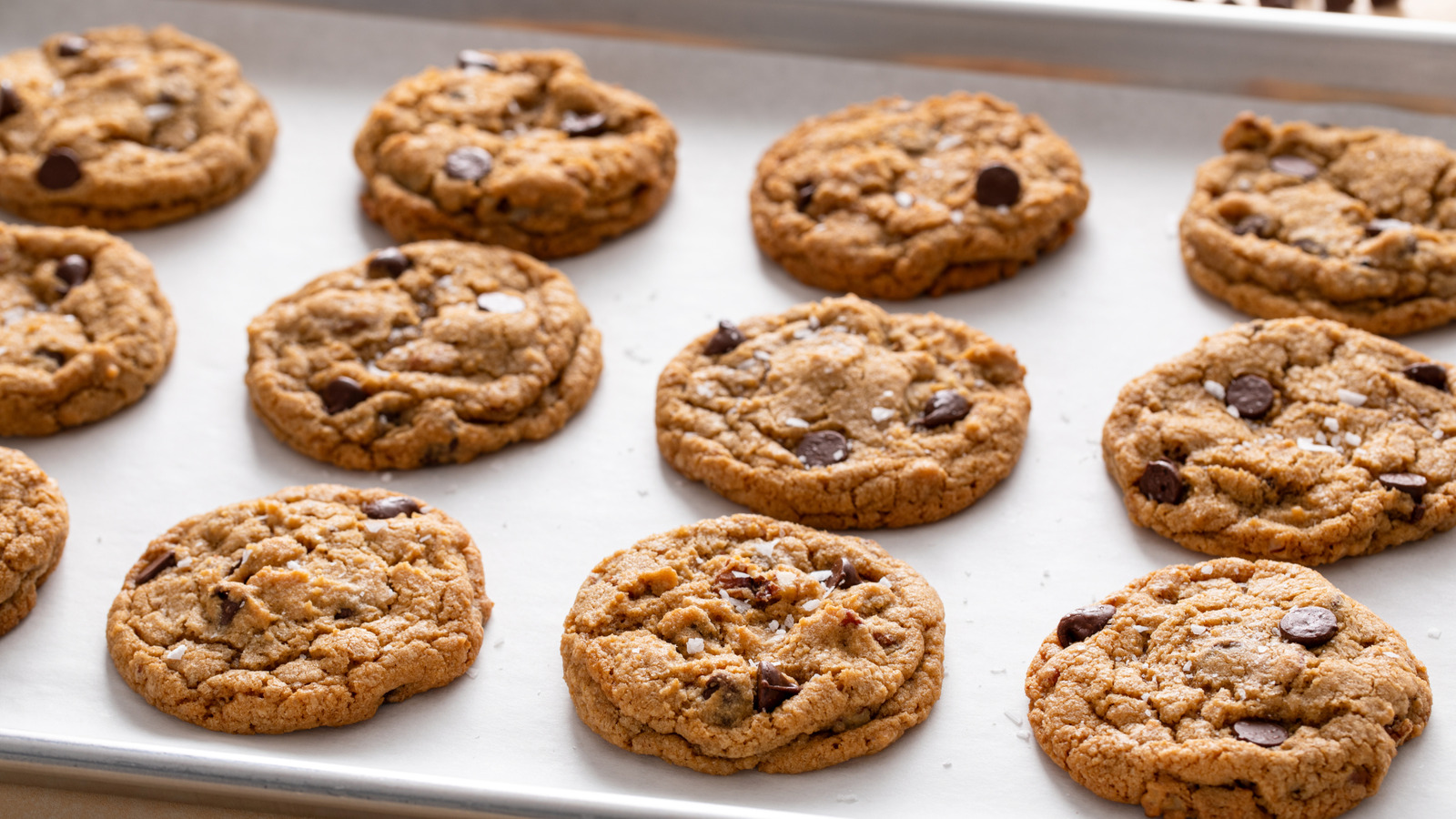
"In the oven, the sugar melts and then caramelizes. This causes the cookie dough to spread more as the ratio of sugar to other ingredients increases, resulting in thinner cookies. She advocates measuring your sugar carefully, like with a scale, in order to prevent excess spread from occurring."
"While the dough might feel slightly more sticky or tacky, generally it doesn't look all that different from dough with less granulated sugar, even if you've used 50% less or 50% more. This is where taking the time to double-check your measurements against your recipe may pay off."
Sugar plays a crucial role in cookie baking by providing flavor, contributing to browning through the Maillard reaction, and trapping air when creamed with butter. However, too much sugar causes problems. When sugar melts and caramelizes in the oven, it increases the ratio of sugar to other ingredients, causing cookie dough to spread excessively and resulting in thin, overly browned cookies. The challenge is that excess sugar in dough is difficult to detect before baking, as the dough appears similar whether it contains significantly more or less sugar. Using a kitchen scale for precise measurements rather than cups helps prevent over-spreading and ensures consistent, properly textured cookies.
Read at Tasting Table
Unable to calculate read time
Collection
[
|
...
]