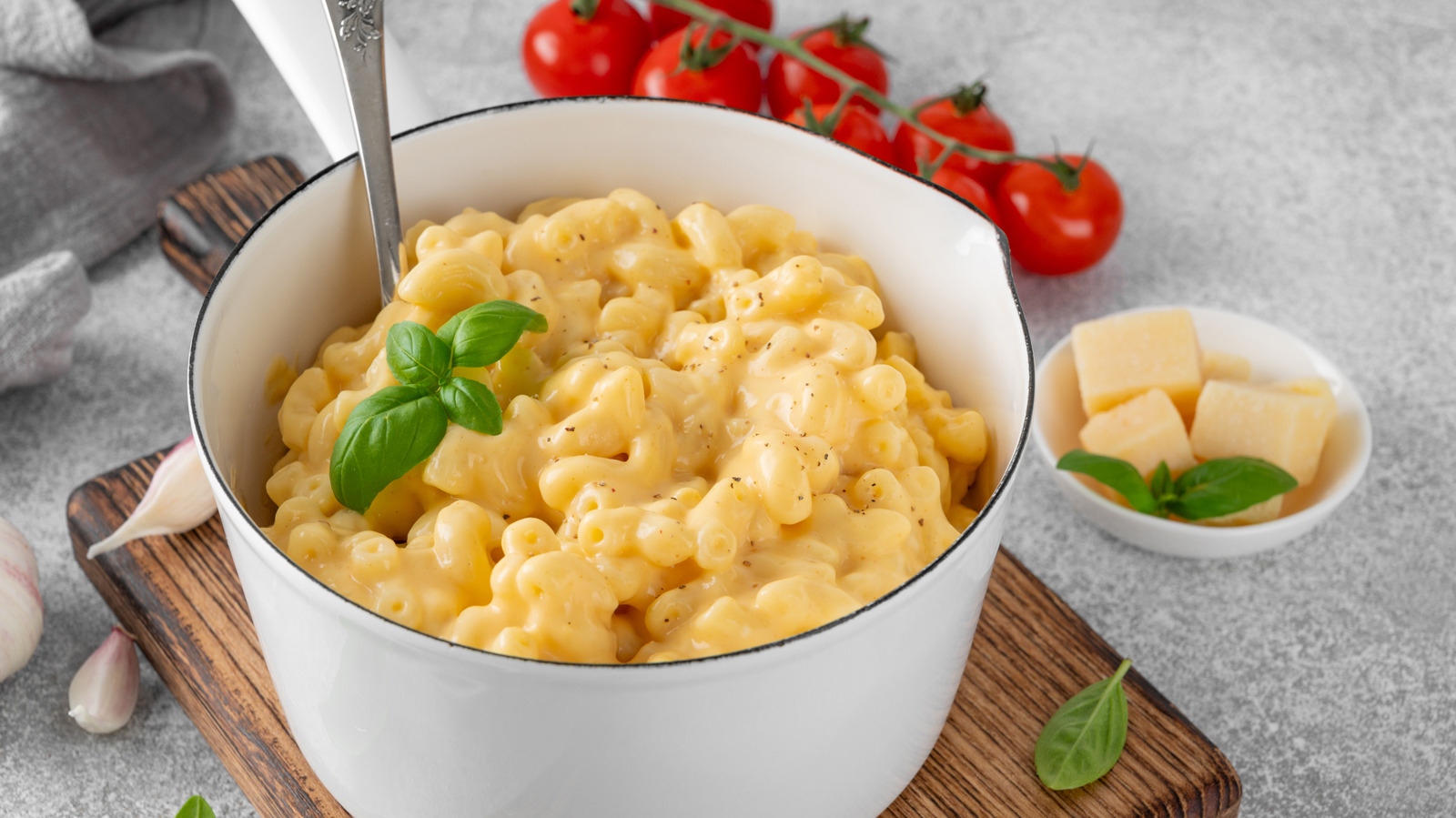
""The biggest thing to keep in mind is moisture content and meltability," he explains. "Cheeses that have been aged for a year or more, like extra-aged cheddar, Parmesan, or other hard grating cheeses, tend to have lower moisture and higher salt, which means they don't fully melt into that smooth, creamy sauce you're looking for.""
""I fold some in at the end for added depth of flavor or sprinkle it on top before baking to create a browned, crispy, nutty crust," the chef explains. "They're fantastic for flavor, just not ideal as the primary 'melter' in the sauce.""
Moisture content and meltability determine whether a cheese will form a smooth, creamy sauce or become clumpy and grainy under high heat. Aged cheeses over a year, such as extra-aged cheddar and Parmesan, have lower moisture and higher salt, which prevents full melting. Use hard grating cheeses as finishing flavors or toppings for a browned, crispy, nutty crust rather than as the primary melter. Softer, more processed cheeses like cheddar, American, or gruyere provide better melt and pull. Sodium citrate can help prevent separation and improve creaminess.
Read at Tasting Table
Unable to calculate read time
Collection
[
|
...
]