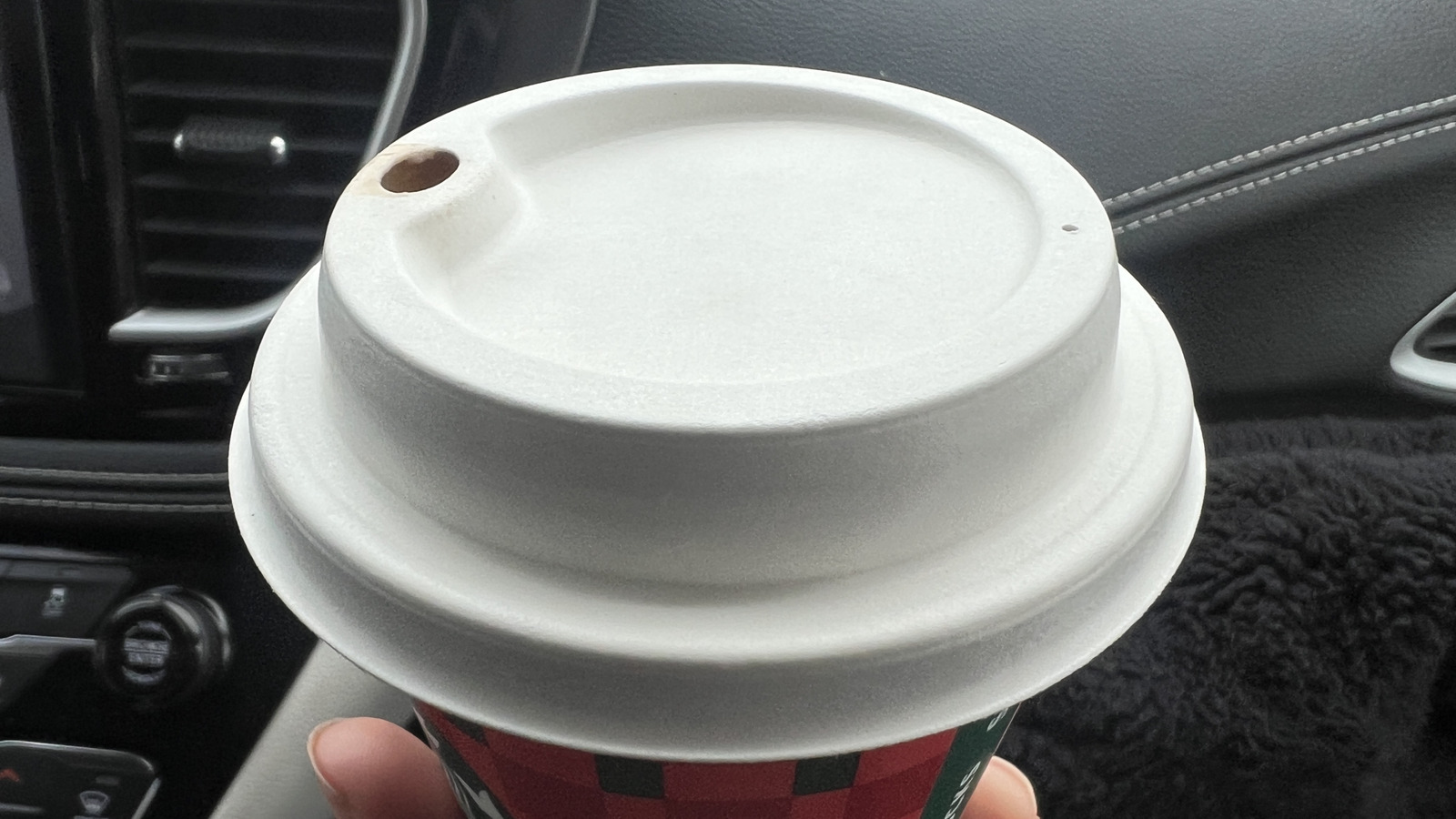
"First and foremost, that small hole allows steam to escape. If a lid is fully sealed right after the cup is filled, steam can gather inside. Under the right conditions, that could build enough pressure to pop the lid off and result in a nasty burn. Letting a tiny bit of steam escape instead makes that pressure build up less likely to happen."
"Vintage soda cans with two press button holes on the top needed to be pushed in by hand. One hole was for designed for drinking, while the other performed the same function as a tiny coffee lid hole. Without proper airflow, liquid doesn't pour out smoothly and causes pressure to build. When you stop drinking and remove your mouth, airflow returns and relieves pressure, which can cause liquid to rush toward the opening and spill in the absence of this extra hole."
"To see for yourself what happens when pressure isn't equalized, fill a coffee cup with a cool liquid and then cover the hole up with your finger. Now try to pour your liquid out. Instead of pouring smoothly, it will suffer from negative pressure and glug out rhythmically. For room temperature liquids this is just an inconvenience, but for hot liquids it can be dangerous as the inconsistent flow could lead to splashing."
Disposable hot beverage lids include a small vent hole that permits steam to escape, preventing pressure buildup that can pop lids and cause burns. The vent also equalizes pressure and sustains airflow while drinking so liquid pours smoothly rather than glugging. Covering the vent induces negative pressure and rhythmic glugging, which is an inconvenience for cool drinks but can cause dangerous splashing with hot liquids. Earlier beverage container designs used a separate vent for airflow, performing the same safety function. The vent improves safety and convenience for on-the-go hot beverage consumption.
Read at Tasting Table
Unable to calculate read time
Collection
[
|
...
]