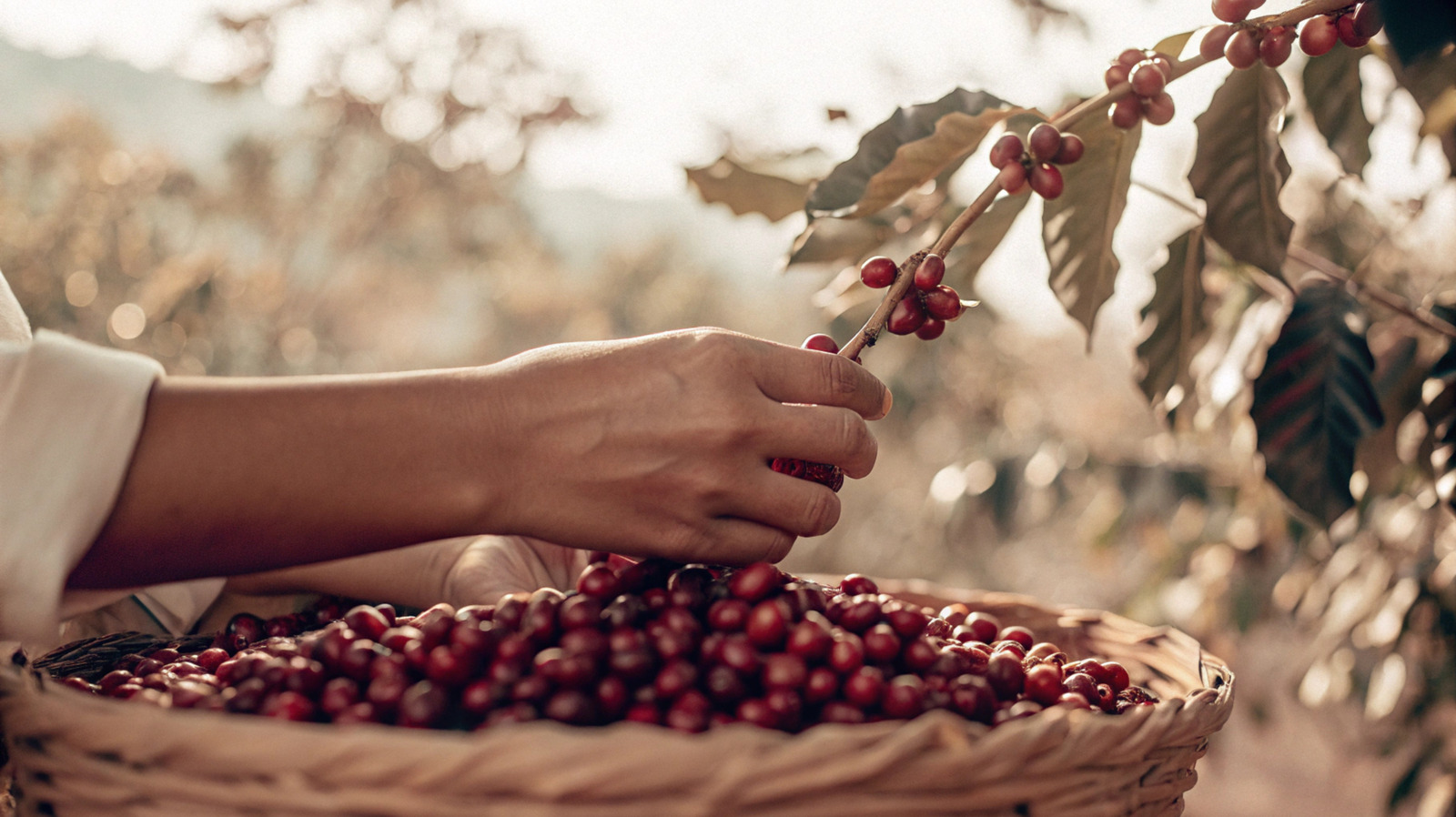
"For a lot of consumers, this is true. The shelves of your local market are stocked with bags of different types of coffee roasts, and any café you frequent likely has a long list of different types of coffee drinks that you can order, but for the most part the actual species of coffee that you buy is not part of the equation."
"Despite the many different species in the Coffea genus, just four main species make up the grand majority of coffee cultivation, with one owning the bulk of the coffee-sphere worldwide. For coffee connoisseurs, however, these four different types of beans each offer a unique niche both in terms of cultivation as well as the taste and aroma that they lend to a morning macchiato."
"Arabica (Coffea arabica) This is the coffee that you are most familiar with. No matter whether we are talking about a cup from a single-serving coffee machine, a carefully-made pour-over in your home kitchen, or the artistically-topped latte served up by your favorite barista at the shop on the corner, odds are it is made with Arabica coffee beans. Arabica accounts for around 60-70% of all coffee produced and consumed globally, and is generally thought to be the best go-to variety on the market."
Over 100 Coffea species exist worldwide, but four primary species constitute the vast majority of cultivated coffee. Arabica (Coffea arabica) accounts for roughly 60–70% of global production and consumption and is widely regarded as the leading commercial variety. Arabica likely originated in Ethiopia, was the first cultivated variety, and prefers high-elevation environments with abundant rain and shade. Numerous Arabica variants are grown globally, with Brazil the largest exporter. The four main species provide distinct niches in cultivation and contribute differing taste and aroma profiles valued by coffee consumers and connoisseurs.
Read at Tasting Table
Unable to calculate read time
Collection
[
|
...
]