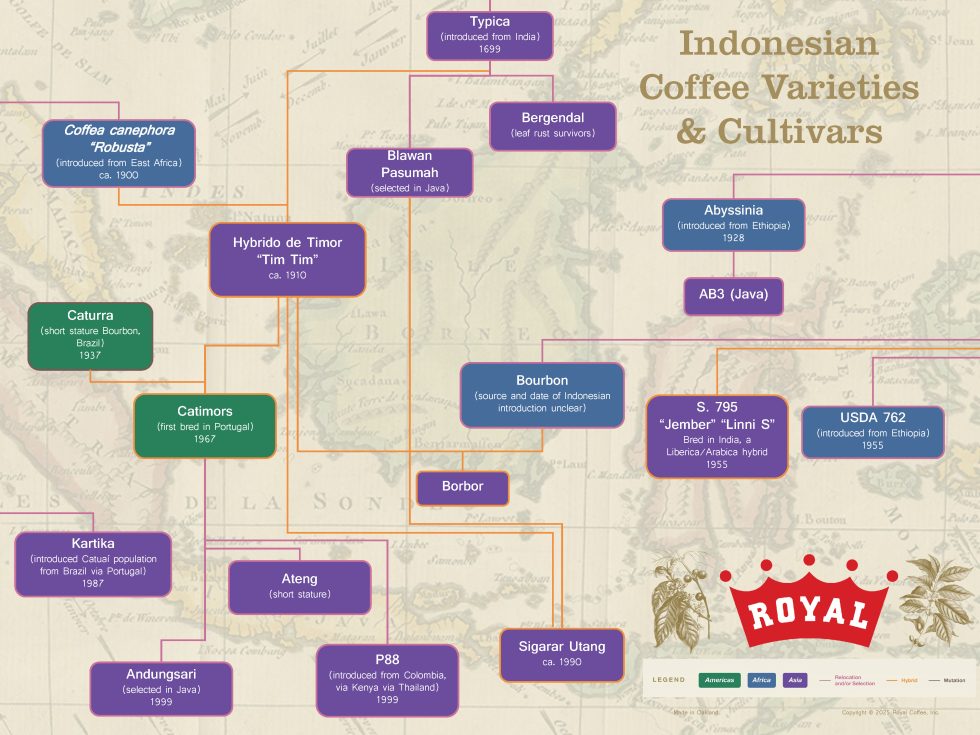
Indonesia's coffee history began in 1699 when Dutch colonizers introduced the crop to the archipelago. The Typica variety of Arabica originated from Java and subsequently spread globally. Coffee leaf rust devastated production in the late 19th century, prompting the introduction of resistant species including Robusta, Liberica, and Excelsa to enhance resilience and genetic diversity. Today, Indonesia produces approximately 11 million 60-kilogram bags annually, consistently ranking among the top five global producers. Over one-third of Indonesian coffee is consumed domestically rather than exported. Despite challenges from climate change, typhoons, and earthquakes, Indonesia's established production infrastructure, hardy plant stock, and proximity to growing Asian consumer markets position the country to sustain coffee production into the future.
"Coffee leaf rust decimated production in the late 19th century, and the islands soon became a proving ground for alternative species of coffee resistant to the fungus, Coffea canephora, colloquially known as Robusta. Liberica and Excelsa, too, were introduced to the islands in ongoing efforts to improve resilience and genetic diversity."
"Today, Indonesia consistently ranks among the top five coffee producing countries by volume, achieving approximately 11 million 60-kilogram bags in 2024. Over a third of the coffee grown on the islands is consumed locally rather than exported."
"With a stock of hearty plants, an entrenched history of production and proximity to an emergent boom in coffee consumer markets throughout Asia, places like Java, Sumatra, Sulawesi, Bali and Flores - while still prone to warming and unpredictable weather, typhoons and earthquakes - appear well positioned to sustain production into the foreseeable future."
#indonesian-coffee-production #coffee-varieties-and-cultivars #agricultural-history #robusta-and-arabica #asian-coffee-markets
Read at Daily Coffee News by Roast Magazine
Unable to calculate read time
Collection
[
|
...
]