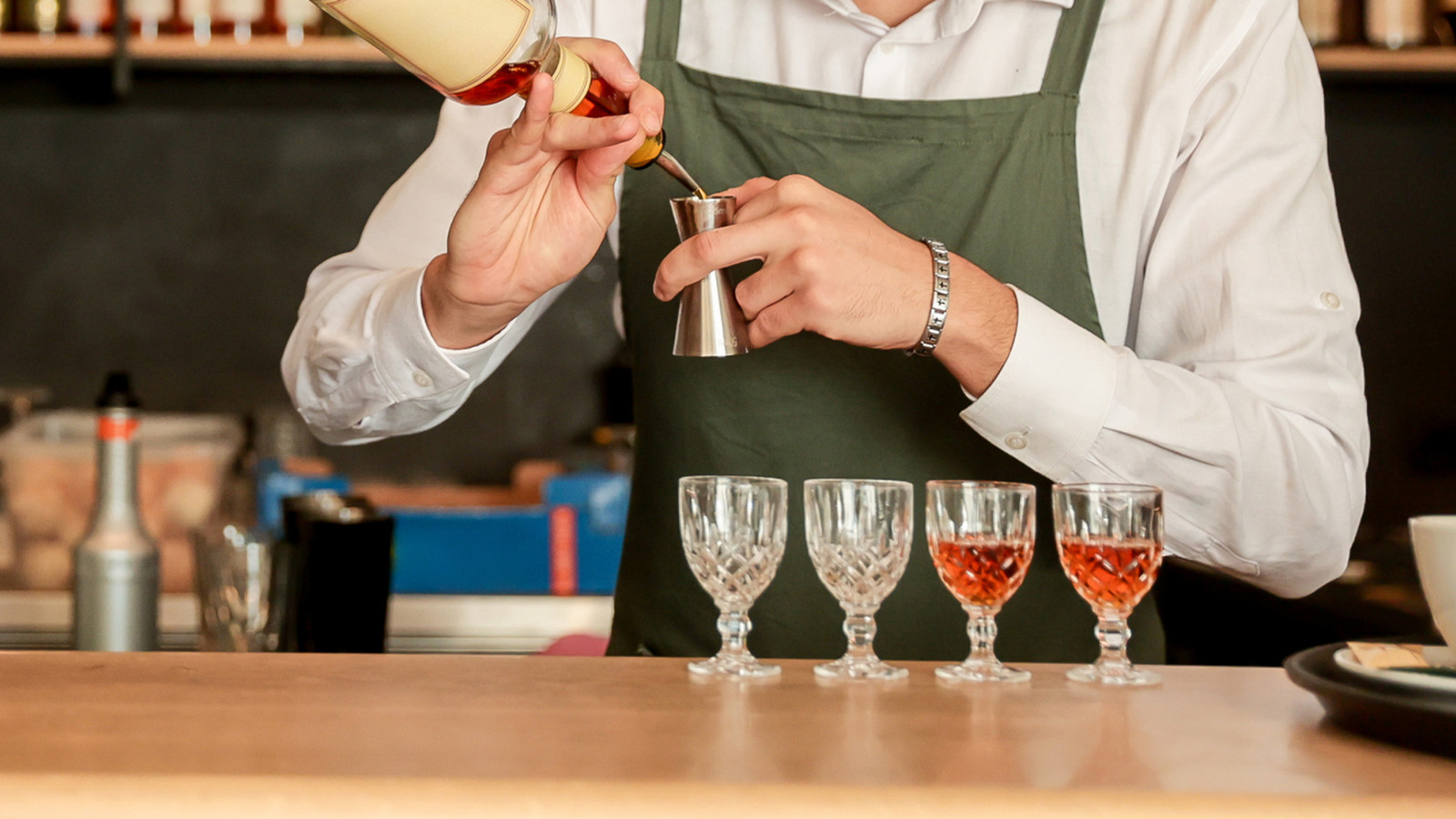
"Marrying the bottles can feel like simply staying on top of organization and tidiness. It's when you have two open bottles of the same thing, with less in one bottle than the other, so you pour that smaller amount into the fuller bottle and get rid of the empty one. If you personally do this to keep your home bar organized, it's not ideal, but not illegal. But it's against the law for bartenders to do it."
"For one thing, the practice is illegal because bottles of liquor are taxed individually, and forbidding bottles from being reused helps prevent tax fraud. More importantly, especially from a customer's perspective, there are safety factors at play. If bartenders were allowed to refill any liquor bottles, they could theoretically pour in entirely different contents. For example, they could be passing off cheap whiskey in an expensive bottle, therefore cheating patrons."
"Furthermore, adding the contents of one bottle to another creates potential for cross-contamination and an overall degradation of quality (which is why it's still not recommended even at home)."
Marrying bottles refers to pouring the remaining contents of one open liquor bottle into another of the same product to consolidate stock. The practice is illegal for bartenders because liquor bottles are taxed individually and reusing bottles could enable tax fraud. Allowing bottle refilling also creates opportunities for intentional or accidental deception, such as substituting cheaper spirits into premium bottles, which harms consumers. Combining bottles can lead to cross-contamination and reduced product quality. Laws prohibit marrying bottles across every state to protect tax collection and consumer safety, even though homeowners might do it at their own risk.
Read at Tasting Table
Unable to calculate read time
Collection
[
|
...
]