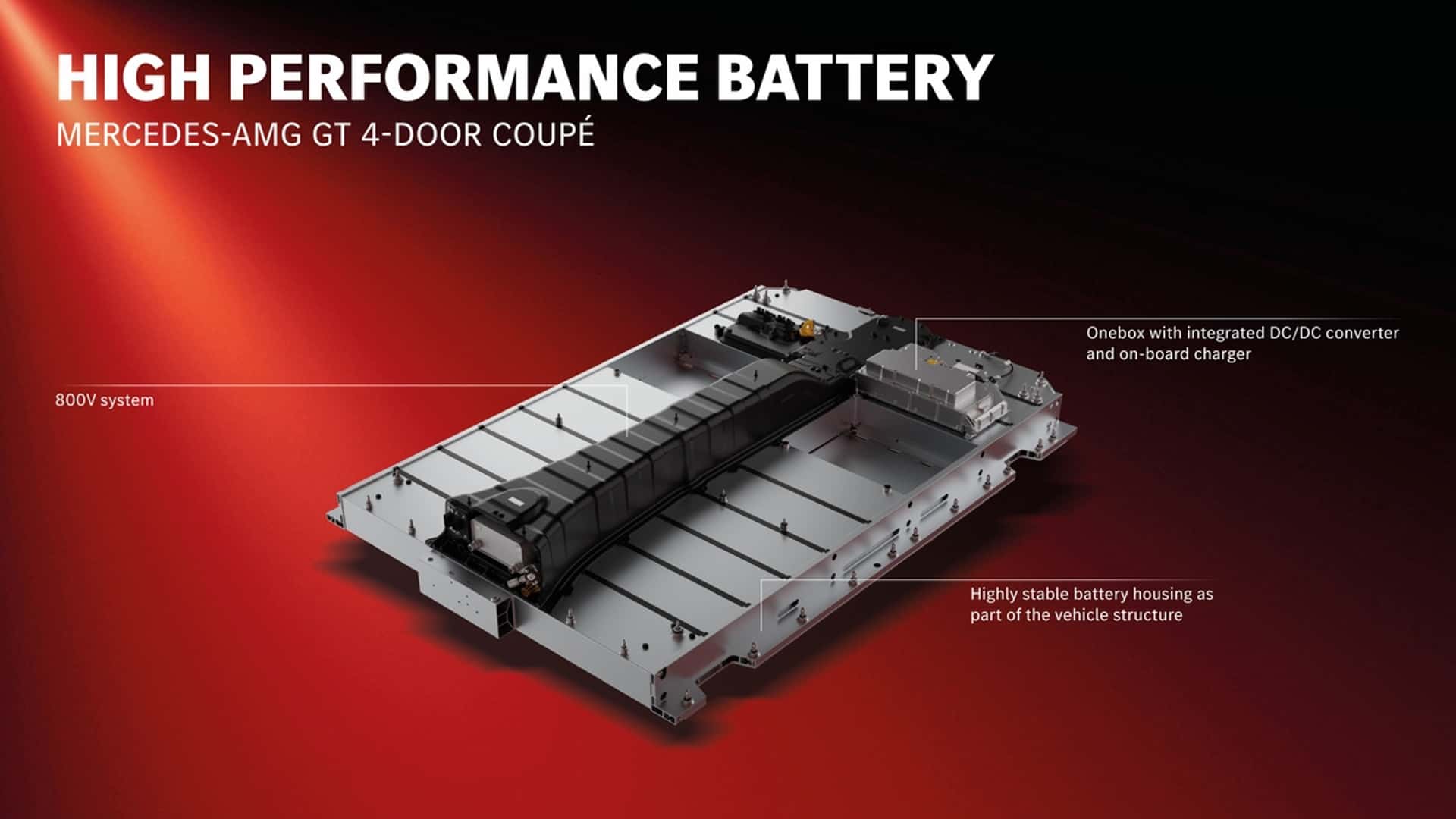
Silicon anodes are entering production to improve electric vehicle charging speed, often blended with graphite while companies develop fully silicon anode designs. EV batteries face severe conditions including temperature swings, road shock, hard acceleration, and repeated fast-charging cycles that generate large amounts of heat. Effective heat management is critical to prevent battery failure. The Mercedes-AMG GT 4-Door Coupe uses an all-electric powertrain with a large usable battery capacity and high peak charging power. Its claimed 10–80% charging time is about 11 minutes in the U.S. market. The silicon anode enables this performance by increasing how much energy the cell can store and how quickly it can accept charge, supported by an overengineered cooling loop.
"Silicon anodes are now entering production to improve electric vehicle charging speeds. They're still blended with graphite as startups work to develop 100% silicon anodes. This unique battery allows the Mercedes-AMG GT to charge from 10-80% in just 11 minutes."
"Electric vehicle batteries live a tough life. Temperature swings, punishment from bad roads, repeated hard acceleration, and fast-charging cycles can push the cells to their absolute limits. The combined effect of these forces can generate enormous amounts of heat. Managing that heat is the difference between a battery that works and a disaster waiting to happen."
"When the car reaches U.S. shores later this year, it will be the fastest-charging EV in America, with a claimed 10-80% time of just 11 seconds. The silicon anode is what makes that charging performance possible. Think of the anode as the part of the cell responsible for how much energy the battery can store and how quickly it can charge."
"Traditionally, battery makers have relied on graphite anodes for their stability and energy density. The AMG GT's 106 kilowatt hours of usable battery capacity delivers up to 700 kilometers (434 miles) of range on the European WLTP cycle, translating to well over 300 miles of comparable range on the tougher U.S. EPA cycle."
Read at insideevs.com
Unable to calculate read time
Collection
[
|
...
]