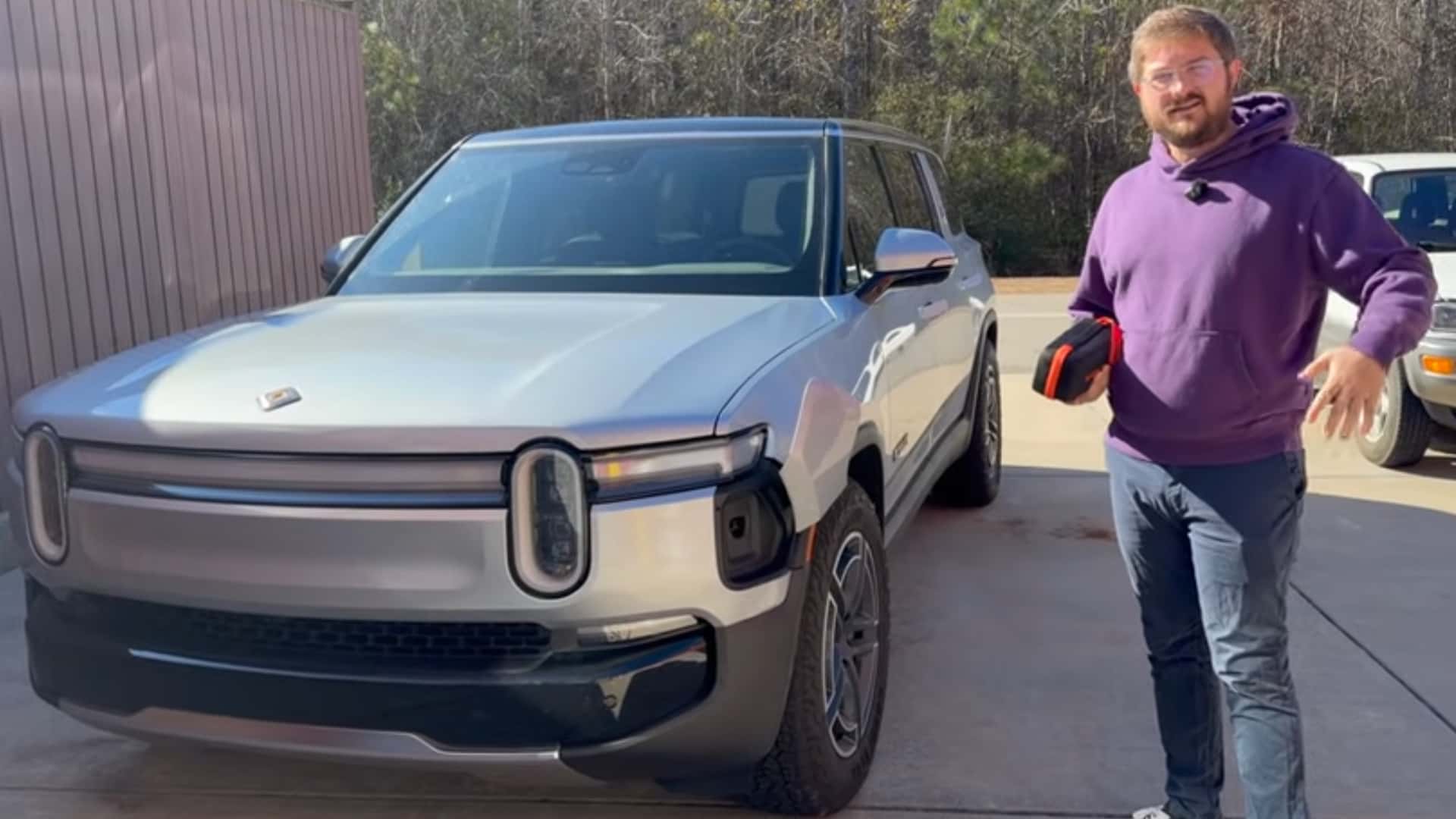
"There's a key challenge with some electric vehicles' door handle design. If the door handles pop out electronically, a dead battery can leave you locked out, and unable to open the hood. Without hood access, you probably won't know how to jumpstart a dead low-voltage battery, leaving you locked out. Here's how you solve that issue, at least if you own a Rivian R1T or R1S."
"For most EVs, there is a manual way to get into the cabin or hood. On Gen 2 Rivian R1s, there's no manual way to get in, but there are a pair of wires in the trailer wiring harness that can be used as jump leads. By connecting a jump box or another vehicle's battery to these cables, you can power up the vehicle's low-voltage power system and engage high-voltage charging."
"The Rivian requires a consistent 12-volt signal to power up its door handles and screens, and a portable roadside jump-box isn't quite enough. Even a larger lead-acid model isn't enough to get the on-board charger to accept an AC connection and begin charging. To solve that, Out Of Spec jumps the Rivian the old-fashioned way, with a pair of jumper cables and a gas car."
Some electric vehicles with electronically actuated pop-out door handles become inaccessible when the 12-volt battery is dead, preventing hood access and jump-start procedures. Gen 2 Rivian R1T and R1S models lack manual entry; a pair of wires in the trailer wiring harness serve as jump leads to feed the low-voltage system. Connecting a jump box or another vehicle's battery to those harness wires can power the 12-volt network and initiate high-voltage charging, but many portable jump boxes lack sufficient sustained current. Using jumper cables to a running gasoline-powered vehicle provides the consistent 12-volt supply needed to activate door handles and enable the DC-to-DC converter to recharge the low-voltage battery so onboard charging can begin.
Read at insideevs.com
Unable to calculate read time
Collection
[
|
...
]