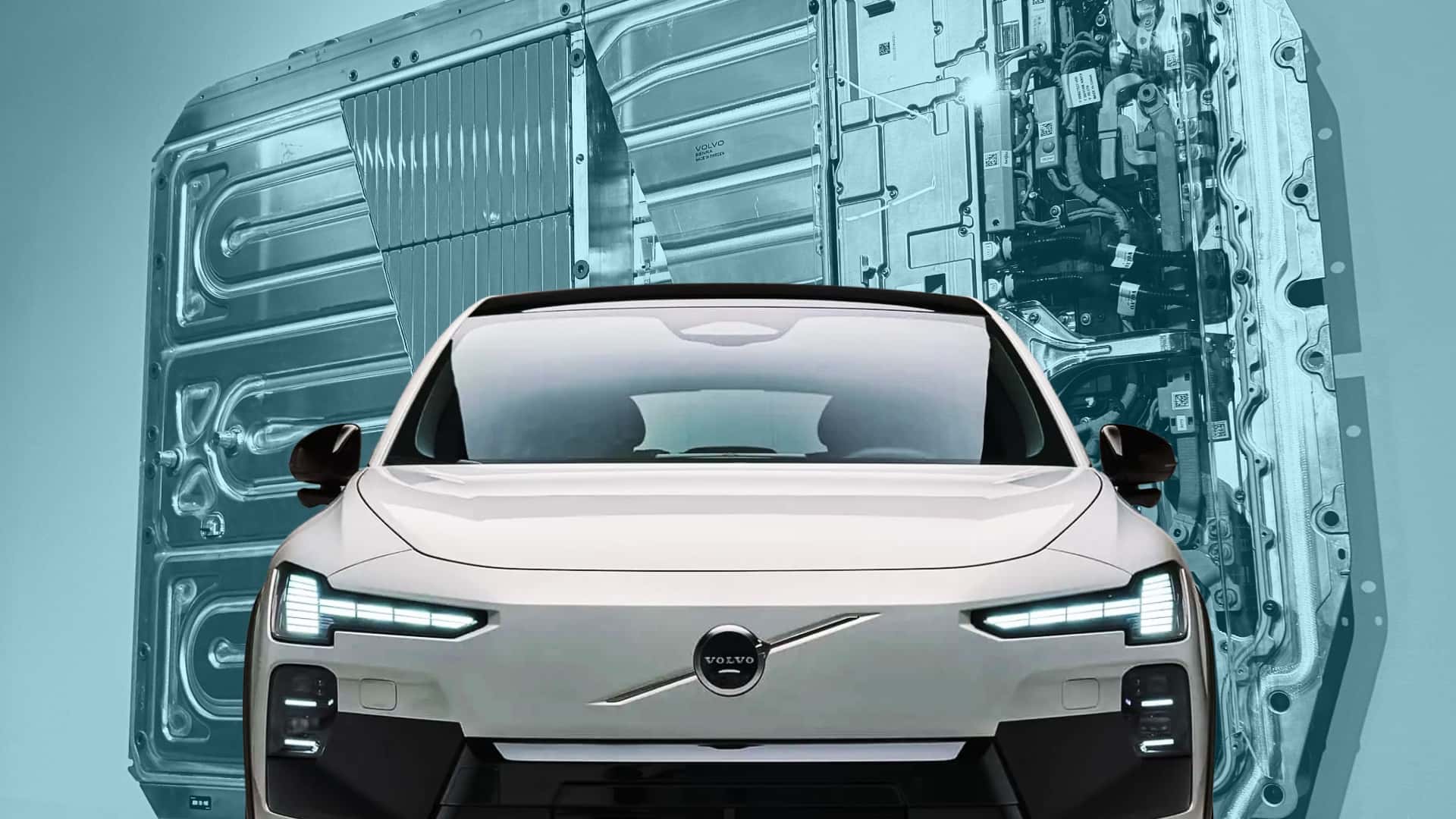
"It's an architectural breakthrough for us in terms of how we build the car, Anders Bell, the Chief Engineering and Technology Officer at Volvo Cars, told InsideEVs in an interview at the EX60 debut event. It's a massive [improvement], we save a lot of weight, we save a lot of cost, which is important because that means we can lower the price for the customers and sell more BEVs, he added."
"Today, most automakers rely on a module-based architecture, where individual cells are grouped into rectangular modules, which are then assembled into a battery pack that is bolted to the car's chassis. GM's battery packs, for example, use the conventional modular approach. It's a proven, flexible approach used by most of the industry, but it comes with trade-offs in complexity and space efficiency. Modules require more parts, which increases the weight of the pack."
Volvo EX60 achieves up to 400 miles of range and charging speeds up to 370 kW while adding numerous high-tech features. The EX60 adopts a cell-to-body structural battery that integrates cells into the vehicle structure, making the battery a load-bearing element and integrating sections of the floor with the cells. This approach reduces parts, weight, and cost compared with module-based packs and improves space efficiency. The cell-to-body architecture advances cell-to-pack trends by eliminating modules and positions Volvo among a few competitors using structural battery solutions, enabling lower pricing and greater BEV adoption.
Read at insideevs.com
Unable to calculate read time
Collection
[
|
...
]