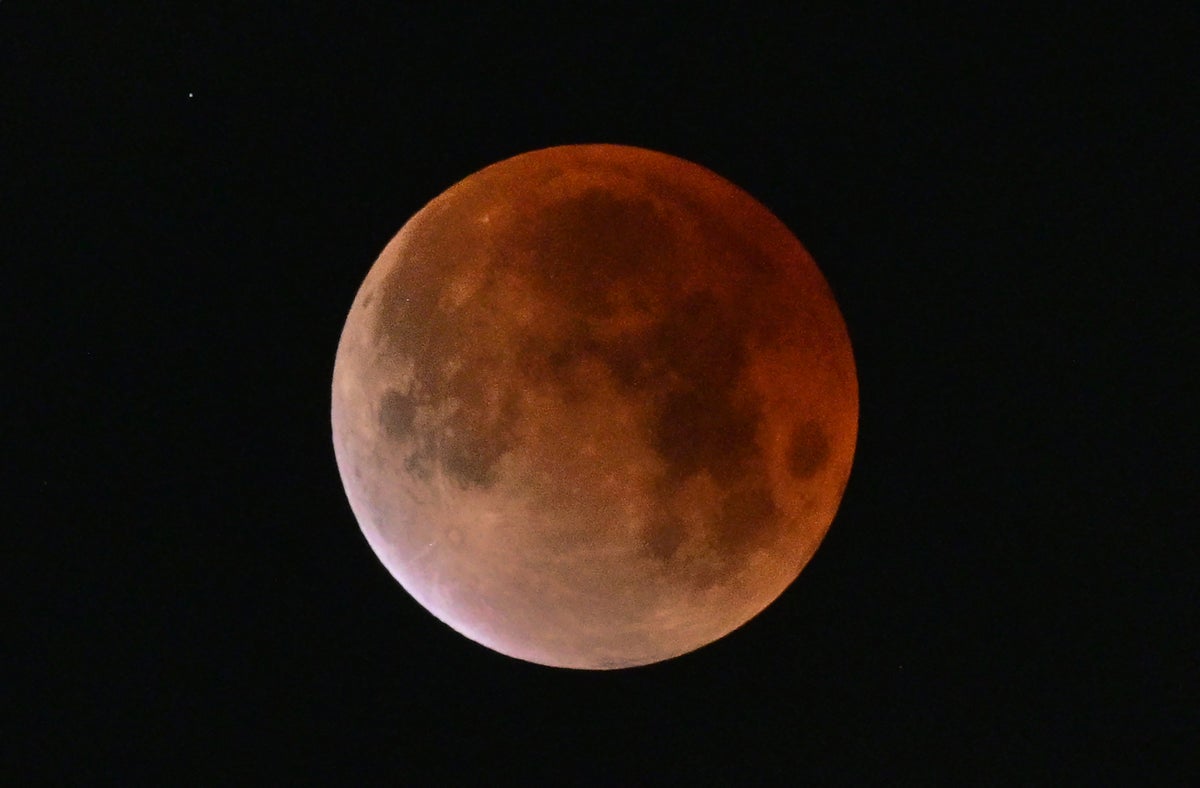
"A total lunar eclipse occurs when the Earth passes directly between the sun and moon. As the star's light filters through Earth's atmosphere, it casts a red hue onto the lunar surface that looks much like the shades of a sunset."
"The eclipse was at least partially visible to sky-gazers across Asia and Australia, as well as North and South America. For those able to see it, the period of totality, or when the moon was fully covered in Earth's shadow, reportedly lasted almost one hour."
"The next total lunar eclipse isn't due until New Year's Eve in 2028, but Earth will experience a total solar eclipse this August. Look to the skies on August 12 to see the moon pass entirely in front of the sun, casting a dark shadow over parts of Greenland, the Arctic, Portugal and Spain."
On March 3, 2026, a total lunar eclipse occurred when Earth positioned itself directly between the sun and moon. As sunlight filtered through Earth's atmosphere, it cast a red hue onto the lunar surface, creating the appearance of a blood moon. This was the first and only total lunar eclipse of 2026. The period of totality lasted approximately one hour. The eclipse was at least partially visible to observers across Asia, Australia, North America, and South America. Photographers worldwide captured images of the crimson moon. The next total lunar eclipse will not occur until New Year's Eve 2028, though a total solar eclipse is scheduled for August 12, 2026.
Read at www.scientificamerican.com
Unable to calculate read time
Collection
[
|
...
]