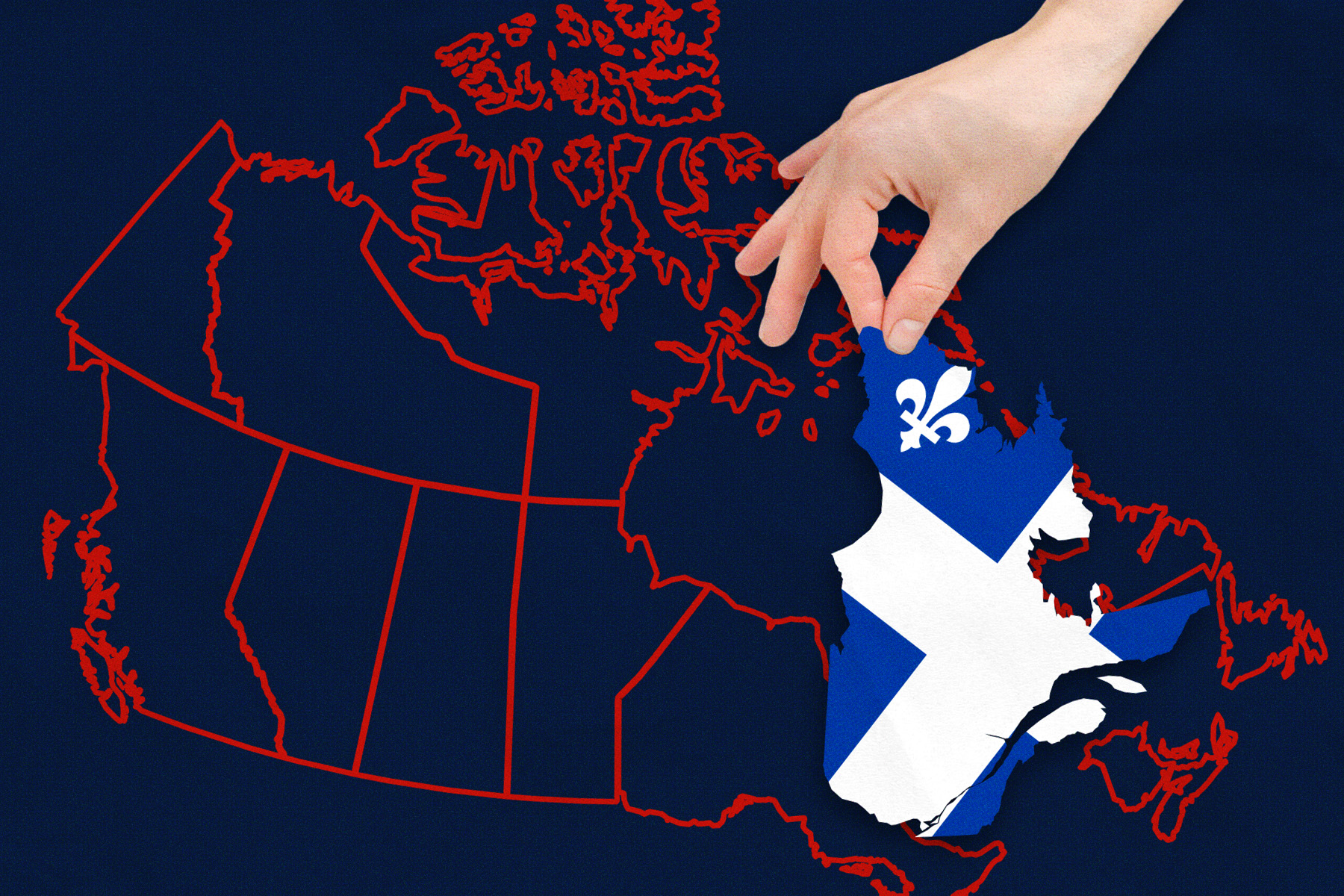
"I t was the thirtieth anniversary of the 1995 Quebec referendum this past October, and it brought to my mind that autumn thirty years ago, when I was far from home-in Sarajevo, with the United Nations. I was serving on the international team trying to hold together a fragile ceasefire that preceded the Dayton Accords, the agreement that ended the Bosnian war."
"One night, I found myself in Pale, the wartime political centre of the Bosnian Serb leadership. I was ushered into the office of the Serb interior minister, who, having clocked that I was Canadian, immediately wanted my views on the Quebec referendum, a topic on which he was surprisingly well briefed. In retrospect, his curiosity made a certain sense: Was a respected federation like Canada on the verge of collapse?"
"But I was at a loss for words. I knew almost nothing about what was unfolding back home. Our telescreen was CNN, and its universe was Bosnia and O. J. Simpson, not Quebec. The only news I got from home came from the newspapers my mother used to cushion her butter tart care packages. When I got back from Pale that evening, I finally sat down and read them."
"We are currently distracted by events south of the border. We tsk-tsk, shake our heads, and reassure ourselves that at least we aren't like that. It's a comfortable illusion of moral superiority. I'm not convinced it's deserved. I've seen what happens when people look away. Yugoslavia taught me how fragile institutions become when leaders stop respecting limits, divide people from their neighbours, and subordinate individual rights to a mythical collective, and when citizens convince themselves "it can't happen here.""
A Canadian United Nations peacekeeper in Sarajevo in 1995 encountered Bosnian Serb leaders who asked whether Canada might collapse during the Quebec referendum. The peacekeeper had little information because international media focused on Bosnia and other global events rather than domestic developments. Distraction by external turmoil and a sense of moral superiority risk obscuring serious internal strains. Lessons from Yugoslavia show how institutions unravel when leaders flout limits, divide neighbours, and subordinate individual rights to a mythical collective while citizens convince themselves "it can't happen here." The Canada–Quebec relationship rests on competing national narratives.
Read at The Walrus
Unable to calculate read time
Collection
[
|
...
]