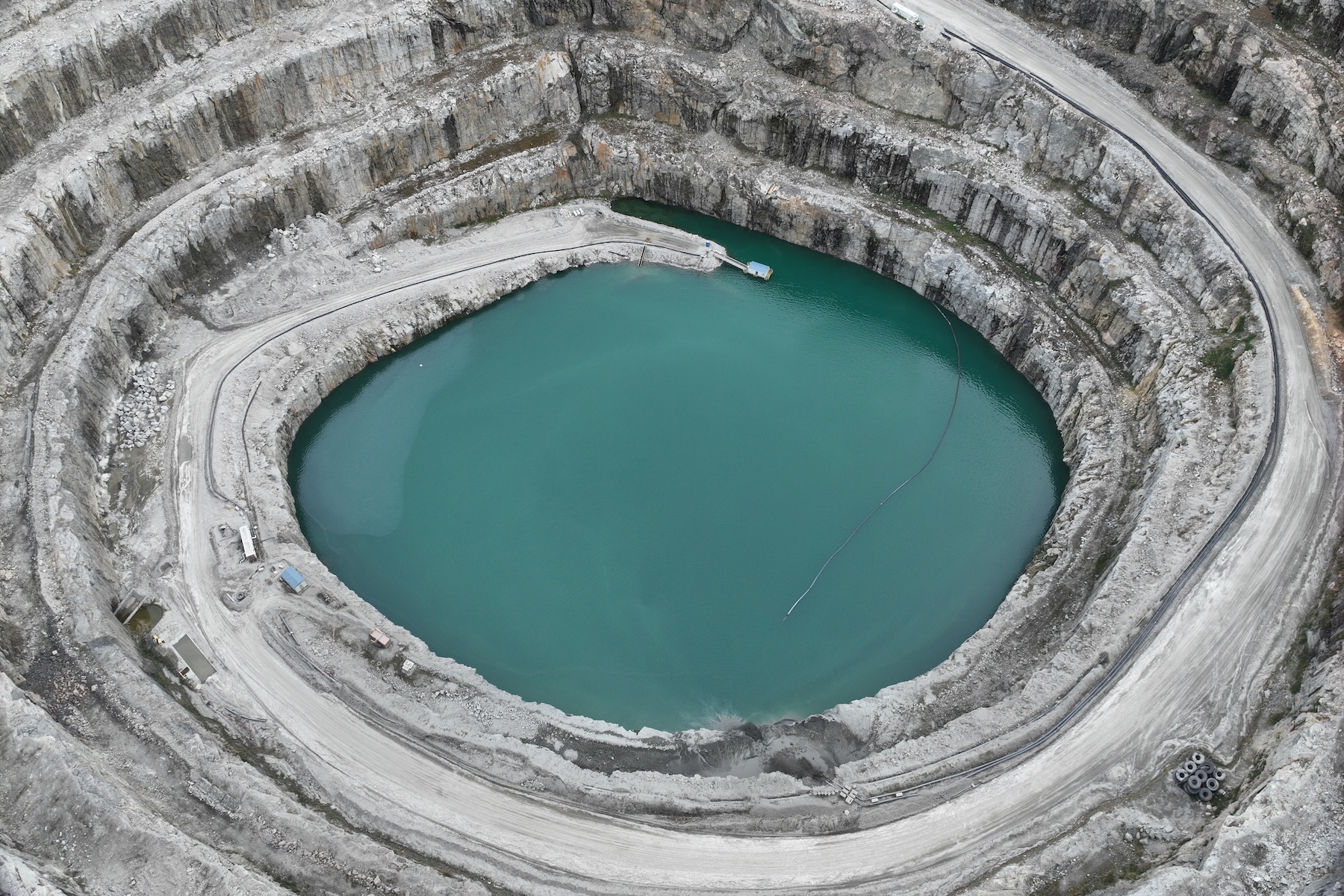
"From above, three human-made craters look like God Herself started drilling giant, threaded holes into the landscape. But a more detailed scan over the tundra reveals a bustling collection of trucks weaving along gravel roads toward, and away from, buildings of all shapes and sizes. From the air, it looks like a town was plopped down among the rocky outcrops of the unforgiving Arctic terrain."
"It's fascinating to see such a place and hard to imagine that this will all vanish-as if nobody ever set foot here-in just a few years' time. That's the plan anyway. All commercial diamond mining was scheduled to stop in March, marking the beginning of the end of the mine's life."
"The discovery didn't come by bumbling around the Arctic. Well, not really. The pair staked the area for about a decade prior, looking for minerals linked to kimberlite, the type of rock that can contain diamonds, and driven by a hunch that the Arctic held diamond deposits."
Diavik Diamond Mine operates on an island in the Northwest Territories, featuring three massive human-made craters visible from above and a bustling industrial complex that resembles a town in the Arctic tundra. Commercial diamond mining operations were scheduled to cease in March, marking the beginning of the mine's closure and restoration phase. The mine originated from Chuck Fipke's 1991 discovery of eighty-one small diamonds at Lac de Gras, located approximately 300 kilometres northeast of Yellowknife. Fipke and his partner Stewart Blusson spent roughly a decade staking the area and searching for kimberlite rock formations before making their significant discovery. The mine's closure represents a complete disappearance of the industrial site, with plans to restore the landscape as if human activity never occurred in this remote Arctic region.
#diamond-mining-closure #arctic-restoration #northwest-territories #environmental-remediation #mining-operations
Read at The Walrus
Unable to calculate read time
Collection
[
|
...
]