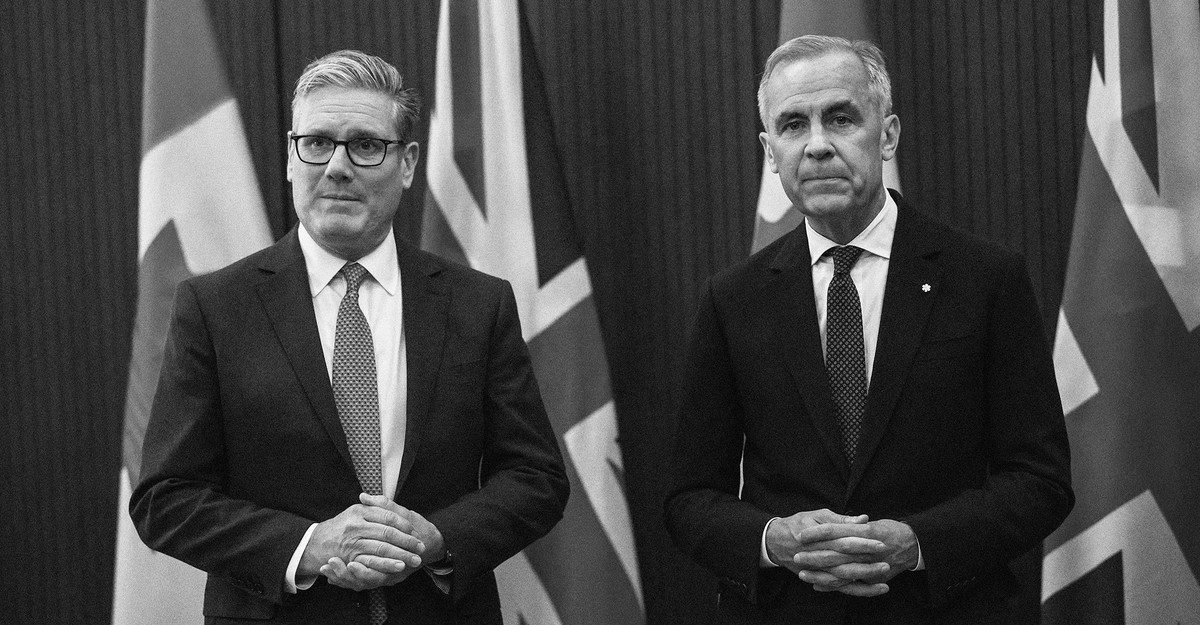
"The urge to visit Beijing has gotten stronger lately among allies of the United States. Canadian Prime Minister Mark Carney, who referred to China last year as his country's biggest security threat, made the trip last month, as did his British counterpart, Keir Starmer. Next week, German Chancellor Friedrich Merz, who heads the largest economy in Europe, plans to meet with Xi Jinping during a three-day visit packed with discussions of security and trade."
"In a speech this past weekend at the Munich Security Conference, Secretary of State Marco Rubio said the U.S. "will always be a child of Europe." But the geopolitical divide between the U.S. and China has made Canadians and Europeans look more like the children in a bad divorce, shuttling between two feuding parents, pleasing neither, and risking retaliation if they take sides."
"Carney said as much in a memorable speech last month in Davos, where he bemoaned the fact that the superpowers are now vying for dominance in ways that place their own self-interest over cooperation. And they are prepared to dole out punishment to those who offend them. "Great powers have begun using economic integration as weapons, tariffs as leverage, financial infrastructure as coercion, supply chains as vulnerabilities to be exploited," Carney said."
Allied leaders are increasingly visiting Beijing to engage China on security and trade, including trips by Canada's Mark Carney, Britain's Keir Starmer, and Germany's Friedrich Merz. The U.S.-China geopolitical divide forces Canada and European nations to shuttle between Washington and Beijing, risking retaliation for perceived alignment. Great powers are using economic integration, tariffs, financial infrastructure, and supply chains as tools of coercion. Medium-size countries are responding with transactional policies aimed at economic resilience and diversification of trading partners while maintaining awareness of persistent security concerns regarding China.
Read at The Atlantic
Unable to calculate read time
Collection
[
|
...
]