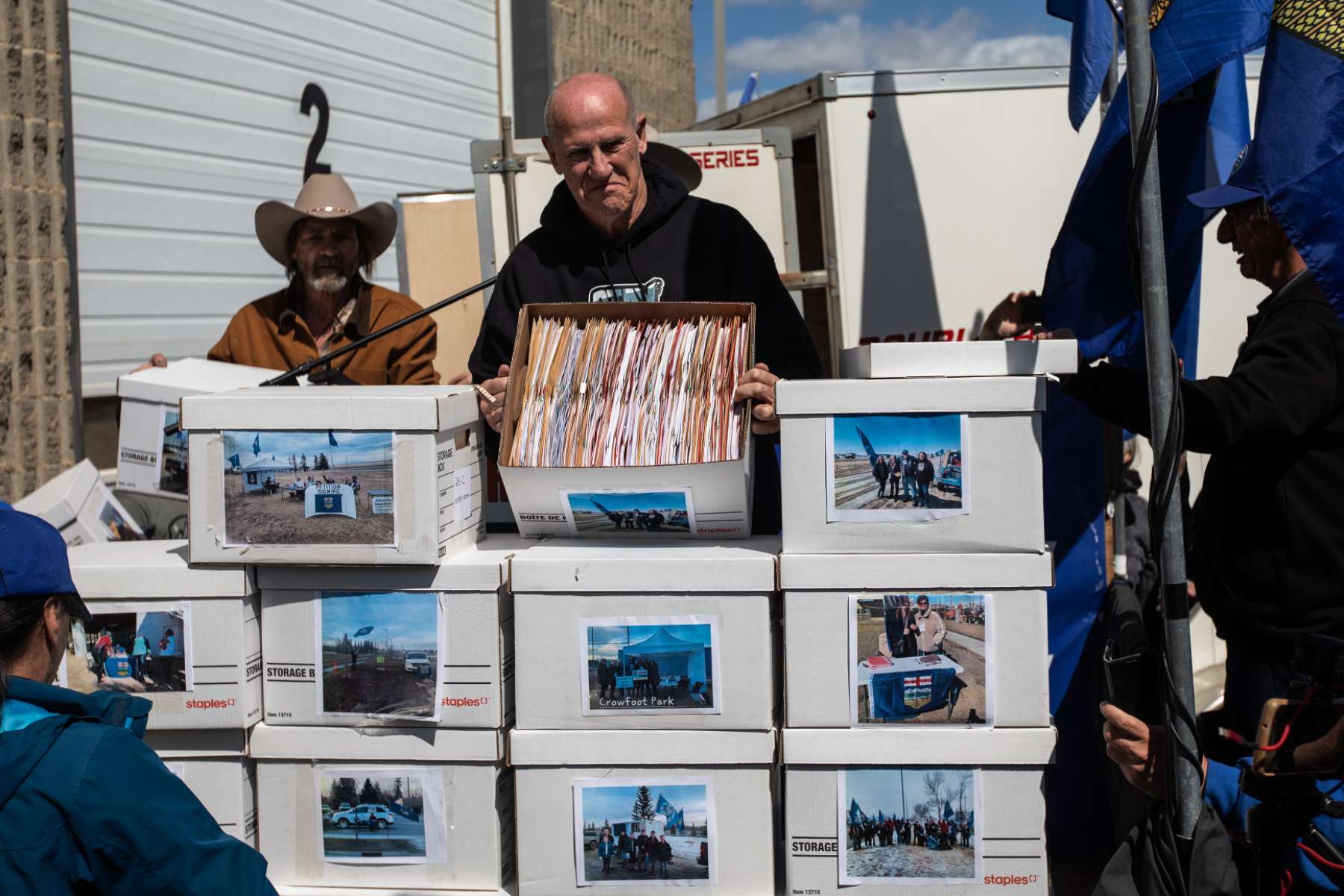
A separatist movement has promoted victories, including a widely repeated claim of roughly 300,000 petition signatures. The figure comes from statements by one individual and lacks independent verification, public audit, and transparent accounting. The uncertainty should prompt caution, but the number has been treated as accepted fact in public discourse. Political movements can use momentum claims to shift what seems politically plausible, including claims of large crowds or overwhelming backing. Such claims can be difficult to challenge because people may assume they are true, avoid amplifying them, or fear being labeled conspiratorial. The signature narrative functions as a tactic to normalize separatism rather than as evidence of support, and repeated references can create a false impression of mainstream movement.
"The oft-repeated claim that organizers gathered roughly 300,000 signatures on a separation petition rests entirely on statements made by one individual: Mitch Sylvestre. There has been no independent verification, no public audit, and no transparent accounting of the signatures themselves. That uncertainty alone should encourage caution. Yet Mitch's number has dominated public discourse as an accepted fact rather than the unverified political assertion that it is."
"Political movements frequently rely on demonstrations of momentum to expand the range of ideas considered politically plausible. This is called shifting the Overton Window, and it's something far-right populists throughout the world have excelled at over the past decade. Claims of large crowds, surging memberships, or overwhelming public backing can reshape perceptions even when those claims are unsubstantiated."
"Indeed, the more outlandish the claim, the less likely it may be challenged. Some assume that the assertion must be true (who would lie about something that big?), others fear amplifying the claim by challenging it (why give it more credibility?), while others fear being labelled conspiracy theorists by questioning its veracity (what evidence do we have, either way?)."
"By exploiting these tendencies, the separatists' 300,000 narrative functions less as evidence of support than as a tactic for normalizing separatism within Alberta politics. And it's working. Some top journalists repeat the claim as fact, without the necessary context. When questioned, many refuse to respond or simply throw up their hands. Fact is: repeated references to "300,000 signatures" create the potentially false impression that separatism has moved from the political fringe toward the mainstream."
Read at The Walrus
Unable to calculate read time
Collection
[
|
...
]