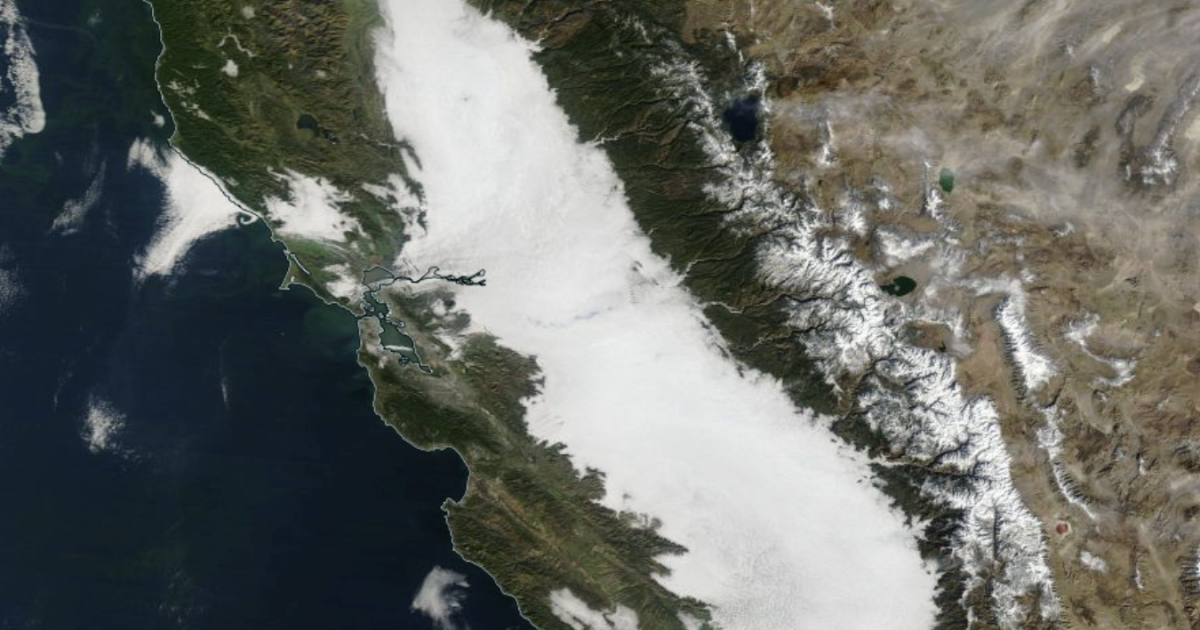
Tule fog has enveloped California's Central Valley for more than a week, visible in satellite imagery comparing pre-storm and fog-covered conditions. The phenomenon, technically radiation fog, forms from a cool, moist layer of Pacific air near the surface combined with clear skies and light winds, and remains longest in valleys where wind cannot disperse it. The National Weather Service forecasts intermittent thinning but expects the fog to thicken overnight and reach Level 3 on its five-level severity index, limiting visibility to about half a mile. Historical pile-ups have resulted from such fog, though no major wrecks were reported after nine days. Growers welcome the fog for helping trees meet dormancy requirements needed for high crop yields.
"The image below shows California as seen from space by a National Aeronautic and Space Administration satellite system. On the left is what the state looked like on Oct. 29, 2025 - before a major storm brought record-setting rainfall - and on the right is the same view on Nov. 27, in the middle of the days-long stretch of Tule fog."
"Technically known as radiation fog, the weather phenomenon is the result of a combination of "a cool, moist layer of air from the Pacific close to the surface, clear skies above and light winds," according to the National Weather Service. Most persistent in valleys where the wind can't sweep it away, the Tule fog has been a main character in California for decades. It causes pile-ups, traps airborne pollutants and has even inspired poetry about its haunting beauty."
"As of Monday, no major pile-ups had been reported after nine straight days of fog. The fog is not all bad: It is beloved by growers of crops such as almonds, apricots, cherries, peaches and pistachios because it helps the trees to satisfy the dormancy requirement necessary to produce flowers and fruit. The trees need this rest period to produce high yields during the growing seaso"
Read at Los Angeles Times
Unable to calculate read time
Collection
[
|
...
]