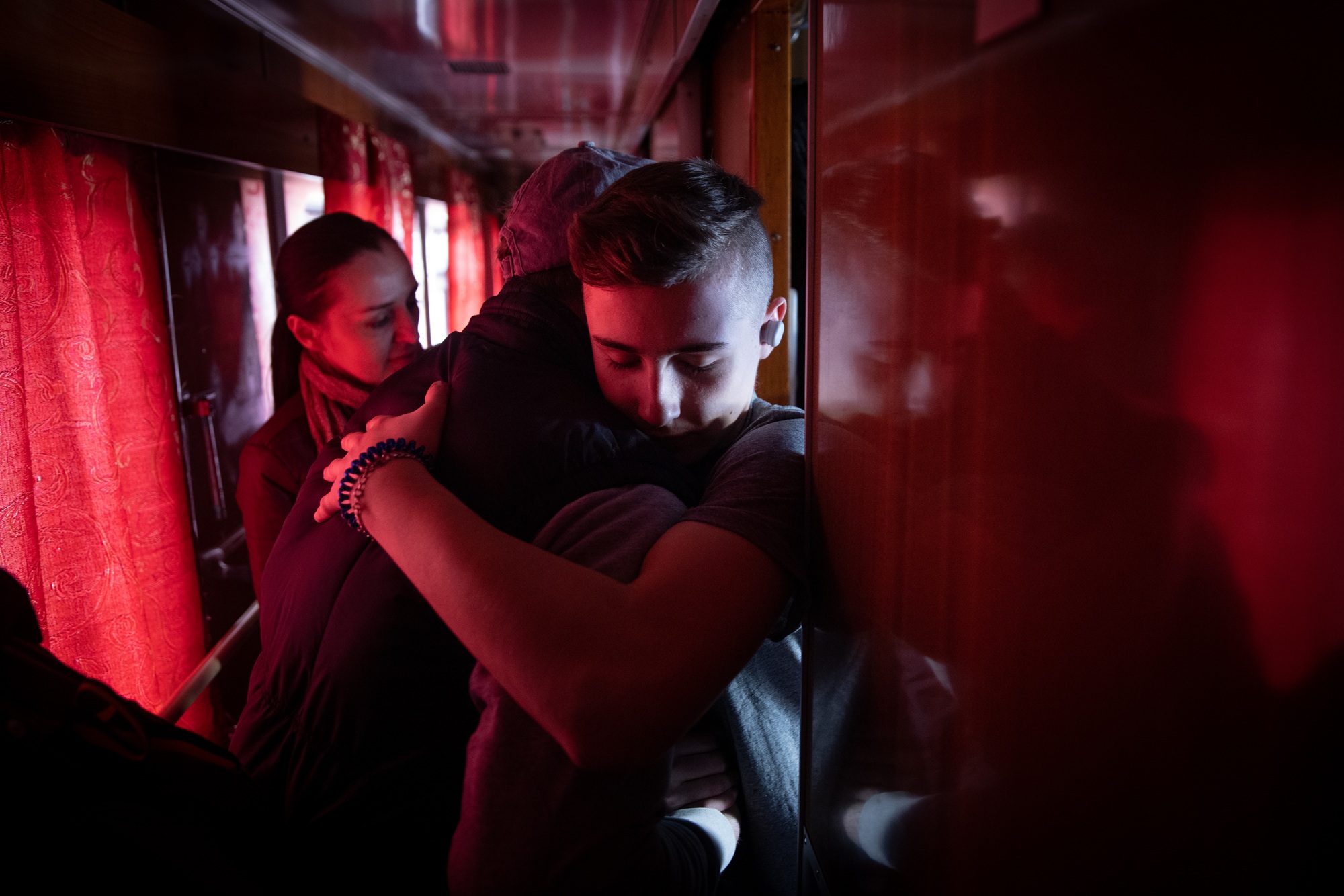
"But fear returns at night. "We don't have a bomb shelter near our house, so we were just sitting on the floor in the corridor all night," Katia said. Since losing their mother, Yulia has spent hours online playing Roblox. To get Yulia away from screens, the family enrolled her in aikido classes. "Right now, it's too slippery to go out - the roads are covered in ice - and we also have bad nights of shelling," Katia said in an interview earlier this month."
"Programs and safe spaces outside the home, such as those offered by the Chabad Orphanage in Odesa, provide support for children coping with trauma. When we visited the Mishpacha Children's Home, a Chabad-run institution that provides care for Jewish orphans in late September, Chaya Wolff, Mishpacha's director, was playing with children on the playground, then mediated a dispute among teenagers. Children from across Ukraine come to the orphanage to learn Hebrew, observe Shabbat customs and live as siblings. Two children, ages 2 and 4, chased each other on the playground. According to Wolff, their father had nearly killed their mother after returning from the front."
"Their sister Sarah left this month to attend school in Israel. "Hopefully, the war in Israel is over soon," Sarah, 16, said. "My parents abandoned me when I was 5. I feel for the children who lost their parents in this war in Ukraine. One day, I hope to become a teacher here and help Ukrainian children learn." For some Ukrainian children, the war has meant not only the loss of parents, but also being uprooted and taken far from home by Russian forces. Ilya Matviyenko was 10 when his mother, Natalia, was mortally wounded during shelling in Mariupol in southeastern Ukraine on March 20, 2022."
Children in Ukraine face recurrent nighttime fear, makeshift sheltering, and disrupted routines due to shelling and icy conditions that limit mobility. Some children have lost parents and spend long hours online; families enroll children in classes like aikido to provide structure and activity. Orphanages and safe spaces, including Chabad-run institutions, offer care, Hebrew education, religious observance, and sibling-like living for orphans. Some children suffer violent family trauma, abandonment, or displacement, with forces uprooting children and causing mortal injuries, as exemplified by missile attacks in Mariupol that wounded civilians and killed parents.
Read at Kqed
Unable to calculate read time
Collection
[
|
...
]