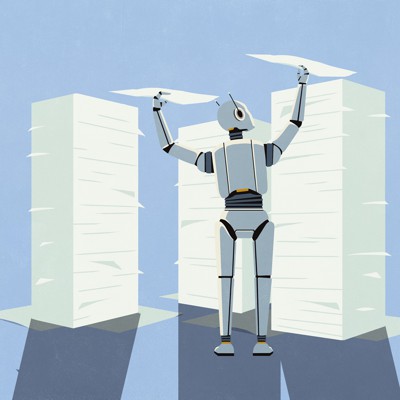
"We're investing a lot in AI - we're doing a lot, but we're stopping at individual productivity. We're not taking the next step. You can't just screw AI on everything - it only makes you faster. It means you need to think about, 'how are our teams collaborating? How are people collaborating?' You probably need to change the way you work."
"The harder question - where does work actually stall? - is the one most organizations aren't asking. Look for the handoffs, the moments between teams where projects slow down, stop and restart without anyone owning the gap. Applying AI to the wrong phase produces nothing. If code review is the chokepoint in a software pipeline, writing more code faster just deepens the backlog on the other side."
"Silos make it harder. Departments operate independently, handoffs break down, work stops without explanation. It's dysfunction that predates AI by decades. One department doesn't know what the other one does."
While workers report 33% productivity improvements using generative AI, only 3% of organizations experience actual business transformation. The gap exists because most organizations stop at individual productivity gains without examining how teams collaborate or where work breaks down. Applying AI broadly without identifying specific bottlenecks—such as code review delays or handoff failures between departments—merely accelerates work in non-critical areas, deepening backlogs elsewhere. Real transformation requires identifying where projects stall between teams and applying AI strategically to those chokepoints. Departmental silos compound the problem, preventing visibility into cross-functional workflows and preventing organizations from understanding why work stops.
#ai-adoption-strategy #organizational-transformation #workflow-bottlenecks #cross-functional-collaboration #business-process-optimization
Read at Nextgov.com
Unable to calculate read time
Collection
[
|
...
]