"It takes a team of 12 to spread the caramel in five layers that make up the Tunnock's wafer biscuit. "We're making roughly 20 tonnes of caramel a day," says Stuart Louden, the firm's engineering and transport manager, and the fifth generation of the Tunnock family to work at the business. "Operators do a lot of caramel testing, just on sight and on feel. So basically, they walk up to the caramel and just give it a squeeze.""
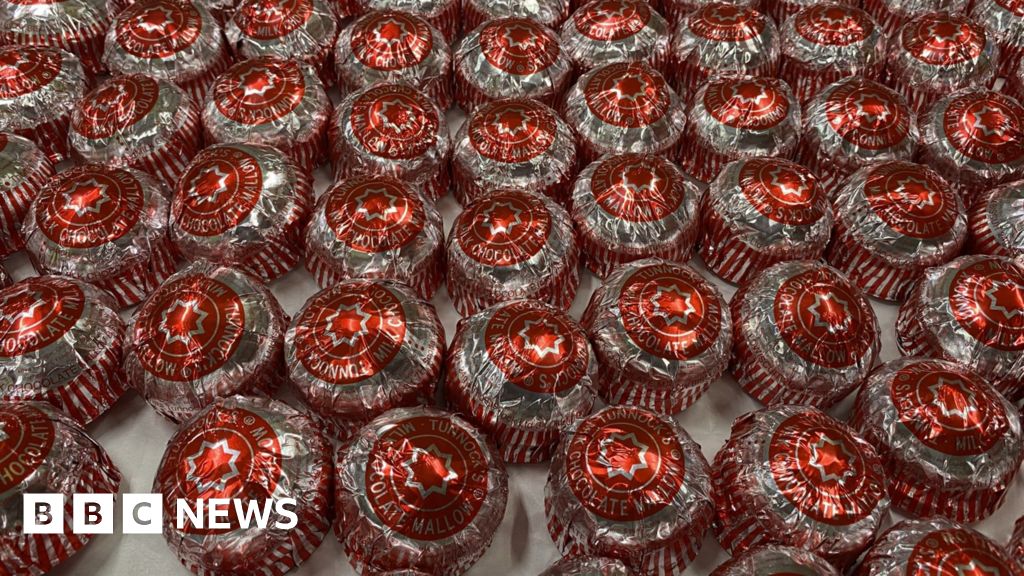
""We are a small fish in a big pond, and to try and keep up with some of these bigger companies that we are competing against, you've got to have the good machines there to get the output," says Mr Louden. They do have machines to spread the caramel, which work at night, but the human workforce is more flexible and takes up less space. Between them, the machines and humans turn out around seven million wafer bars and 4.5 million tea cakes a year."
Tunnock's factory outside Glasgow produces caramel and assembles wafer biscuits using both human skill and machines. Caramel production yields roughly 20 tonnes a day and requires testing by operators using sight and touch. A team of 12 spreads five layers of caramel onto wafers; machines also perform spreading at night. Most of the factory is automated to maintain output and compete with larger snack companies. The firm, led by a fifth-generation family member in engineering and transport, balances tradition and efficiency to produce about seven million wafer bars and 4.5 million tea cakes annually, with marshmallow made under close human supervision.
Read at www.bbc.com
Unable to calculate read time
Collection
[
|
...
]